Karol Darmoros
Border Island
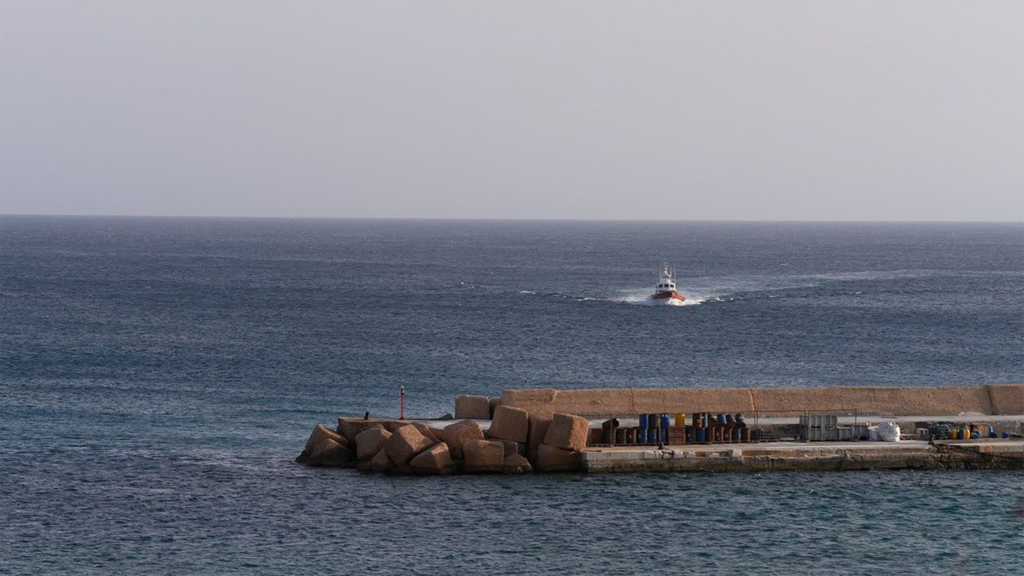
For years, Lampedusa has been a testing ground for Europe. It is here that boats arrive with people fleeing war, poverty, violence, and lack of prospects. It is also here that the sea often returns the bodies of those who did not survive the crossing.
The center in Contrada Imbriacola, managed by the Italian Red Cross, remains the main first reception point for migrants on the central Mediterranean route. In recent years, tens of thousands of people have passed through it: exhausted, disoriented, often sick, but finally safe.
Visit Program
The visit of Leo XIV will begin with a visit to the cemetery, where the Pope will lay flowers on the graves of those who died on the journey across the sea. He will then stop at the Gate of Europe, a monument commemorating those who died trying to reach the continent.
The next point will be Favaloro Pier, the place of many migrants’ first contact with Europe. There, the Holy Father will bless a plaque naming the pier after Pope Francis. Leo XIV will also meet with migrants, and at 10:30 AM, he will celebrate Holy Mass. An image of Our Lady of Portosalvo will be displayed at the altar.
In Francis’ Footsteps
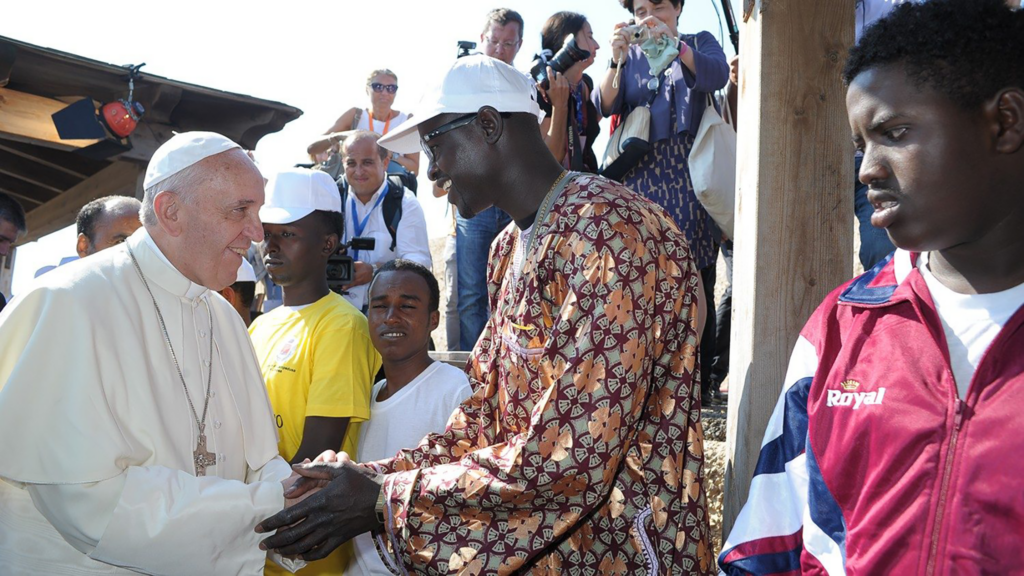
Lampedusa holds a special place in the recent history of the papacy. On July 8, 2013, Francis arrived there on the first pastoral journey of his pontificate. He spoke then of the “globalization of indifference” and asked: “Has anyone among us wept?” over the death of brothers and sisters who died at sea.
The visit of Leo XIV is therefore a return to a place where the Church reminds us that migrants are not a statistical problem, but people with faces, histories, and inalienable dignity.
The Teaching of Leo XIV
This emphasis clearly returns in the exhortation Dilexi te. In it, Leo XIV reminds us that the Church “has always recognized in migrants the living presence of the Lord.” He also recalls Francis’ words from the canonization homily of St. John Baptist Scalabrini, that this saint “looked further, looked to the future, towards a world and a Church without barriers, without foreigners.”
In the encyclical Magnifica humanitas Leo XIV writes that the situation of migrants, refugees, and people forced to leave their homes remains one of the decisive tests of social justice.
A few weeks ago in the Canary Islands, the Pope recalled that “human dignity has no passport and does not lose value after crossing a border.” He also pointed out that migrations “can become an opportunity for encounter and mutual enrichment of nations.”
He emphasized, however, that integration is a mutual path: migrants must “open themselves with trust to the community that welcomes them, learn its language, respect its laws, get to know its customs, participate in community life, and offer their gifts with gratitude.”
At the same time, Leo XIV strongly condemned those who exploit human desperation. To those who “organize routes of death, traffic people, withhold documents, exploit workers, intimidate women, deceive families, and turn the suffering of others into a source of profit,” he appealed: “Stop! Convert!”
Saturday’s visit to Lampedusa thus becomes for Leo XIV not only a destination, but also a place where the teaching on human dignity, the poor, and migrants takes concrete form.