Sr. Amata J. Nowaszewska CSFN
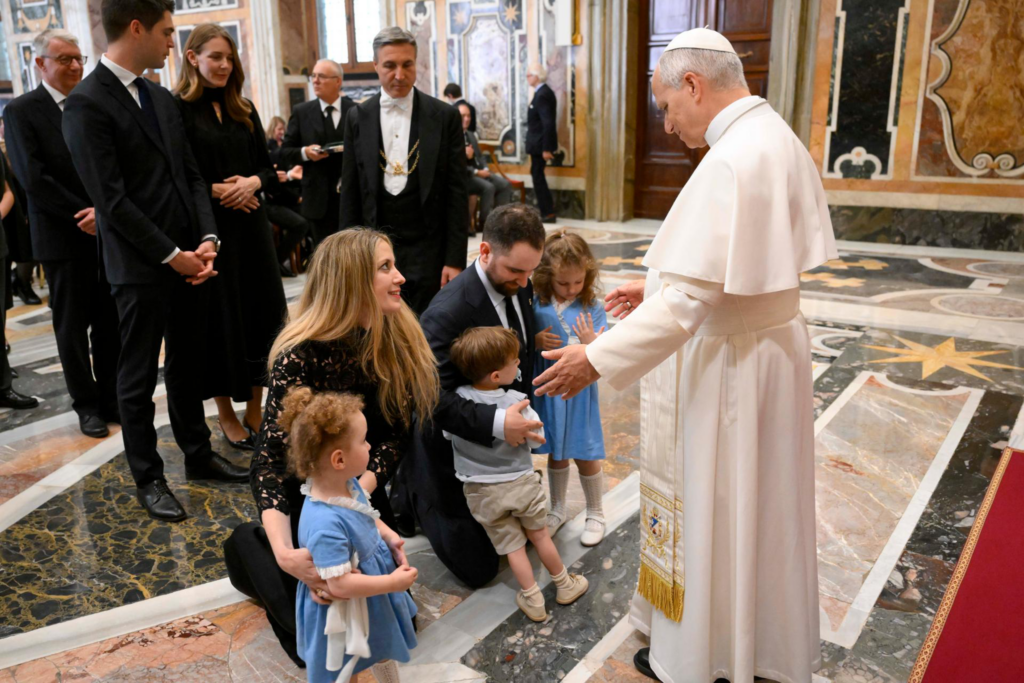
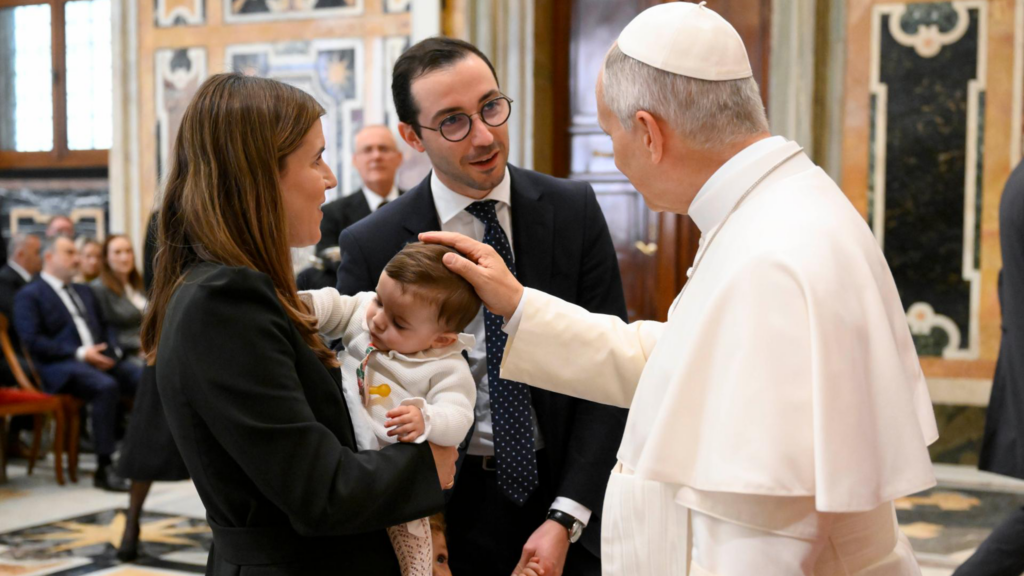
During a meeting with members of the European Parliament’s Intergroup on Demography, which took place on May 25 in the Vatican, Leo XIV noted that the problem of declining birth rates affects millions of Europeans today and has far-reaching social consequences.
Recalling the words of Pope Francis, he spoke of Europe becoming an „old continent” not so much because of its history, but „because of progressive aging”.
Demography is not just statistics
The Pope emphasized that the demographic crisis cannot be reduced solely to numerical data.
„Demographic data are not just statistics — they speak of fatherhood, motherhood, and children. And children are the future!” he noted.
Among the consequences of current trends, he also mentioned the „pandemic of loneliness”. He added that integral and sustainable development is not possible without intergenerational solidarity.
„Solidarity requires a balance between generations, which is clearly lacking in Europe today,” he stated.
„A crucial moment for Europe’s future”
Leo XIV assessed that responding to the demographic crisis requires a joint effort from scientific, political, and social communities.
„All these issues require urgent research and coordinated actions undertaken by a wide range of scientific, political, and social communities,” he said.
He also emphasized that „the demographic challenge represents a crucial moment for Europe’s anthropological, social, and economic future”.
According to the Pope, European institutions and cross-party dialogue forums, capable of developing new solutions to the demographic crisis, can play a special role.
The family, „the first and irreplaceable school of social life”
Speaking about the sources of social renewal, Leo XIV pointed to the family. Quoting St. John Paul II, he recalled that it is „the first and irreplaceable school of social life”.
The Pope noted that the family, based on the marriage of a woman and a man, combines personal and social dimensions, and its central place should be reflected in public life.
As he emphasized, only respect for the role of the family and the application of the principle of subsidiarity allows avoiding both „excessive state interference” and „individualism”.
Not a return to the past
Leo XIV rejected interpretations that promoting the family meant an attempt to recreate old social models.
„It is not about returning to social models of past eras,” he stressed.
As he explained, the goal is rather to show „unchanging principles” that „can reliably guide in the search for answers to fundamental questions posed in every era: what is the meaning and value of human life; what is an authentic human community; and what kind of world do we wish to pass on to future generations”.
In this context, he indicated that national and EU policies should be „developed and implemented in cooperation with civil society”.
„A new spring for the family”
Finally, the Pope expressed his conviction that overcoming the demographic crisis requires a renewal of family and social culture.
„Only a new spring for the family can transform the winter chill of aging societies,” he stated.
He also assured the conference participants of his prayers for their efforts on behalf of families and „the dignity of every human person”.