Polish-German Commemoration
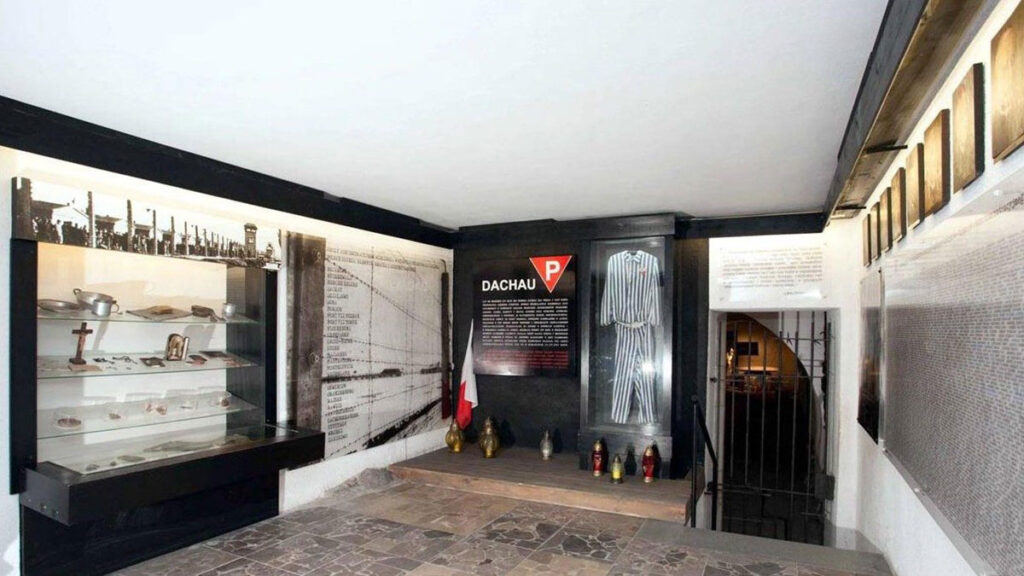
Last Saturday, a Polish-German Holy Mass was celebrated in Dachau. Over 1400 faithful, including 10 bishops from Poland and Germany and over 50 priests, gathered in the Chapel of the Agony of Christ to pray together for peace and remember the victims on the 80th anniversary of the liberation of the German concentration camp. “This ceremony has a triple dimension for us – it is a prayer for the victims, a matter of moral responsibility towards the world, and personal formation,” emphasized Father Michał Wilkosz.
The Gehenna of Polish Priests
The Rector of the Polish Catholic Mission recalled that Polish clergy, nearly 1800 of whom were sent to Dachau, were classified into the worst category of prisoners. They performed the heaviest work and were forbidden from administering any sacraments. “Their German colleagues or priests of other nationalities did not experience this. We owe them prayerful remembrance for shaping the spirit and showing the strength of spirituality,” noted Father Michał Wilkosz. He added that the Polish Catholic Mission in Germany is inscribed in the legacy left by the priests who went through Dachau.
Good was born from evil
Among them was Prelate Edward Lubowiecki. He was a long-time secretary to the Metropolitan of Krakow, Prince Cardinal Adam Sapieha, and director of Catholic Action. From 1942 to 1945, he was a prisoner of the Mauthausen and Dachau concentration camps. A year later, he became the General Vicar of the Polish Diocese in Germany. “He was a priest who survived the hell of Dachau in its worst dimension, who had the right, after liberation, to leave it all behind, like a large number of priests – to go to the United States or Canada. Instead, with war trauma, he remained here because he knew that Poles needed care,” said Father Michał Wilkosz. These were often young people, deeply demoralized by wartime experiences, not attached to religion. “In the documentation we have at the rectory, the figure of a person sensitive to human poverty emerges in his person. Imagine that there are letters where Father Lubowiecki uses all his connections to get medicine, available only in France, for an elderly woman from near Łódź. He left no letter unanswered. Every smallest matter concerning Poles and the Polish diaspora was at the center of his attention, and he made every effort to address it,” said the Rector of the Polish Catholic Mission in Germany.
Education of the younger generation
Polish priests strive to show examples of such attitudes, including 57 clergy-prisoners of Dachau already raised to the altars, to the youngest generation of the German Polish diaspora.
“We make every effort to ensure that our youth come to these places of remembrance as part of religious education classes or catechesis. We organize trips for these young people to Dachau. We try to ensure that this topic is somehow included in the entire Polish diaspora education,” added Father Dr. Michał Wilkosz. A large group of high school graduates from Radom, studying in a German language class, also participated in Saturday’s commemorations. The martyrdom of Polish clergy in Dachau is also an eloquent symbol for those preparing for the priesthood. “The rector of the Krakow seminary brought the entire seminary to this ceremony. They not only had the opportunity to learn about the heroic attitude of the priests in Dachau, but it was also an important point on the path of formation for the priesthood,” noted the Vatican News-Vatican Radio interlocutor.
80 years since liberation
On April 29, 1945, the American army liberated the German concentration camp in Dachau. The anniversary of this event has been celebrated since 2002, by decision of the Polish Episcopate, as the Day of Martyrdom of Polish Clergy during World War II. The initiator of this commemoration was Cardinal Ignacy Jeż, one of the miraculously surviving prisoners of KL Dachau.
A total of 2794 monks, deacons, priests, and Catholic bishops were sent to the camp located near Munich. 1773 of the clergy came from Poland. The Germans tortured to death a total of 1034 clergy in KL Dachau, including as many as 868 Poles.