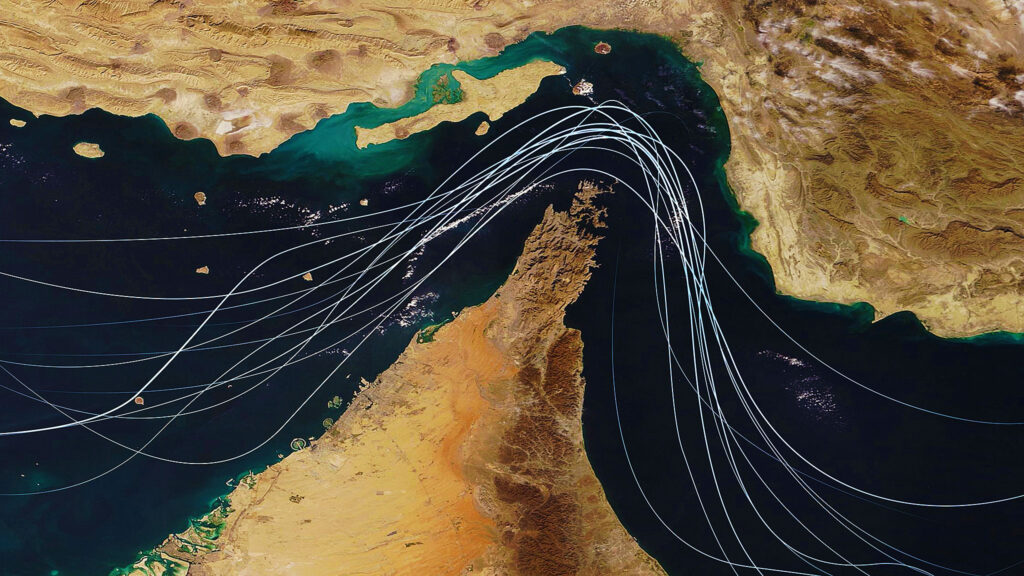
Condition: Iran immediately and completely opens the Strait of Hormuz for safe navigation. Iran confirmed. Pakistan, which mediated the talks, invited both sides for peace negotiations in Islamabad on Friday, April 10. Oil prices immediately dropped by thirteen percent. After forty days of war — a first breath.
How it came to this
For the past forty days, the US and Israel’s war with Iran escalated daily. A downed F-15 over Iran, a dramatic pilot rescue on Easter Sunday, a closed Strait of Hormuz, record oil prices, thousands of casualties, threats of force against Iranian civilian infrastructure. On Tuesday morning, Trump wrote on Truth Social that if there was no agreement by 8:00 PM ET, “hell would fall” on Iran — strikes on power plants, bridges, and potentially oil and water infrastructure. The Iranians responded by organizing “human chains” around power plants.
In the final hours before the deadline, Pakistan took on the role of chief mediator. Prime Minister Shehbaz Sharif and Chief of Army Staff Field Marshal Asim Munir held phone calls with both sides. Iran presented a ten-point peace plan. Trump wrote that it was a “basis for negotiations” and agreed to a ceasefire.
What the agreement contains
The ceasefire went into effect immediately after the announcement on Tuesday at 8:00 PM ET. Its terms — according to available statements from both sides — include a two-week halt to US and Israeli bombings, the opening of the Strait of Hormuz for safe passage of ships (in coordination with Iranian armed forces), a halt to Iranian defensive operations (if attacks on Iran cease), and a two-week window for negotiations aimed at a lasting peace agreement.
Iranian Foreign Minister Abbas Araghchi thanked Pakistan for its mediation and confirmed that “safe passage through the Strait of Hormuz will be possible in coordination with Iranian armed forces, taking into account technical limitations.” Iran also announced that its ten-point plan includes “ending the war against all elements of the Axis of Resistance” — meaning Hamas, Hezbollah, and the Houthis. The US has not confirmed these details.
Israel supported the ceasefire, but with a caveat: Prime Minister Benjamin Netanyahu stated that the truce does not include Lebanon, where Israel is conducting a ground invasion against Hezbollah. Pakistan claims the truce also covers Lebanon. This discrepancy could become a problem.
Markets breathed a sigh of relief
The market reaction was immediate. Brent crude oil prices fell by thirteen percent — from above $117 per barrel to around $103. S&P 500 futures rose by over two percent. Nasdaq by almost two percent. Dow Jones — by over 725 points. Since the outbreak of the war on February 28, the Strait of Hormuz — through which twenty percent of the world’s oil flows — had been effectively closed, causing a global energy crisis. Its opening, even temporarily, is a relief for drivers in America, manufacturers in Europe, and importers in Asia.
Friday in Islamabad
Pakistan’s Prime Minister invited delegations from both sides for peace negotiations in Islamabad on Friday, April 10. According to Axios sources, the American delegation is to be led by Vice President JD Vance. The White House has not officially confirmed the composition of the delegation. “Talks will continue. Nothing is final until the President or the White House announces it,” said White House spokeswoman Karoline Leavitt.
“Both nations have shown extraordinary wisdom,” Prime Minister Sharif wrote on platform X, inviting the delegations to “finally settle all disputes.”
What this means for the Polish diaspora
For Poles in America — after six weeks of record gasoline prices, rising heating costs, and uncertainty about the fate of American soldiers — the ceasefire is a relief. But this is just the beginning. Two weeks of silence is time for negotiations, not a guarantee of peace. If the talks in Islamabad fail, Trump has already shown that he is not bluffing.
This truce also matters for Poland. If the Strait of Hormuz opens and oil prices fall, the pressure on Polish energy reserves and on sending Patriots to the Middle East will decrease — at least for two weeks. Poland refused to hand over the batteries a week ago. Now it can breathe. But the clock is ticking — this truce expires on April 21.
Editorial Staff, Voice of Polonia in the USA
Read also: Easter miracle — F-15 pilot rescued from Iran mountains | USA wants Polish Patriots — Poland refuses
Read more at poland.us. Looking for a Polish business in the USA? PolishPages.com.