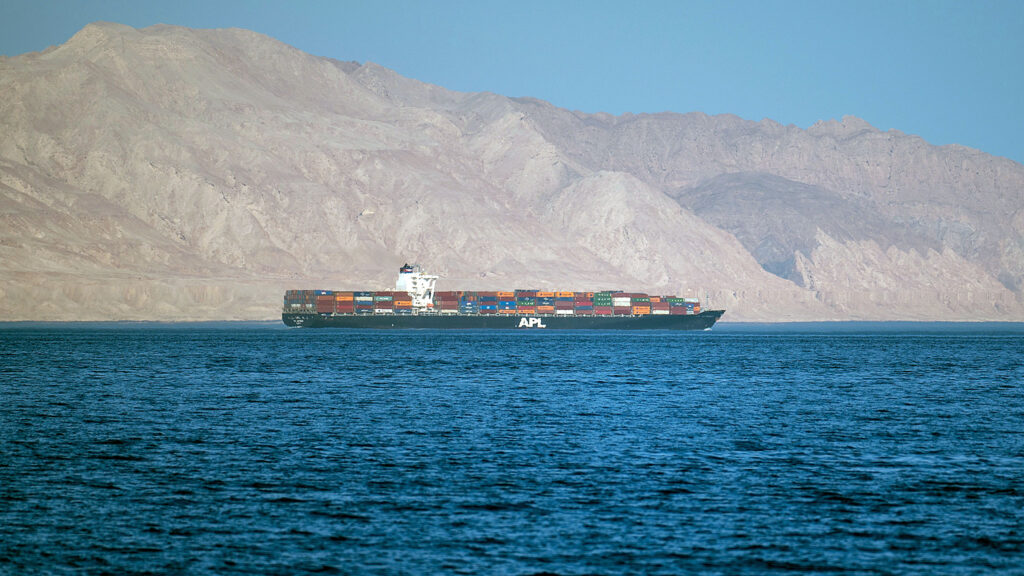
Marathon 21-hour negotiations in Islamabad on April 11–12 ended without an agreement. On April 13, Trump imposed a US naval blockade on Iranian ports. On Sunday, the US Navy opened fire and seized the Iranian container ship Touska, which was attempting to bypass the blockade — US Marines rappelled onto the deck from a helicopter. Oil rose by over 6 percent overnight. Iran says it “has no plan for a second round of talks.” Pakistan is trying to salvage the situation. And the world asks: what will happen on Wednesday evening?
What happened in Islamabad
The first round of peace negotiations took place on the weekend of April 11–12 in Islamabad. The American delegation — 300 people — was led by Vice President JD Vance, special envoy Steve Witkoff, and Trump’s son-in-law, Jared Kushner. Iran sent 70 people led by Parliament Speaker Mohammad Bagher Ghalibaf and Foreign Minister Abbas Araghchi. The Pakistanis were led by Prime Minister Shehbaz Sharif and Field Marshal Asim Munir.
The talks lasted 21 hours. Three rounds — the first indirect, the second and third direct. And they ended with nothing. Main points of contention: Iran’s nuclear program and the status of the Strait of Hormuz. The US demanded that Iran freeze uranium enrichment for 20 years; Iran proposed 5. The US demanded that Iran surrender its stockpile of enriched uranium — over 400 kilograms. Iran refused. Additional disagreements: the scope of sanctions, 6 billion dollars of frozen Iranian assets, the status of Lebanon (Iran wanted the truce to include Hezbollah; the US and Israel refused).
Araghchi said they were “a step away from an agreement,” but the US “moved the goalposts.” Vance, in turn, stated on Fox News that Iran “moved in our direction, but not enough.”
Naval Blockade — Trump’s Move
On April 13 — the day after the negotiations ended — Trump imposed a US naval blockade on Iranian ports. Goal: to cut off oil exports and increase economic pressure on Tehran. The US is stopping every ship entering and leaving Iranian ports. Simultaneously, Iran, according to reports, lost some of the mines it had laid in the Strait of Hormuz — and is unable to fully open it. The US began an operation to clear the strait of mines.
On Friday, Iran announced that the strait was “fully open” — oil prices fell by ten percent. On Saturday, Iran regained control of the passage — prices jumped up again. On Sunday, the US Navy opened fire and seized an Iranian container ship which, according to Trump, “refused to stop.” This was the most “violent session in the Strait” since the beginning of the crisis — said one market analyst.
Oil and Stock Markets
The market reaction this morning was immediate. West Texas Intermediate oil jumped over 6 percent to 89 dollars per barrel just after midnight. Brent rose 5.6% to 95.50 dollars. American stock markets opened in the red. According to analysts’ estimates, fifty days of the US-Iran conflict caused disruptions in the supply of over half a billion barrels of oil and gas. Even if an agreement is signed tomorrow, the global market will take months to recover.
What about the second round
Pakistan is trying. Field Marshal Munir flew to Tehran on Tuesday. Egypt and Turkey joined as additional mediators. Trump says one thing, Iran says another — on Monday morning, Iranian Foreign Ministry spokesman Esmaeil Baghaei said that “there is no plan for a second round of negotiations with the US,” accusing the Americans of violating the truce through the naval blockade and seizure of the ship. He called the blockade “illegal, criminal, and a crime against humanity.”
Trump responded on Sunday on Truth Social that the American negotiating team “is going to Pakistan to talk to Iran again.” White House spokeswoman, Karoline Leavitt, said that “the talks are productive, we feel good about the chances of an agreement.”
What could happen on Wednesday evening
Three scenarios. First — Iran changes its mind at the last minute, the delegation lands in Islamabad, the truce is extended, negotiations continue. This is the scenario that markets and mediators are hoping for.
Second — the truce expires without extension, but neither side immediately escalates. A “cold stalemate” — the blockade continues, Iran does not open the strait, Pakistan and Egypt continue to negotiate.
Third — Trump carries out what he promised in the April 7 ultimatum: strikes on Iranian civilian infrastructure. Power plants, bridges, perhaps oil facilities. Iran responds with missile attacks on US bases in the region, closes the strait, strikes Israeli targets. Oil prices jump to 150 dollars per barrel.
The second scenario is the most likely. The third is the worst. The first — that’s the one everyone is hoping for and almost no one expects.
What this means for the Polish diaspora
Gas at stations in New Jersey and Long Island yesterday: an average of 4.12 dollars per gallon. In normal times — 3.20. The difference goes into the pockets of Saudis, Emiratis, and Americans from Texas who increased production, but not enough to meet market demand without Iranian oil. A Polish family in America is currently paying for a war being fought in another part of the world.
If the truce expires and strikes resume — gas will jump even higher. If an agreement is signed — we will slowly start to return to normal. By Wednesday morning, we will know which way the world will go.
Editorial Team, Voice of Polonia in the USA
US–Iran Truce 2026 | Announcement: April 8, 2026 | Expires: Wednesday, April 22, 2026, evening ET (8:00 PM Tuesday = 00:00 GMT Wednesday) | Islamabad Negotiations: April 11–12, 21 hours, no agreement | Naval Blockade: from April 13 | Oil: +6% overnight on April 20 | Sources: Axios, CNN, CNBC, Al Jazeera, Time, Reuters, NPR, ABC News, CBS, Bloomberg
Read also: Truce announced — how it happened (April 7) | Easter Miracle — F-15 pilot rescued from Iran mountains
Read more at poland.us.