Meanwhile, FIFA pretends the situation is under control, Trump invites Iranians to matches, and Poland in two weeks plays to even go to this World Cup.
The third team in the world to qualify — and the first to withdraw
Iran qualified for the World Cup as the third team in the world, ahead of Brazil and Germany, among others. They were drawn into Group G with Belgium, Egypt, and New Zealand, and all three group matches were to take place on the west coast of the USA — in Los Angeles and Seattle, where nearly a million Americans of Iranian descent live. For Iranian fans, this was meant to be a special tournament, played literally in their American backyard.
And then, on February 28, the United States and Israel launched Operation “Epic Fury.” Ayatollah Khamenei was killed. Over 1,200 Iranian civilians died. Within two weeks, Iran transformed from a World Cup participant into a country at war with the tournament host — a situation for which FIFA regulations were unprepared, as it had simply never happened before.
Sports Minister Ahmad Donyamali stated directly on Iranian state television: “This regime murdered our leader. It murdered thousands of our people. Under no circumstances can we participate in a World Cup organized by a country that is waging war against us.”
Infantino invites, Trump shrugs, Iran refuses
This week’s story reads like a script no screenwriter would ever write. On Tuesday evening, FIFA head Gianni Infantino met with President Trump at the White House and proudly announced on Instagram that “the president confirmed that the Iranian team is, of course, welcome to the tournament in the United States.” A few hours later, the Iranian sports minister stood before cameras and said the exact opposite.
Trump himself, when asked earlier if he cared about Iran’s participation, responded with his characteristic nonchalance: “I really don’t care.” This is the same Trump who, in December, received the “FIFA Peace Prize” from Infantino — a newly established award that FIFA invented specifically for the occasion. Two months later, the peace prize laureate began bombing a country whose team was supposed to play in his tournament. Life writes its own satire.
Who will replace Iran? FIFA seeks a solution not in the rulebook
FIFA regulations (Article 6.7) state that in the event of a participant’s withdrawal, the federation “shall make a decision at its own discretion.” In practice, this means FIFA must now find a replacement at express speed, as the World Cup kicks off on June 11 — in less than three months.
The most likely candidate is Iraq, which, as next in line from the Asian confederation, was scheduled to play in the intercontinental playoffs at the end of March. Following Iraq are the United Arab Emirates. FIFA could also theoretically leave Group G with three teams instead of four — but that would mean fewer matches, less money from TV rights, and a less satisfied Infantino, which ranks quite high in FIFA’s hierarchy of priorities.
The irony of the situation is almost literary: Iraq — a country where Polish soldiers are stationed as part of a NATO mission — could take Iran’s World Cup spot, with whom America is currently at war. Geopolitics and football have intertwined in a knot that no one can untangle.
Poland has its own problems — Albania in two weeks
Before we start analyzing the composition of Group G, it’s worth remembering that Poland still doesn’t have a guaranteed ticket to the World Cup. Jan Urban’s team must first go through the playoff grinder, which begins on March 26 with a match against Albania on Polish soil. If the White-Reds win, they face a playoff final against the winner of the Ukraine-Sweden match.
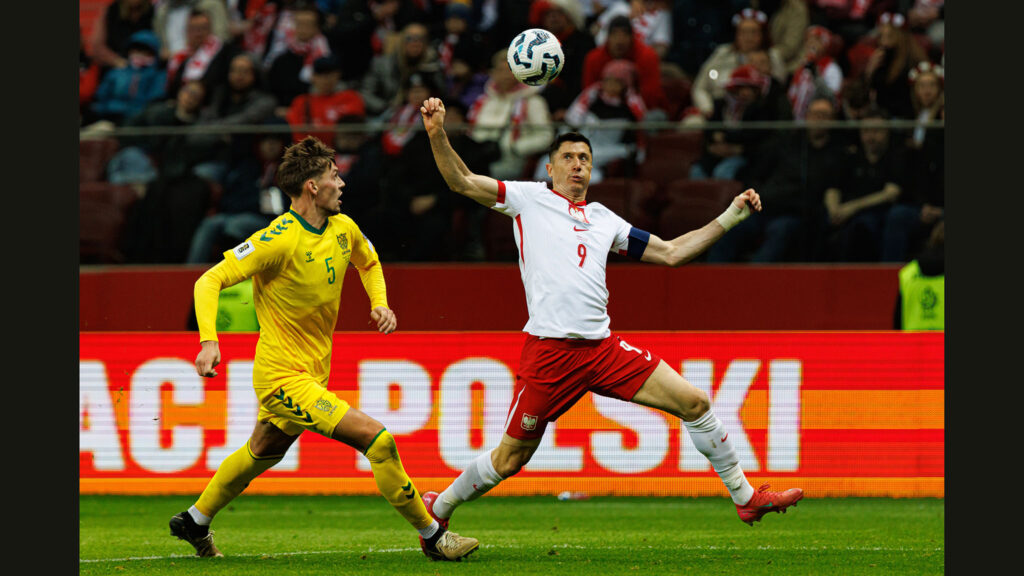
Only two victories will secure Poland a place in Group F — alongside the Netherlands, Japan, and Tunisia, with group matches played in the USA. And there awaits the 10-million-strong Polish diaspora, who have dreamed for years of cheering Lewandowski live, in an American stadium, with a red-and-white scarf and a twelve-dollar beer.
The team has its arguments: Lewandowski still scores, Zieliński commands the midfield, Kiwior and Bednarek hold the defense. But it also has a history of disappointments that makes Polish fans cross their fingers tightly but keep expectations low. This might be Lewandowski’s last World Cup — which makes these playoffs more than just another match.
Iranian female footballers seek asylum — a story no one talks about
On the sidelines of grand politics, a smaller but more human story unfolds. The Iranian women’s national team was playing in the Asian Cup in Australia when the war broke out. Six female footballers asked the Australian government for humanitarian visas — they did not want to return to a country engulfed in bombings, where women have been fighting for basic rights for years. Australia granted the visas. One player eventually changed her mind, but the rest stayed.
This is not a story about football. This is a story about what happens when sport meets reality — and loses. Infantino may repeat that “football unites the world,” but these female footballers preferred to stay abroad rather than return to their homeland in the name of footballing brotherhood.
What this means for us — fans, Polish diaspora, Poles
The 2026 World Cup was supposed to be a celebration of football in three countries, with 48 teams and billions of viewers. Instead, it is becoming an arena where politics, war, and diplomacy play a game whose rules no one knows. Iran drops out because it is at war with the host. FIFA is looking for a replacement. Trump hands out peace prizes and drops bombs in the same quarter. And we, Poles — we are just trying to beat Albania.
Because unlike Iran, our problem is not that we cannot go to the World Cup. Our problem is that we don’t yet know if we can. And frankly — that’s a much more pleasant problem to solve.
Voice of the Polish Diaspora in the USA — poland.us. World Cup in 93 days. Poland plays for qualification in two weeks. Cheer with us — and check out Polish sports bars at polishpages.com.