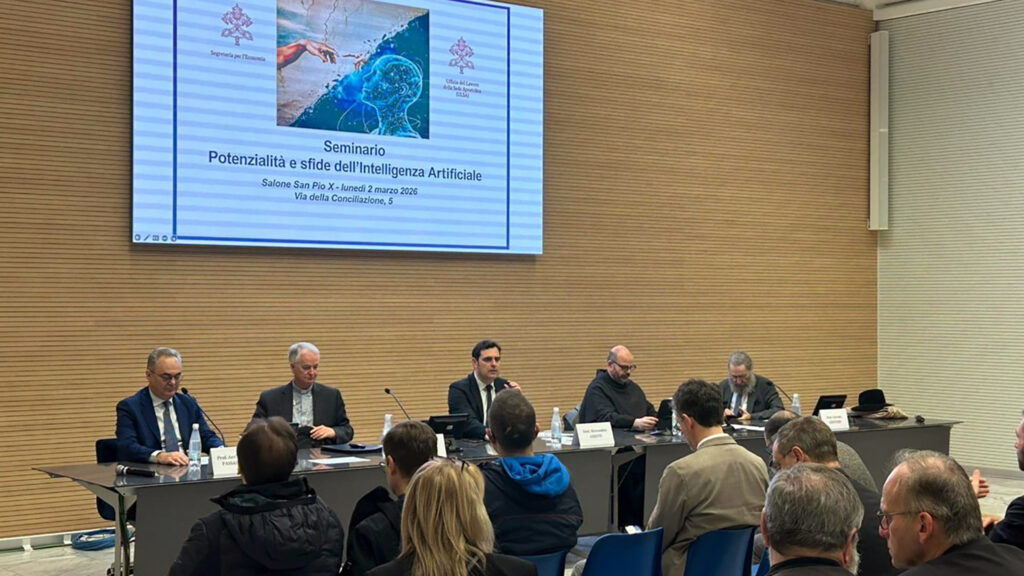
Edoardo Giribaldi, Wojciech Rogacin – Vatican
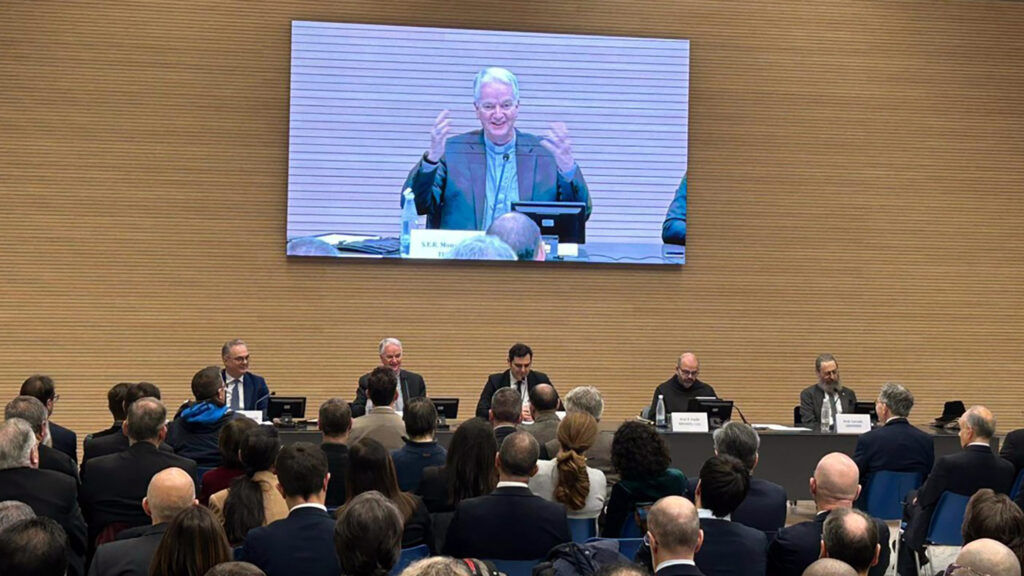
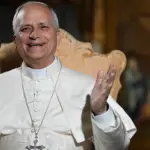
Archbishop Paul Tighe, Secretary of the Dicastery for Culture and Education, participating in the discussion, recalled the commitment of Pope Leo XIV, who made reflection on artificial intelligence (AI) one of the priorities of his pontificate. The Church, for its part, possesses “moral authority” and the ability to gather competent interlocutors, becoming an important partner in guiding the development of AI – the Irish archbishop pointed out.
Promoting global governance
Archbishop Tighe explained point by point how these principles can translate into concrete actions for the Church. In the area of competitiveness – by promoting cooperation and global governance of new technologies. In the context of polarization – by reaffirming the culture of encounter and dialogue. With regard to inequalities – by recalling that a “realistic social pact” must include different cultures and worldviews. Finally, on the issue of “delegating cognitive functions” – by strengthening the Catholic vision of education and reinforcing the network of Catholic universities.
Earlier in the discussion moderated by Alessandro Gisotti, Deputy Editorial Director of the Dicastery for Communication, the hierarch summarized the consequences that followed the widespread adoption in 2022 of ChatGPT – one of the most popular chatbots developed by the American company OpenAI. Archbishop Tighe used the acronym VUCA: Volatility, Uncertainty, Complexity, and Ambiguity.
Real AI threats
The threats – without succumbing to apocalyptic rhetoric – are, however, real: “biological weapons, propaganda, disinformation, systems escaping human control” – he indicated. Representativeness, transparency, and intelligibility are key words in counteracting the technocratic paradigm.
The development of artificial intelligence is therefore not taking place in a neutral space – the Irish bishop emphasized. In the absence of international regulations, “great powers strive for technological advantage, especially in the military sphere,” while “awareness of a possible financial bubble encourages risk-taking at the expense of security.”
In this context, Archbishop Tighe recalled recent events and the case of Anthropic – an American company founded to develop more ethical artificial intelligence – which reportedly experienced pressure to soften its ethical commitments regarding military and surveillance applications.
Social risks of new technologies
AI models are also designed to adapt to the user – often by the same companies that control social media – to the point of “flattering” the recipient and generating so-called “hallucinations,” i.e., providing “expected answers, not necessarily accurate.”
Attention was also drawn to the risk of entrusting artificial intelligence with cognitive tasks proper to humans, especially by individuals who cannot critically evaluate its results or ask the right questions. The consequences of this are not limited to the sphere of work or academia but also affect personal life, interpersonal relationships, and spirituality, embodying psychologist Abraham Maslow’s observation: “To someone who has a hammer, everything looks like a nail.”
Let the Church guide the development of AI
In the face of these complexities, the bishop referred to the document Antiqua et Nova, pointing to “wisdom of the heart, capable of integrating the whole and the parts,” as what humanity most needs today: intelligence that, in the face of the power of available tools, questions their service, goals, and consequences.
Different goals of technology
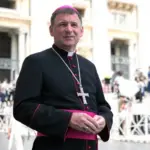
Fr. Paolo Benanti, lecturer at the Pontifical Gregorian University, pointed to the power dynamics in the use of AI. This is reflected, for example, in the world of information: the visibility of an article no longer necessarily depends on its quality, but increasingly on the position assigned to it by an algorithm on websites. This – as the lecturer emphasized – is a form of “power mediation.”
Removing “friction,” giving up power
The advantage of using AI – noted Fr. Benanti – is the elimination of “friction.” This is a metaphor with numerous practical applications. For example, a dating app removes the “friction,” the effort associated with finding the love of one’s life. “But in doing so, a part of one’s own power is given up,” and the transmitted information becomes a “tool of control.”
At the end of the meeting, Alessandro Gisotti, Deputy Editorial Director of the Dicastery for Communication, referred to Pope Leo XIV’s message for the 60th World Day of Social Communications and the need to develop “media, information, and artificial intelligence literacy.”
He also noted that AI should always be treated as “support” for human activity, and its results must be subject to constant critical verification.