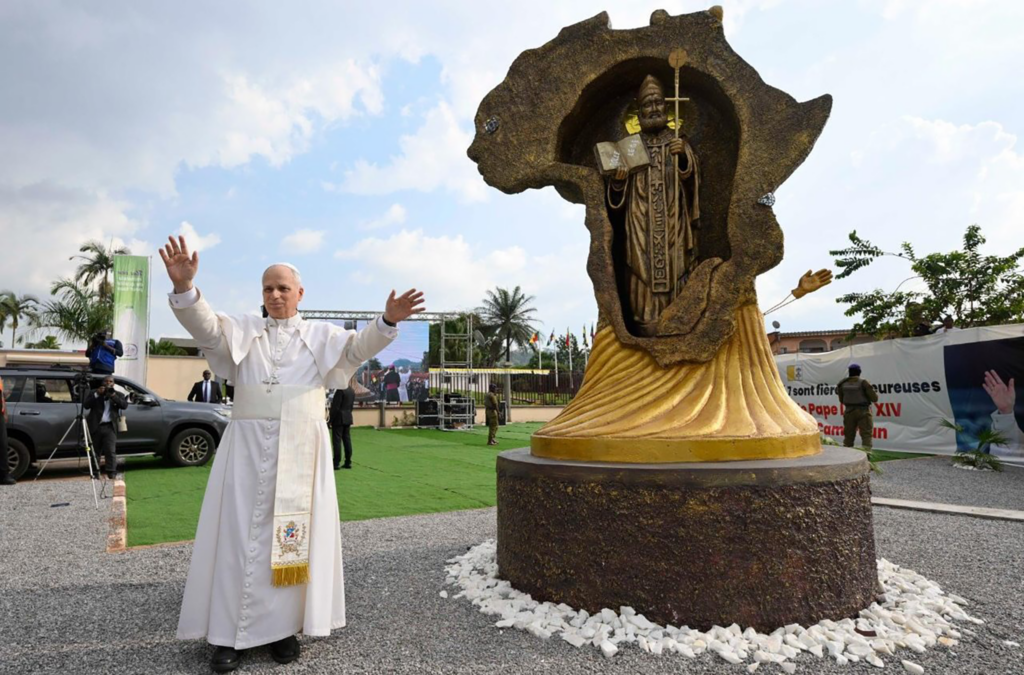
Wojciech Rogacin – Vatican
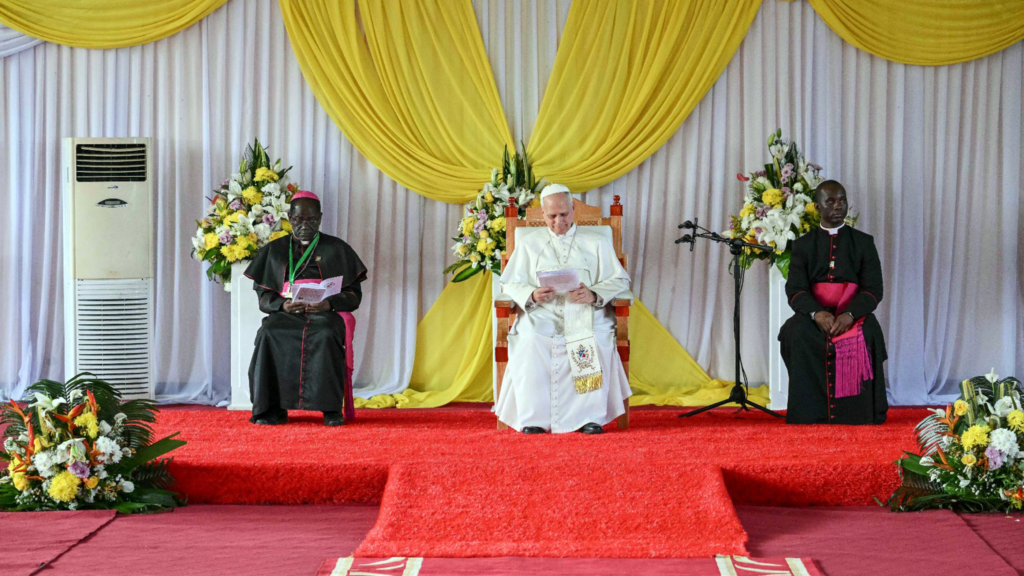
“Today – more than ever – it is necessary for universities, and even more so for Catholic universities, to become true communities of life and research,” the Pope said in his address to the academic community of the Catholic University of Central Africa.
University as a place of encounter
He pointed out that it is precisely in Catholic universities, thanks to faithful adherence to the principles of the Gospel and the Church’s teaching, that the formation of a culture of encounter, which is threatened today, can take place.
“In times when many people in the world seem to be losing their spiritual and ethical reference points, being trapped in individualism, appearances, and hypocrisy, the university is par excellence a place of friendship, cooperation, and at the same time, inner life and reflection,” emphasized the Holy Father.
Faith broadens scientific horizons
Pointing to the genesis of medieval universities, whose main goal was the search for truth, the Pope referred to the thought of St. John Henry Newman, who said that God “pours Himself into all true principles, all phenomena merge in Him.”
Faith, with its “gentle light,” has a beneficial influence on the scientific outlook, stimulates critical sense, because it does not allow research to be satisfied with its formulas, and helps them understand that nature is always greater – indicated Leo XIV.
“Dearest ones, Africa can make a fundamental contribution to broadening the too narrow horizons of a humanity that finds it difficult to hope,” the Pope said.
Essential formation of students’ consciences
He indicated that for this, the formation of “free and holy restless” consciences is essential, so that the Christian faith appears as a fully human proposal, capable of transforming the lives of individuals and society and encouraging an ever deeper, “never satiated search for God.”
For it is in conscience – as Leo XIV said – that moral discernment is formed, through which we freely seek what is true and honest, and an enlightened and upright conscience directs human actions towards the search for good, justice, and peace.
Dialogue and encounter instead of information bubbles
The Pope called on the university community to provide humanistic formation for students in the era of the digital revolution, especially in the age of artificial intelligence.
The current “great historical transformation,” which is the artificial intelligence revolution, “requires not only technical competence, but also humanistic formation, capable of revealing the economic logic, ingrained prejudices, and forms of power that shape the perception of reality.”
“In digital environments, designed to exert influence, interactions are optimized to such an extent that real-world encounter becomes superfluous, the distinctiveness of flesh-and-blood people is neutralized, and relationships are reduced to functional reactions,” warned Leo XIV. “Dearest ones, you, however, are real people!” – he emphasized.
The Pope also warned against closing oneself off from social ties and contact with reality when digital simulation becomes the norm. “We then live as if in bubbles that are impenetrable to each other, we feel threatened by anyone who is different, and we lose the habit of encounter and dialogue. In this way, polarization, conflicts, fears, and violence spread,” said the Holy Father. He added that it is precisely in this area that the Catholic university has a duty to assume primary responsibility.
Do not succumb to migratory pressure
He encouraged students from the university in Cameroon not to succumb to the “understandable migratory tendency that may lead one to believe that a better future can easily be found elsewhere.”
“I encourage you above all to respond with a fervent desire to serve your country and to use the knowledge you acquire here for the good of your fellow citizens,” he said. Pastors and lay people involved in social life are witnesses to the wisdom and justice that the African continent needs – the Pope indicated.
Builders of the future in truth
Referring to the words of John Paul II, he recalled the role of the Catholic university: a Catholic university “is born from the heart of the Church” and participates in its mission of proclaiming the truth that liberates.
This places an intellectual and spiritual demand on the university community: to seek truth in all its dimensions, with the conviction that faith and reason are not opposed but mutually supportive – the Pope said. He indicated that professors and students of a Catholic university also have the task of proclaiming the Good News of Christ.
For this, spiritual formation and deepening of inner life are essential. “In this way, dear students, learn to become builders of the future of your countries and of a more just and more human world,” emphasized Leo XIV.