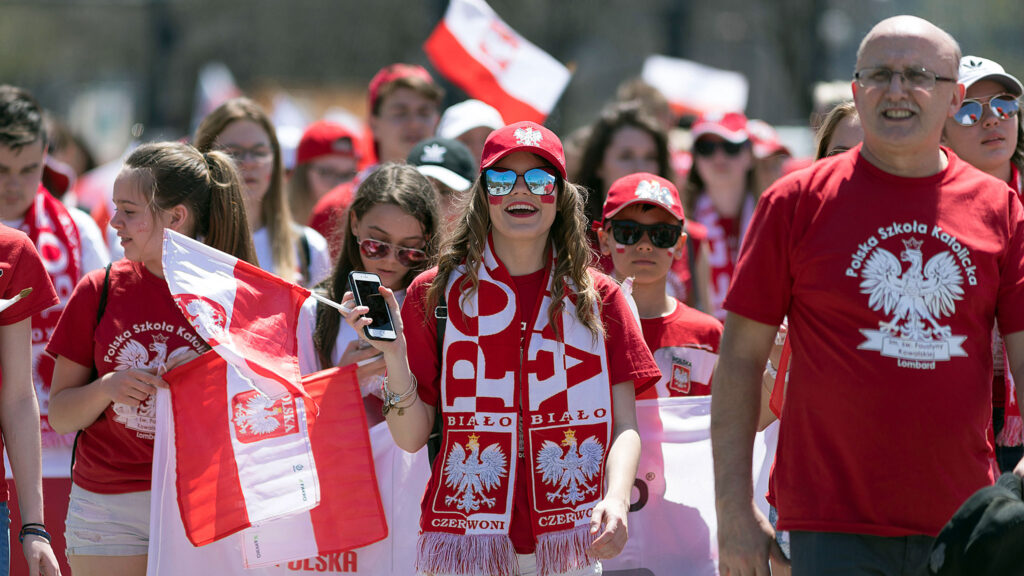
On Facebook, Polish-American groups are buzzing with questions: “Can I be deported?”, “How do I return to Poland with my pension?”, “Will my child born in the USA get a Polish passport?” And at the same time, Polish companies from Warsaw, Krakow, and Wroclaw are looking for a way to enter the American market — and a bridge. Polonia is that bridge. But is this bridge still standing?
Greenpoint is no longer Greenpoint. And Jackowo is no longer Jackowo.
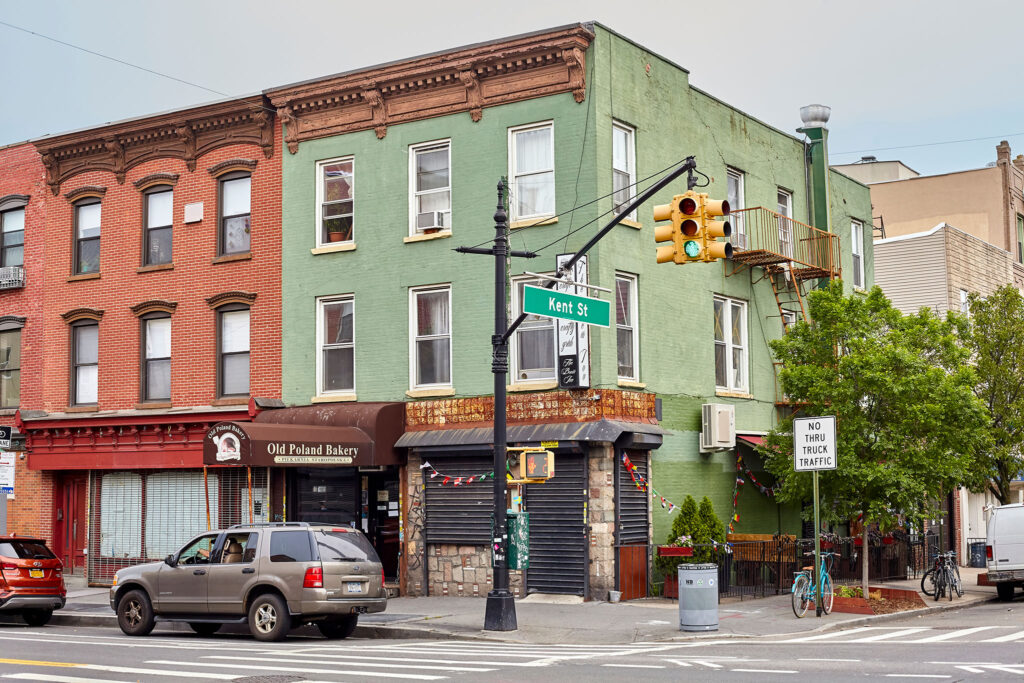
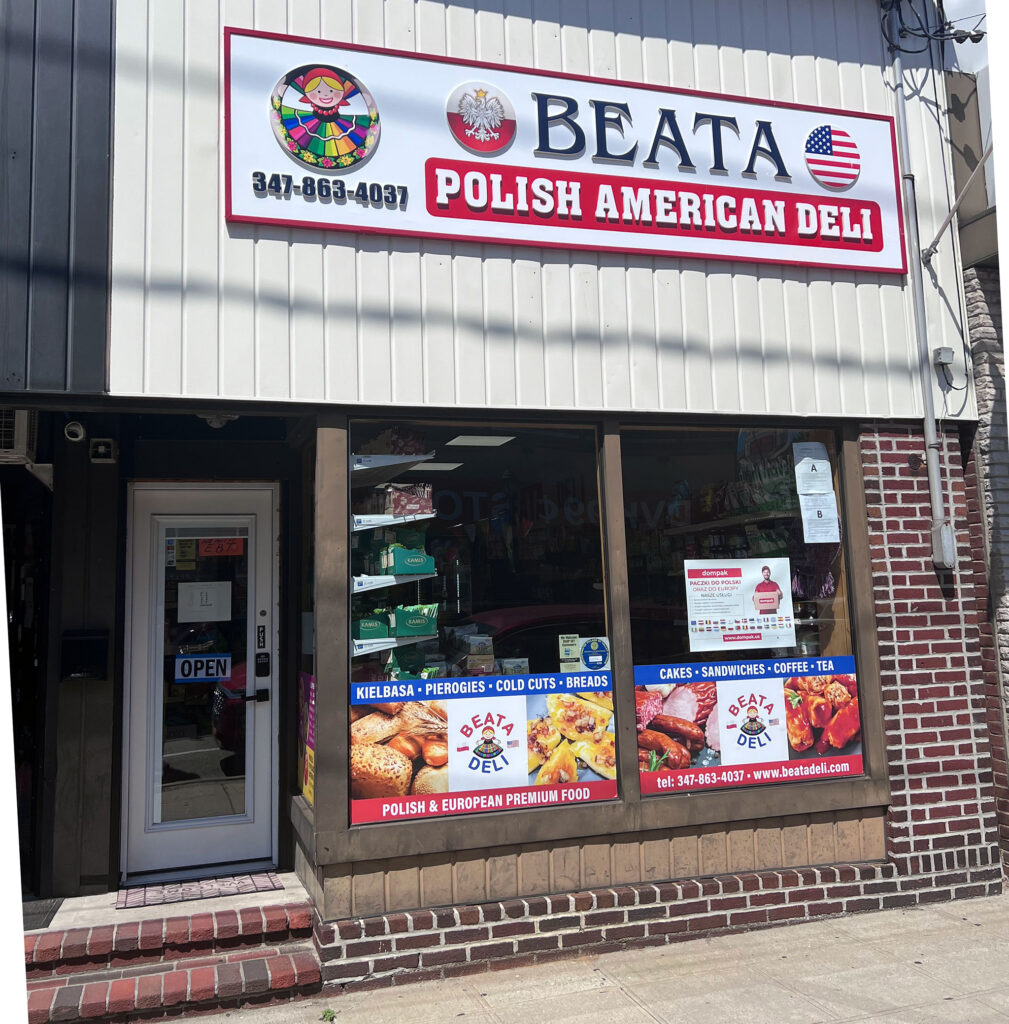
For decades, Greenpoint in Brooklyn was the unofficial capital of Polish America. Polish butcher shops, bakeries, churches, Saturday schools, law offices with “Mówimy po polsku” (We speak Polish) signs — it was a world enclosed in a dozen blocks between Manhattan Avenue and McCarren Park. But this world is shrinking. The younger generation — born in the USA, English-speaking, with American university degrees — is not opening new delis. They are moving to New Jersey, Long Island, Connecticut. Or they don’t identify with their parents’ “Polish-Americanness.”
The same is happening in Chicago. Jackowo — Avondale, Irving Park, the area around Milwaukee Avenue — for generations was the Polish heart of Central America. Today, Polish businesses are moving to the suburbs: to Niles, Park Ridge, and Schaumburg. The Copernicus Center is still alive, Taste of Polonia still draws crowds on Labor Day, but Jackowo itself looks different than 20 years ago. Mexican taquerias are opening where Polish butcher shops once stood — and no one complains anymore, because the Poles have moved out.
In Philadelphia, Port Richmond and Bridesburg are undergoing the same transformation. Allegheny Avenue still has Polish shops, but Polish is heard less and less often there.
In the Poconos — Stroudsburg, East Stroudsburg — it was the opposite: Poles from New York and New Jersey bought vacation homes there, then moved permanently. An entire mini-Polonia emerged in the Pennsylvania mountains, with Polish delis and a church where the pews are full on Sundays.
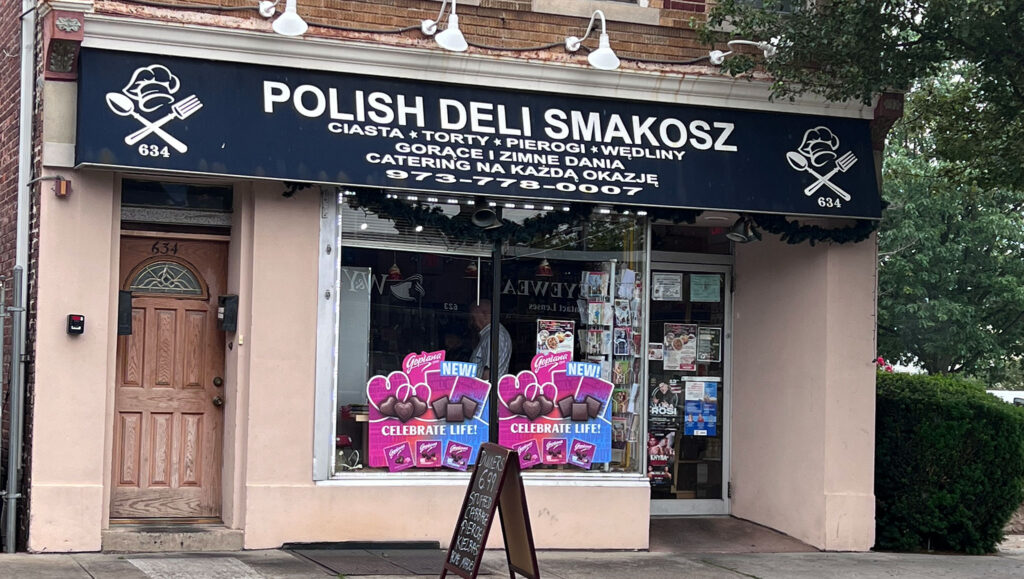
And in Connecticut stands New Britain — “Little Poland,” one of America’s oldest Polish strongholds. Broad Street, Sacred Heart Church, Polish National Home — here, Polishness is not a memory, but an everyday reality. Poles began arriving in New Britain at the turn of the 19th and 20th centuries, for factories and foundries. They stayed. Their grandchildren still live here, attend Polish parishes, and vote for local politicians of Polish descent. New Britain is proof that Polonia is not shrinking everywhere — in some places, it simply endures, quietly and stubbornly, for over a hundred years.
On Long Island — Riverhead, Calverton, North Fork — Poles from Brooklyn and Queens are buying homes with gardens and building a new Polonia among the vineyards.
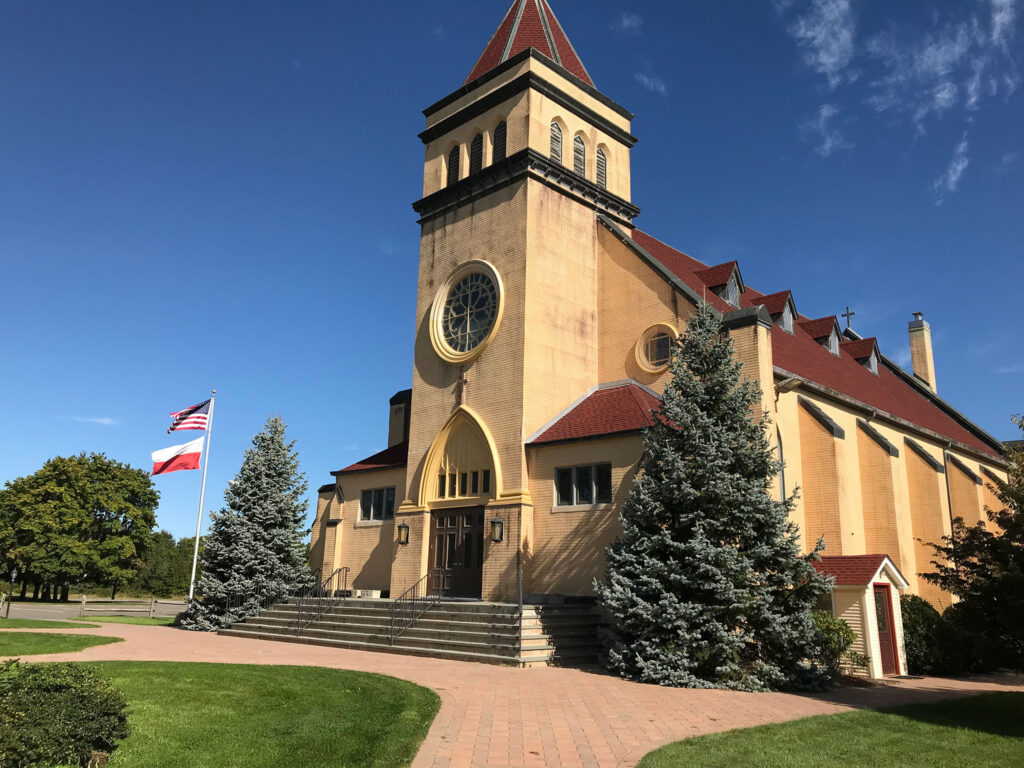
In Florida — in Pompano Beach, Jacksonville, around Orlando — a Polish “Boca Raton” is growing. The older generation is moving to retire under the palm trees, taking with them Polish traditions, senior clubs, and a longing for kielbasa, which can finally be bought in a Polish store on Federal Highway. And in Doylestown, Pennsylvania, stands American Czestochowa — the National Shrine of Our Lady of Czestochowa, run by the Pauline Fathers, the spiritual capital of Polish America on the East Coast. Thousands of people from all over the United States come for pilgrimages in August. The cemetery of Polish veterans on the hill is one of the most beautiful places Polish emigration has created anywhere in the world.
The older generation stays in these places — and grows old. Polish parishes, which were bursting at the seams thirty years ago, now have empty pews at morning mass. Polish Saturday schools are struggling for students. PSFCU is opening new branches in Illinois and Connecticut — officially as part of expansion, but it’s hard not to notice that there are fewer Polish-speaking customers in Greenpoint and Jackowo than before. This is not the end of Polish America — but it is a transformation that is changing its face faster than most of us are willing to admit.
Fear of Deportation
In 2026, one word dominates Polish-American Facebook groups: deportation. The tightening of immigration policy by the Trump administration has caused a wave of anxiety among Poles without regulated status — and according to publicly cited estimates by the Polish Ministry of Foreign Affairs from 2025, there could be up to thirty thousand of them — although higher numbers, rarely supported by equally clear sources, also appear in Polish-American discourse. These are people who came on tourist visas and stayed. Who work, pay taxes, have children born in America — but do not have a green card or the right to legal residency.
For them, every piece of news about an ICE raid, every post about an airport detention, every change in regulations is a reason for a sleepless night. Some seek immigration lawyers — Polish ones, because it’s easier to talk to them about their fears. Some are considering returning to Poland — after twenty, thirty years in America. With children who speak English better than Polish, and with a Social Security pension that can be transferred to a Polish bank.
Returns — A New Wave
Returning to Poland was a topic that sounded like a joke five years ago. “Go back? To what?” — Poles in America would ask, recalling the PRL era, the grayness of the nineties, and the ZUS bureaucracy. But Poland 2026 is not Poland 2000. Poland is now one of the largest economies in the European Union, with rising wages, modern infrastructure, and a quality of life that in many cities rivals that of Western Europe. For a retired Pole from America — with a Social Security pension in dollars and an apartment inherited from parents — life in Poland can be more comfortable than in New York, where rent is 3,000 dollars a month.
But returning is not a vacation. It’s bureaucracy, the tax system, health insurance, children who don’t understand Polish school, and a longing for the America they just left. Returning Poles form a new social category — people between two worlds, who are neither fully here nor there.
Polish Business Seeks America
At the same time — from the other side of the Atlantic — Polish companies are looking for a way into the American market. Manufacturers of cosmetics, organic food, furniture, software, computer games — Poland is exporting more and further. But entering the US market requires something that no tariff calculator provides: knowledge of the culture, language, law, and local realities. And here, Polonia could be an invaluable resource.
The Polish-American network in America — a lawyer who speaks Polish and knows New York state commercial law. A real estate agent who will find an office in Jersey City. An accountant who will handle federal and state taxes. Polish-American media that will reach 100,000 potential customers of Polish descent. This is a value that Polish companies are only just beginning to discover — and which Polish-American companies in the USA can offer as a service.
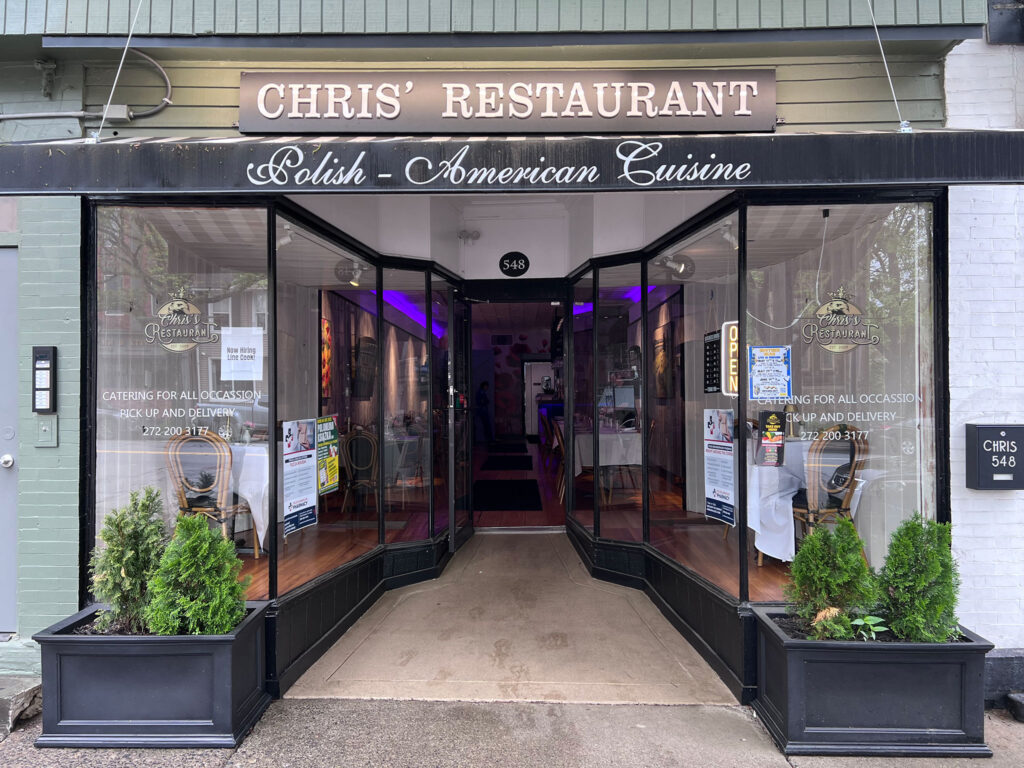
On PolishPages.com — a directory of Polish-American businesses in America — not only Poles in the USA are searching. Increasingly, Polish companies from Poland are searching, needing a local partner. The bridge between Poland and Polonia does not have to be one-way — it can work both ways.
The World Seen from a Polish-American Perspective
This week, Orbán lost the elections in Hungary. On the group “Poles in the States,” someone wrote: “Good, maybe they’ll finally unblock money for Ukraine.” Below, thirty comments — half for, half against, and one gentleman from New Jersey who posted a picture of his Easter sour rye soup and wrote “do I care?” Leo XIV flew to Africa and said he wasn’t afraid of Trump. In Greenpoint, over coffee after mass, an older gentleman shrugged: “Pope or no pope, gas is still four dollars.” Astronauts returned from the Moon. In a Polish Saturday school in Wallington, the teacher played a recording of the splashdown for the children. Nine-year-old Zosia said: “Why isn’t there anyone from Poland there?”
Good question, Zosia.
But in these big discussions about deportations, startups, and geopolitics, we lose what hurts most in Greenpoint — the silence. Polonia in 2026 is often older people who put all their health into cleaning offices in Manhattan and renovating homes on Long Island to educate their children. These children are now lawyers in Midtown or nurses in Connecticut. They speak with a strong American accent and come to Greenpoint once a year — for pierogi for the holidays, because “it’s so nice and ethnic.” Many of those considering returning to Poland are not really fleeing ICE. They are fleeing because in modern America, which they themselves helped build for their children, they have no one to talk to in their own language.
Over eight million people declare Polish descent in the American census — Polish-American organizations speak of nearly ten million. Regardless of the definition, it is a huge community. Some of them have never been to Poland. Some do not speak Polish. Some do not know that their grandmother was born in Stary Sącz. But when someone on the street says “kurwa” — they turn their head. Something remains in them. Maybe it’s little. Or maybe it’s enough.
Kamil Brzozowski, poland.us
Looking for a Polish lawyer, accountant, real estate agent in the USA? PolishPages.com — a directory of Polish-American businesses in America. Looking for a Polish business partner in the USA? Write to us: FusionDigitalGrowth.com.