An almost incomprehensible strategy of the German criminals
One of the elements of the terror used by the German occupier against the Polish population was the aforementioned pacification of smaller Polish towns, and especially villages. By pacification, we understand the armed suppression of a potential uprising of the population, but also, as the Germans applied it, using force to eliminate people who were not putting up the slightest resistance.
The specifics of German cruelty towards Poles
The manner in which the pacification of Polish villages was carried out was, as we know, a planned extermination activity on the part of the German occupier. It was most often aimed at an innocent and, at the same time, defenseless civilian population. During the September campaign, as we know from source accounts, German troops carried out the massacre-like liquidation of large population clusters. As we know, several thousand Poles were murdered at that time, and the Wehrmacht was responsible for these crimes. Later on, the SS, Gestapo, and Einsatzgruppen are widely blamed for the murder of Poles in such simply organized executions. However, Wehrmacht forces participated in these actions most frequently. In total, in September 1939 alone, over 400 Polish villages were burned down along with their populations. One of the most famous such pacification actions took place in Wawer, where the Germans shot over 100 residents in a single night.
Bestiality of the German occupier
Attacks on Polish villages were generally unjustified and never found any explanation. The extermination of Poles always took place in violation of previously established “war conventions,” including the Hague Convention. The reason for this type of action was the physical destruction and intimidation of the Polish population, not only those operating within the resistance movement. In the face of resistance from the civilian population, the Germans carried out extremely bloody attacks on such villages. That is where unarmed residents, including innocent women, children, and the elderly, most often gathered. Among the forms of pacification, one should mention, of course, mass shootings and arson. The latter fact consisted of gathering the packed population, for example, in barns, which were then set on fire. As the Nazis recounted in post-war trials, these situations allowed them to save ammunition.
This cannot be assessed well
It is difficult to estimate how many Polish villages fell victim to German pacifications. However, it should be emphasized that German terror against the inhabitants of Polish villages was widespread. In the Świętokrzyskie region, such pacifications were practically mass-scale. Most of them took place in the years 1940–42, most frequently during the summer harvest period.
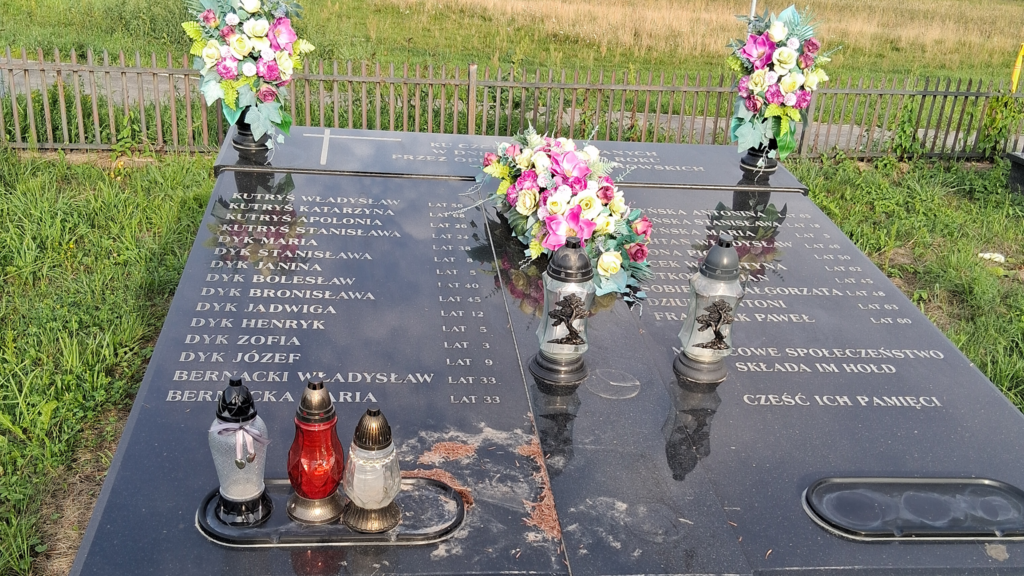
Just now, in the month of August, the editorial staff of “Dziennik Polonijny” went to the Świętokrzyskie region to lay a white-and-red bouquet of flowers on the graves of our compatriots. Honor to Their Memory.