
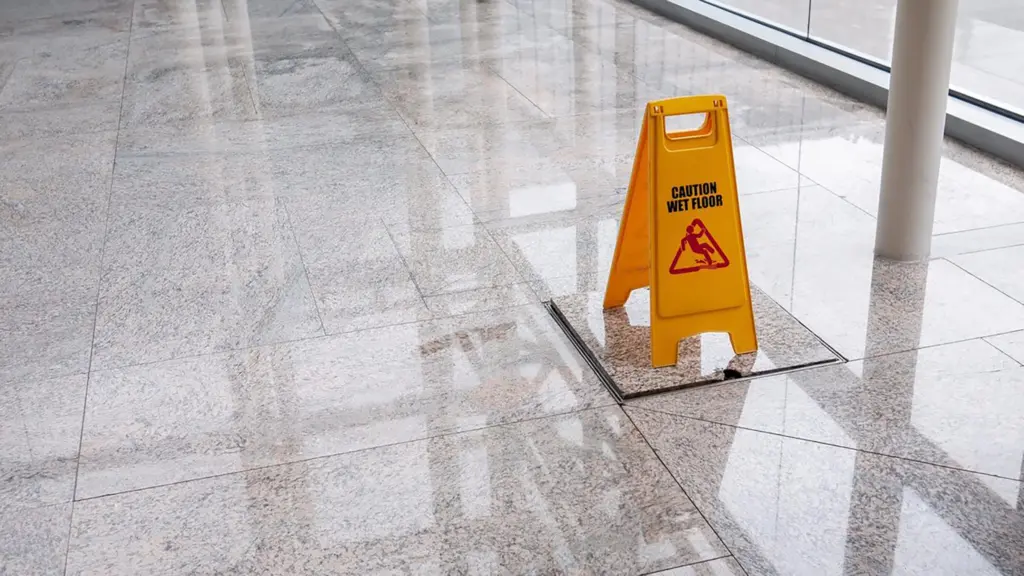
A fall on an icy or broken sidewalk is often treated as a minor stumble, but for an older person it can mean serious injury and months of rehabilitation. In New York, responsibility for a safe sidewalk usually lies not with the city but with the owner of the adjoining property — and evidence has to be secured right away.
Sidewalk cases are won by whoever has the evidence: photos of the defect, witness details, footage from a nearby camera — and surveillance recordings can vanish within days. Here is who actually bears the duty to maintain a sidewalk, what “constructive notice” means, and why the first days after a fall so often decide the case.
Who is liable for the sidewalk — premises liability in practice
The key provision is NYC Administrative Code §7-210. It clearly places the duty to keep the adjoining sidewalk in safe condition on the property owner — including clearing snow and ice and repairing uneven slabs and defects. This was a significant shift: before 2003 the city was generally responsible for sidewalks, and today the burden rests on private owners, which opened a path for injured pedestrians to bring civil claims against a party that actually carries insurance.
There is an important exception. For owner-occupied one- and two-family homes, liability may still fall to the city. That distinction often decides who the defendant is, which is why establishing a building’s status — a rental building or an owner-occupied home — is among the first steps in a case. In rental buildings, responsibility is often blurred between owner and managing agent, which in practice can mean no one clears it.
Older adults are especially exposed in this category of case. For a senior, a fall often means not just a fracture but the start of a more serious health spiral. Even so, many injured members of the Polonia never report a fall, assuming it was their own fault — when legal responsibility may lie with the property owner.
Constructive notice — the heart of the dispute
The mere presence of ice or a defect in the sidewalk is not enough to win a case. An injured person generally must show what is called constructive notice — that the dangerous condition existed long enough for a reasonable owner to notice and fix it. It is around this concept that many disputes with insurers turn. Details of the process and how to document a fall are set out in the PolishPages guide to premises liability.
In practice, this means that weather data, the time snowfall ended, and time-stamped photos matter enormously. Insurers also invoke the “storm in progress” rule — while a storm is underway, the duty to clear snow may be suspended until it ends. All of these elements have to be reconstructed later, and the more time passes, the harder it is to do so credibly.
Edward Sanocki, Esq., of Sanocki Newman & Turret notes that owners and their insurers often count on the passage of time and on an injured person’s lack of knowledge. “A fall on a sidewalk may seem minor, but for an older person it can be the beginning of the end,” says Sanocki. “The key to a case is fast documentation: photos of the sidewalk’s condition, witness details, and a medical report from the day of the fall. Building owners count on a victim not knowing their rights.”
Why evidence and surveillance footage must be secured immediately
The urgency comes from a simple fact: evidence disappears. Ice melts within hours, and a sidewalk defect is sometimes repaired before anyone photographs it. The most valuable — and most fleeting — evidence is surveillance footage from nearby shops, buildings, or parking lots. These systems usually overwrite their recordings automatically after a short time, so if no one asks for the footage to be preserved, it is lost for good.
That is why it is worth acting at once after a fall: take photos of the sidewalk and its surroundings, note the date and time, write down witness details, see a doctor as soon as possible (a medical report from the day of the fall carries weight), and contact an attorney. The sooner you act, the better the chance that surveillance footage is preserved before it is overwritten. More on the firm’s experience with premises-liability cases can be found on its PolishPages profile and client reviews.
The takeaway is practical: a sidewalk fall is not always plain bad luck for which the injured person is to blame. Legal responsibility often lies with the property owner — but proving it depends on evidence that has to be secured before it disappears.
The full Sanocki Newman & Turret listing and services: view the complete SNT profile and services on PolishPages
This article is informational. Prior results do not guarantee a similar outcome. This is attorney advertising.