Vatican News / Benedetta Capelli – Vatican City
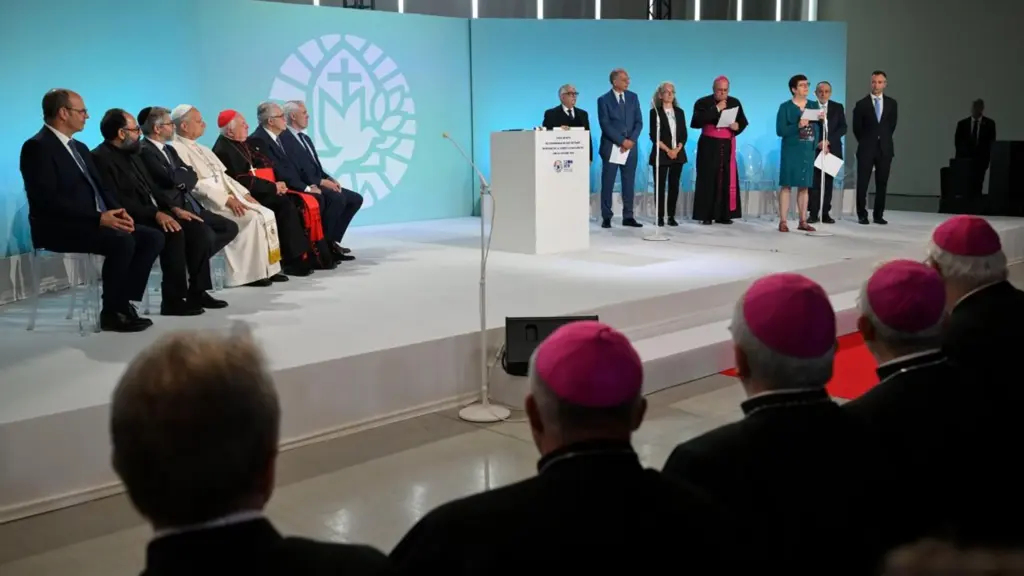
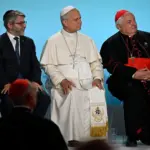
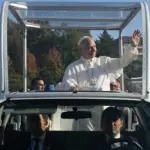
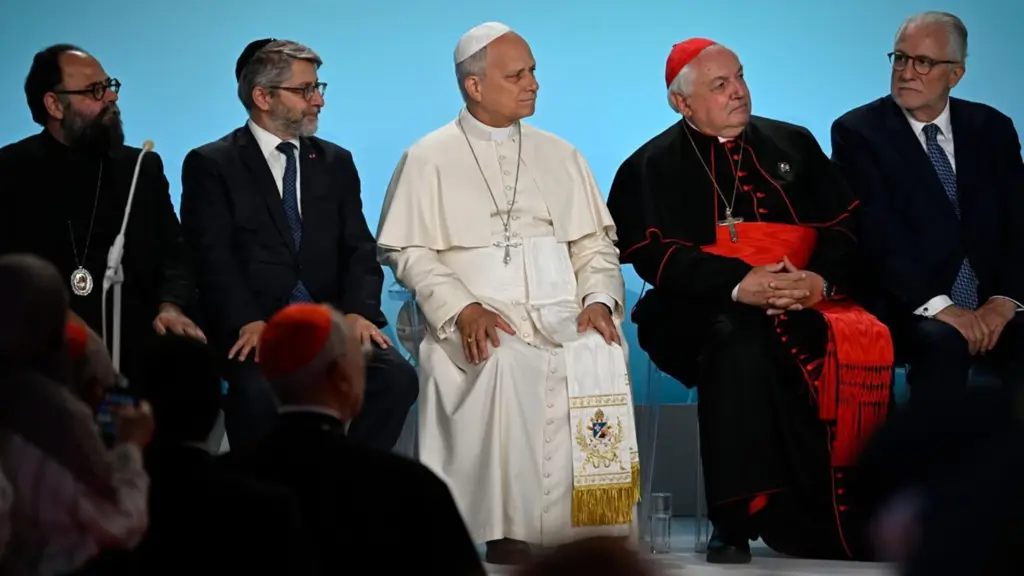
Three concrete commitments to be undertaken together, despite differences in religious beliefs, but in the shared service of world peace and with respect for the dignity of every person — such was the appeal issued by the leaders of religious communities in France. It was read on Monday, September 28, during an interreligious meeting, which was the first item on the Pope’s visit program to Metz, where he arrived this morning at around 9:00 AM.
Continuing dialogue; educating younger generations through mutual knowledge of each other’s traditions; unity, even in the face of adversity, for the sake of justice and peace — these are the three directions indicated by the organization uniting representatives of Buddhist communities, Christian Churches (Catholic, Orthodox, and Protestant), Islam, and Judaism.
Humanity at a Crossroads
“Sentinels, watchful of the dignity of every human person and caring for the other,” “artisans of reconciliation,” “bastions protecting humanity from oppressive or corrupted power” — these are some of the descriptions highlighting the mission of religion that appear in the text presented to the Pope.
This text stems from deep concern regarding the changes taking place in the contemporary world. It was created on the 40th anniversary of the Assisi peace appeal.
“Humanity today is facing another turning point. The growing number of conflicts threatens international law, and in particular international humanitarian law. Wars and violence — the text reads — are multiplying, inequalities are deepening, the balances of our planet, especially ecological ones, are weakening, and technological transformations are shaking our societies, turning our universal and fundamental values and our ways of life upside down.”
Hence the responsibility of the various religious traditions to “act together in the service of peace, fraternity, and reconciliation.”
The Responsibility of Religion
From the soil of Lorraine, “scarred by so many wars,” the commitment of religions to build and sustain peace in the world, and especially in Europe, resounds once again.
“We solemnly appeal for dialogue and fraternity, for reconciliation and peace. We are convinced that in each of our communities, as well as across divides — in our cities — today more than ever, it is essential to educate for dialogue in order to build peace.”
This task is put to a severe test by the “new outbreaks of violence and wars” emerging across the world.
The appeal recalls that peace is not merely the absence of conflict. It is born of justice, respect for human dignity, solidarity between nations and generations, and a shared concern to protect our common home.
The Poison of Totalitarianism
Aware of divisions, discrimination, and mechanisms of rejection that undermine the cohesion of societies, the authors of the appeal express their outrage at acts of violence “directed against individuals or places of worship because of their origin or professed faith.”
Hence also the condemnation of discrimination and hate speech. “In particular, we oppose the poison of totalitarianism, which this land of Lorraine has experienced so deeply.”
The name of God cannot be invoked to justify violence. Instead, the path to peace is opened by dialogue, prayer, meditation, and various forms of spiritual practice.
“Because peace is also built within each person: in our ability to recognize and disarm within ourselves what fuels the rejection of the other, fear, and hatred.”
Paths of Reconciliation
Leaders of various religious traditions call for a culture of hospitality and fraternity — a culture that draws strength from mutual listening, service to the common good, persevering dialogue, and spiritual practices.
“We want to act concretely in the service of justice and peace.”
Despite being aware of the wounds inflicted by history, we are called to “open paths of reconciliation, rejecting the logic of revenge, rejection, and humiliation.”
For religions are a “privileged path” toward a “disarmed and disarming peace” — a peace appealed for by Pope Leo.
Building a culture of peace requires the contribution of families, schools, recreational and sports institutions, as well as every community.
“This action is fully in line with constitutional principles that guarantee freedom of conscience and the free practice of religious worship.”
Awakening of Consciences
“Peace — the appeal states — is not an unrealistic dream: it is built every day, through respect for the other person, their culture, and their religion, through the building of friendly relationships in which everyone can be recognized in their identity.”
It was expressed hope that the meeting in Metz would contribute to the awakening of consciences and bear lasting fruit.