The first weeks of hormone replacement therapy (HRT) can make you feel worse, not better — tender breasts, mood swings, spotting. Many Polish women then give up treatment, thinking they “don’t tolerate hormones.” This is usually not true. We show you how to interpret your body’s signals and where to find Polish-speaking care in the USA.
A Polish Woman in a Gynecologist’s Office in the USA — A Typical Scenario
You are 47, 52, maybe 58 years old. Your periods are becoming irregular or have already stopped. You wake up at night drenched in sweat. During the day, you experience “hot flashes,” brain fog, irritability, insomnia, vaginal dryness, decreased libido, and weight gain without changes in diet.
You go to the doctor. The visit lasts 10 minutes. You get a prescription. You hear: “Low dose, see you in 3 months”. You return home with a box of hormones and a question about what is supposed to happen now.
After two weeks, you feel worse than before starting therapy. Your breasts are painful, sleep is shallower, and your mood is even more volatile. Spotting again. You go to Polish Facebook groups — hundreds of women describe similar symptoms there. Some write: “I stopped it, I couldn’t handle it.”
And here the problem begins.
Why feeling worse at the start is not a reason to stop
HRT is not a supplement from the pharmacy. It’s the restoration of a biochemical signal your body hasn’t heard clearly in years. When estrogen and progesterone receptors “turn on” again, the body reacts — sometimes loudly.
Breast tenderness, water retention, mood swings, vivid dreams, spotting — these are most often signals of adaptation, not therapy failure. The problem is that in the American system, no one usually explains this to you. And without an explanation, it’s easy to conclude that “hormones aren’t for me” and discontinue therapy.
When a “low dose” turns out to be too high (and what it says about your body)
What is listed in the formulary as a “low dose” can, in practice, be a stimulating dose for you. Especially when:
- Your liver metabolizes hormones more slowly
- You have intestinal problems (IBS, bloating, food intolerances)
- You live under chronic stress (work, children, caring for elderly parents — a classic “sandwich generation” situation)
- You drink coffee or alcohol daily
- You take other medications (antidepressants, thyroid medication, SSRIs)
- You are prone to allergies and histamine reactions
In such a situation, even a small dose of estrogen can cause pressure in the head, anxiety, itchy skin, or breast heaviness. This is not a verdict — it’s a signal that you need to change the form of administration (patch instead of pill, cream instead of gel), the dose, or the timing of intake.
Progesterone — the most commonly misadjusted hormone
The standard recommendation “take before bed” works for some women. For others, it causes morning grogginess (like a hangover), worsening mood, or irregular bleeding. Why? Because not only the dose matters, but also the rhythm: continuous or cyclical, at what time, and in what dosing schedule.
Two women with the same prescription can react completely differently. A good specialist will not set your progesterone “automatically” — they will ask about your sleep, bleeding history, presence of a uterus, previous pregnancies, and past reactions to hormones.
What should signal “see a doctor immediately”
Distinguishing between a typical adaptation period and a real danger is one of the most important things you should know when starting HRT.
Normal (to monitor, but no panic): breast tenderness, spotting in the first 6 months, mild sleep disturbances, mood swings.
Immediate contact with a doctor: heavy, persistent bleeding; sudden deep depression or suicidal thoughts; new chest pain, shortness of breath, severe headache with visual disturbances; rapidly developing swelling or allergic reaction.
You don’t “wait these out.” These require a visit the same day.
Why Polish-speaking care matters
Menopause is a topic where cultural and linguistic nuances make a real difference. When you describe symptoms in a second language, it’s easy to oversimplify or omit something. When a doctor explains the mechanism of hormones to you, you need to understand every word — not every other word.
Polish patients often say the same thing: “Only with a Polish doctor did I tell everything. In an American office, I didn’t even know how to name some of the symptoms.”
This is not a matter of knowing English. It’s a matter of trust and precision.
Where to find a Polish-speaking hormone specialist (NY/NJ)
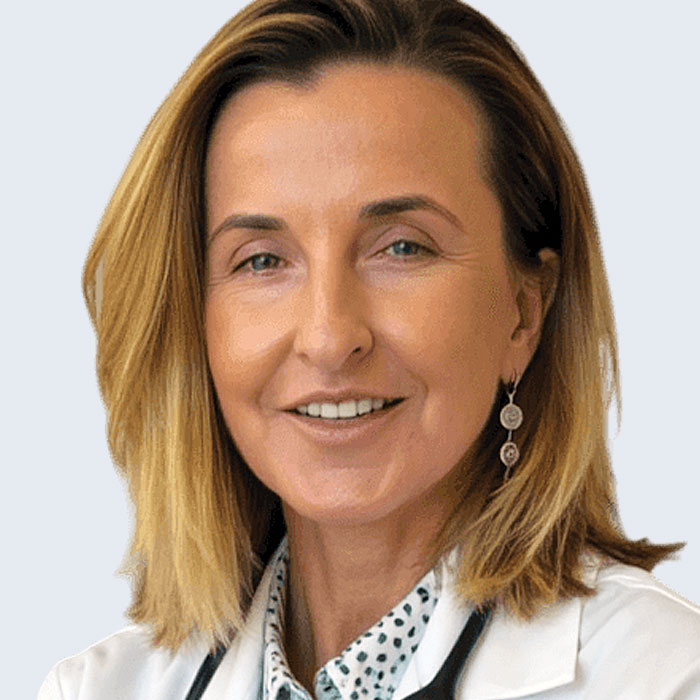
In the New York and New Jersey area, more and more Polish clinicians specialize in functional medicine, bioidentical hormone replacement therapy (BHRT), and women’s health during menopause. One of the practices conducted in Polish is Downstate Adult Health NP — a clinic founded by Magdalena Szczepańska, MSN, APRN, ANP-C, certified in functional medicine and BHRT, with over 25 years of experience in adult care.
The functional approach differs from the standard one in that it seeks the cause of symptoms — not just suppressing them. Hormones are matched to your biochemistry (liver, intestines, stress, thyroid), not to a textbook chart.
Wondering if HRT is for you — or if it’s worth trying again?
If you stopped hormone therapy because you “couldn’t handle it,” perhaps the problem wasn’t the hormones — but the way they were chosen. Schedule a consultation in Polish at Downstate Adult Health NP and discuss your situation with someone who treats menopause as a full medical issue, not just “a stage to be endured.”
In-person and telemedicine consultations. We serve patients from NY and NJ.