Wojciech Rogacin – Vatican News
In the face of new wars and conflicts around the world, and still inflamed situations in many countries after recent conflicts – including in the Middle East, Ukraine, Africa, and Haiti – Leo XIV decided that his first Holy Week and Easter as pope would be a strong appeal for peace.
God will not listen to your prayers, your hands are full of blood
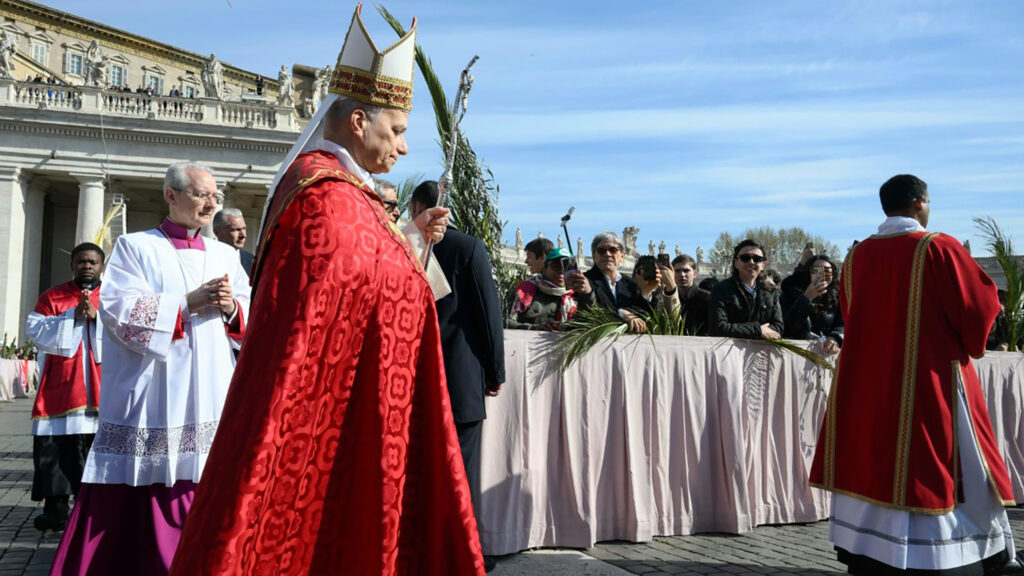
“Have mercy! Lay down your arms, remember that you are brothers!” – this poignant cry of Leo XIV resounded in St. Peter’s Square on Palm Sunday, just after the reading of the Passion of Christ, before tens of thousands gathered and millions watching on television.
A moment later, the Pope reminded the leaders waging and starting new wars that Jesus did not take up arms, always rejecting violence. – It is God who rejects war, whom no one can use to justify war, who does not listen to the prayers of those who wage war, and rejects it, saying: “Even though you multiply your prayers, I will not listen. Your hands are full of blood” – Leo XIV firmly reminded them.
Disturbing news from Jerusalem
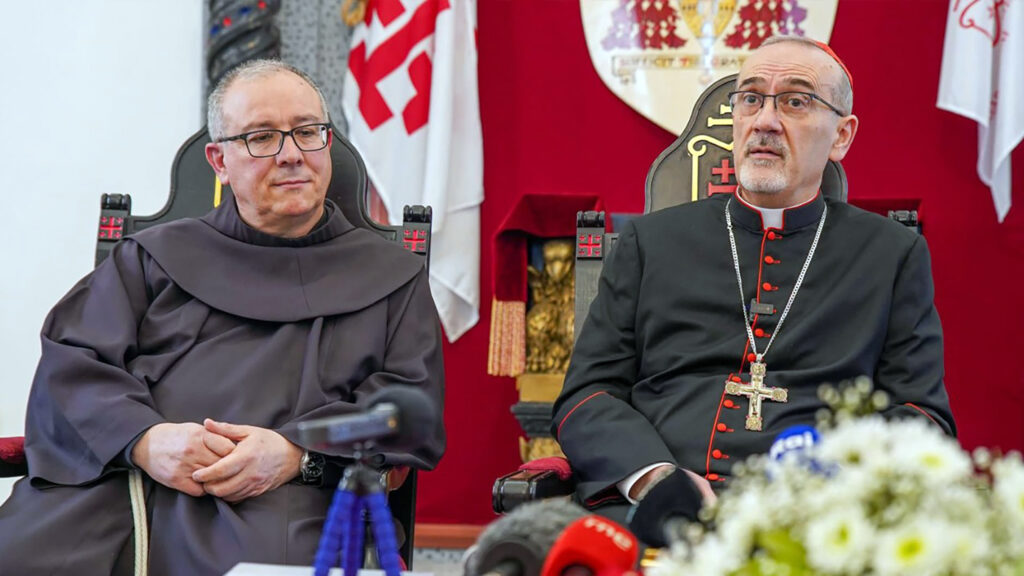
It was not an easy Sunday. News arrived in the morning – certainly painful and difficult for the Pope – about the Latin Patriarch of Jerusalem, Cardinal Pierbattista Pizzaballa, being denied entry to the Basilica of the Holy Sepulchre in Jerusalem. For the first time in several centuries, the patriarch could not enter to celebrate Palm Sunday Mass. In this situation, the question arose about the celebrations of the Paschal Triduum and Easter itself in the place that is the very heart of these Feasts – where Christ was killed, buried, and rose on the third day.
Despite an initial wave of global outrage, the matter was resolved diplomatically. On Good Friday, the Pope spoke with Israeli President Isaac Herzog, whom he had received several months earlier in the Vatican, and who now played an important role in resolving the issue.
In the Colosseum, following the example of John Paul II
Two days later, on Holy Tuesday, he told journalists that he was praying for a ceasefire for Easter. However, he was aware that “unfortunately, many people want to spread hatred, violence, and war.”
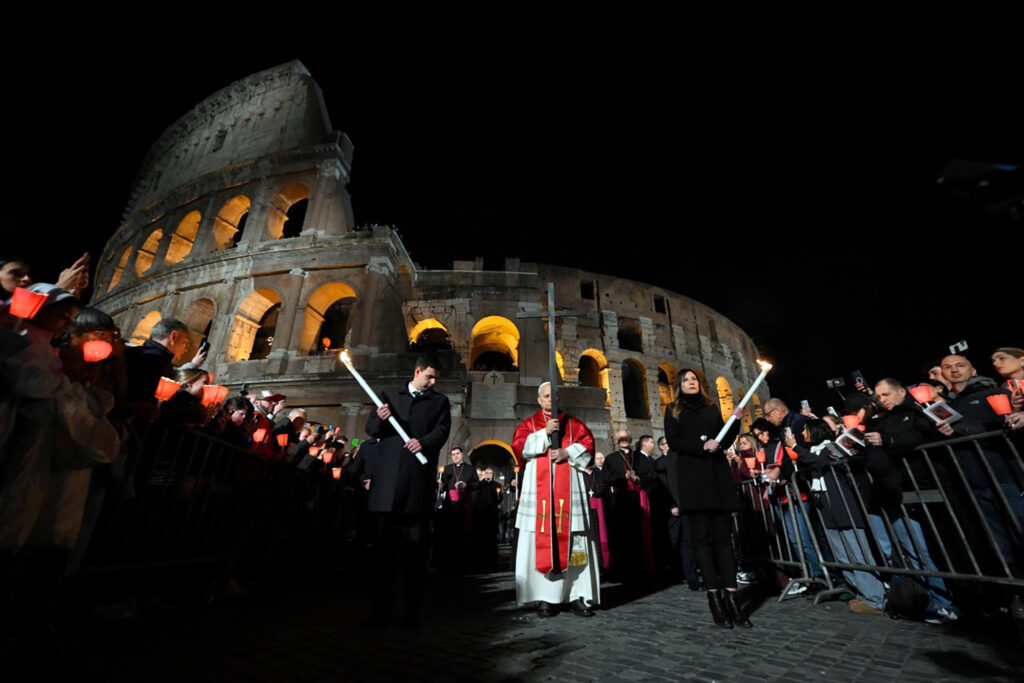
Therefore, he decided to personally carry the cross during the Good Friday Way of the Cross in the Colosseum. This custom was initiated by John Paul II, although the Way of the Cross devotion in the Colosseum had been celebrated since the late 18th century, when Pope Benedict XIV introduced it. John Paul II was the first pope in history to personally carry the cross through all 14 stations of the Way of the Cross every year from 1980 to 1994 – as long as his strength allowed. Benedict XVI and Francis did not carry the cross through all stations, and only Leo XIV is the second after the Polish Pope to carry the cross through all 14 stations.
“I believe this will be a sign, because of what the Pope represents as a spiritual leader in the modern world – he is a voice reminding us that Christ continues to suffer. And I also carry all these sufferings in my prayer,” Leo XIV explained on Tuesday.
Message to leaders, including Trump
Asked about his message to US leaders, the American Pope replied: “I was told that President Trump recently stated he would like to end the war. Let us hope he is looking for a ‘way out of the situation.’ Let us hope he is seeking a way to reduce violence and bombings, which would be a significant contribution to removing the hatred that is arising and constantly growing in the Middle East and elsewhere.”
He added that this is why he continues to appeal to all world leaders to return to the negotiating table, to dialogue. “Let us seek solutions to problems, let us seek ways to reduce the violence we are fueling, so that peace – especially at Easter – may reign in our hearts,” the Pope added.
Way of the Cross with the Middle East in mind
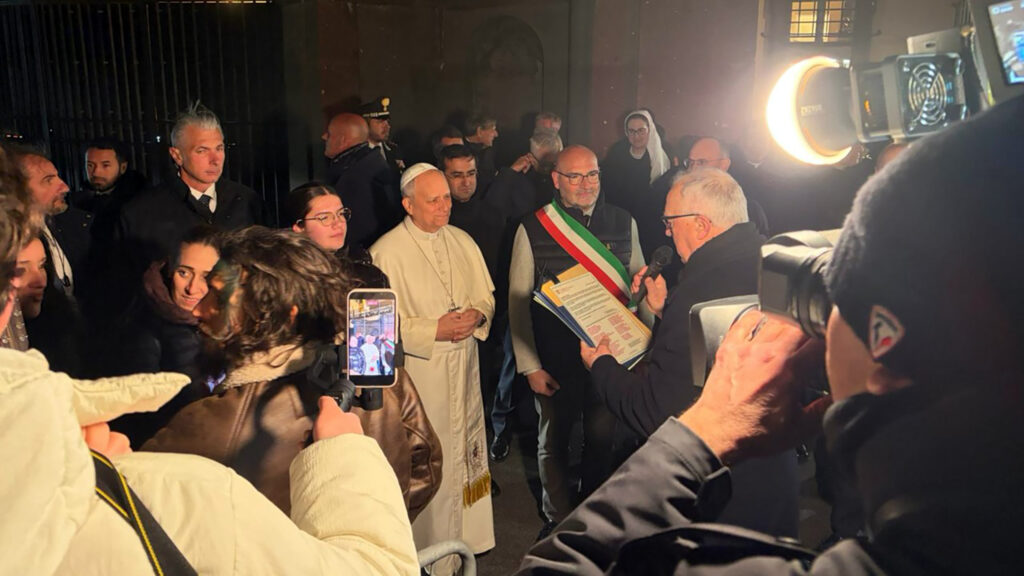
An important message of the Way of the Cross in the Colosseum was the Pope’s request to Fr. Francesco Patton, former Custos of the Holy Land, to compose the meditations for the 14 stations. This was to emphasize the Pope’s particular concern for the people living in the Holy Land and throughout the Middle East, who in recent years, and now anew, are particularly experiencing violence and wars.
And Fr. Patton referred to contemporary mothers mourning their children, to the Simons of Cyrene who selflessly help others, sometimes without even realizing its significance, to the Veronicas wiping defiled faces, to women and the weak, exploited by the powerful of this world.
Holy Thursday – return to tradition
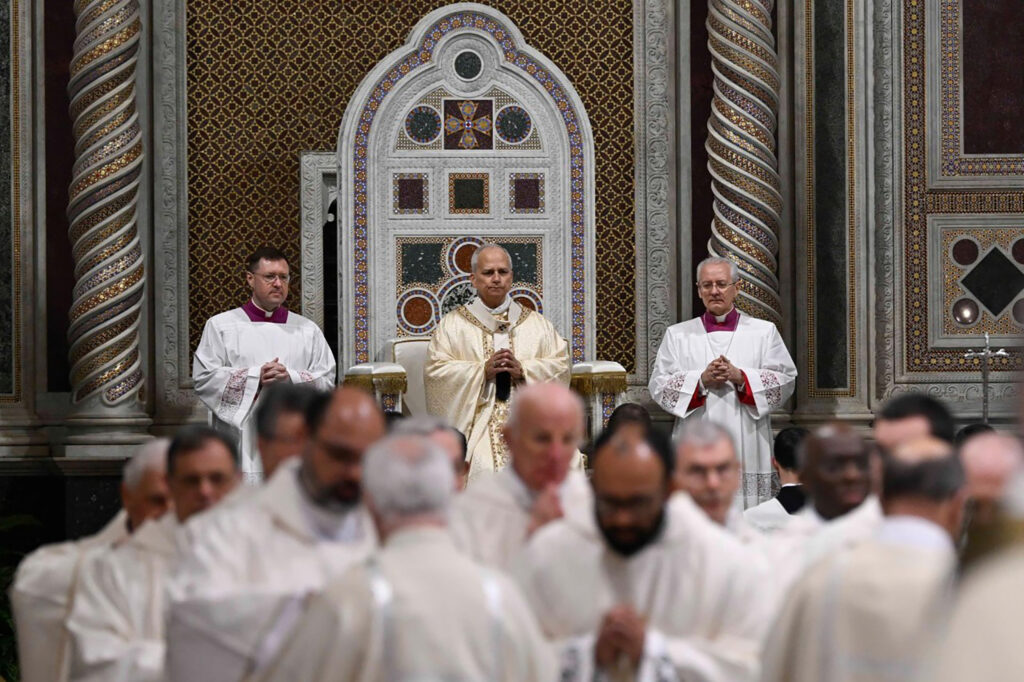
Even before the Way of the Cross on Good Friday, the Pope returned to another – centuries-old – tradition of washing the feet of priests on Holy Thursday in the Basilica of St. John Lateran – the seat of the Bishop of Rome, the first Roman temple, built by Constantine the Great, where Christians in this city could freely pray.
Pope Francis, in a gesture of humility and reaching out to the peripheries, washed the feet of prisoners, migrants, and excluded persons on Holy Thursday – often in Rebibbia prison or other places. Leo XIV washed the feet of 11 priests ordained by him last year and Fr. Renzo Chiesa, the spiritual director of the Pontifical Roman Seminary.
The Pope indicated that in this gesture, man should rediscover the greatness of God, which differs from what he imagines. It is not – as Benedict XVI emphasized – the God of success, but the God of the Passion. Not a God who serves us because he gives us victory, useful like money and power. The Lord kneels to wash man – out of love for him. And God’s gift transforms us.
Earlier, during Thursday’s Chrism Mass, the Holy Father called on priests to renew their mission, carried out without abusing power.
In this dark hour of history, God has seen fit to send us to spread the fragrance of Christ where the stench of death prevails. Let us renew our “yes” to this mission – Leo XIV said to the priests on Holy Thursday morning in St. Peter’s Basilica. He indicated that, like Jesus, one must leave everything familiar and safe and “empty oneself” to fulfill the mission in freedom.
In humility before the cross
Also on Good Friday, during the adoration of the cross, Leo XIV returned to another tradition – the Holy Father approached the cross barefoot.
According to tradition, the homily during the Liturgy of the Passion of the Lord was delivered by the Preacher of the Papal Household – Fr. Roberto Pasolini. He indicated that Jesus, through his obedience to the Father, broke the logic of evil, and following his example, we too can stop the cycle of evil if we do not point a finger at the enemy, nor return the harm suffered, but accept the “score of the cross.”
Also during the 3-hour liturgy of the Easter Vigil on Holy Saturday, the Holy Father called for actions for reconciliation and peace. “Sisters, brothers, also in our times there is no shortage of tombs that need to be opened, and often the stones that close them are so heavy and so diligently guarded that they seem immovable. Some of them overwhelm man in the heart, like distrust, fear, selfishness, resentments; others, being a consequence of these internal ones, break the bonds between us, like war, injustice, isolation between nations and states. Let us not allow them to paralyze us!” the Pope said.
Great Vigil for Peace on April 11
Leo XIV, who began his pontificate by quoting Christ’s words to his disciples in the Upper Room after the resurrection – “Peace be with you” – also made every effort on his first Easter as pope to ensure that the message of peace resonated as strongly as possible. In his Easter Sunday homily, he spoke of hope. “Today we need this song of hope. And it is we, risen with Christ, who must carry it along the paths of the world. Let us run then like Mary Magdalene, let us proclaim it to all, let us carry the joy of the resurrection with our lives, so that wherever the specter of death still hovers, the light of life may shine forth,” he urged.
In his first Easter Urbi et Orbi message, he urged: “Let those who wield weapons lay them down! Let those who have the power to unleash wars choose peace! Not peace imposed by force, but built through dialogue! Not built on the will to dominate another, but on the desire to meet them!”
He reminded that the peace Jesus gives us is not the peace that merely silences weapons, but the peace that touches and transforms the heart of every person. “Let us convert by embracing the peace of Christ! Let the cry for peace that comes from the heart resound! Therefore, I invite everyone to unite with me during the prayer vigil for peace, which we will experience here, in St. Peter’s Basilica, next Saturday, April 11,” the Holy Father appealed.
To Poles in Polish
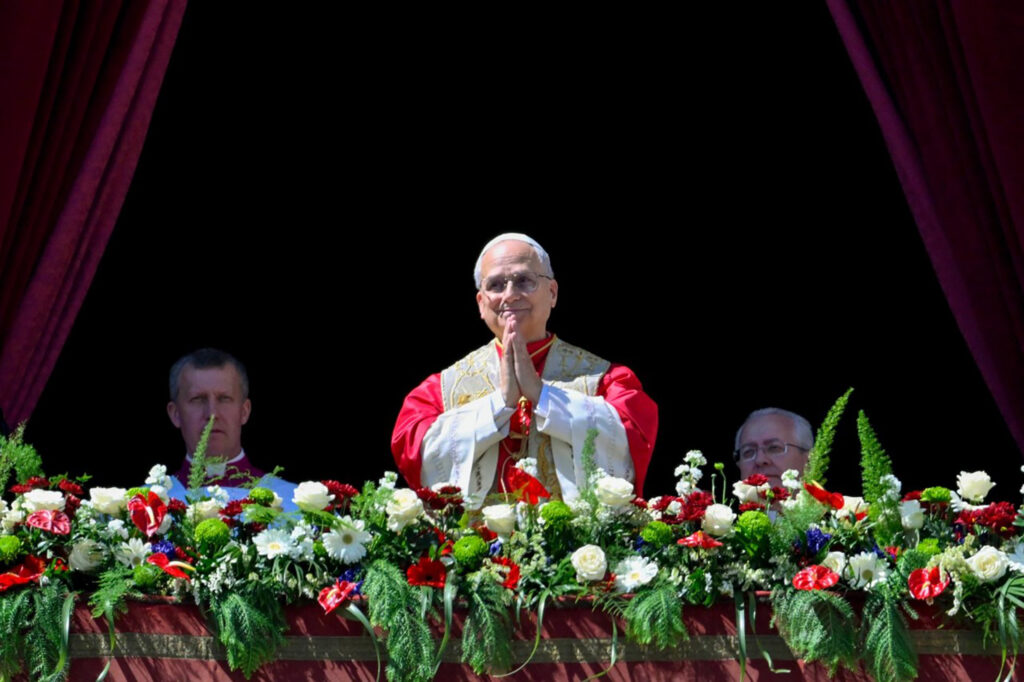
On this day, the Pope also for the first time extended wishes to Poles in their own language. “Happy Easter!” Leo XIV said from the loggia of blessings of St. Peter’s Basilica to 50,000 gathered in the square before the basilica and millions watching on receivers. Polish was one of only a few languages in which the Pope greeted the faithful – alongside Italian, French, German, Spanish, Portuguese, Arabic, Chinese, and Latin.
Even earlier, on Holy Wednesday, during the general audience, speaking to Poles in Italian, Leo XIV encouraged them to adore the Blessed Sacrament at the Holy Sepulchres and to participate in the Resurrection procession as a profession of faith.
Against fake news
Finally, on Easter Monday, in his reflection before the Regina Coeli prayer, Leo XIV pointed to two narratives flowing from the empty tomb – the true one, about the resurrection – and the false one, spread by bribed soldiers. “One is the source of new and eternal life, the other of certain and definitive death. This contrast prompts us to reflect on the value of Christian witness and the honesty of human communication. For often the telling of truth is obscured by fake news – as it is called today – that is, by lies, allusions, and baseless accusations,” the Pope said.
“In the face of these obstacles, however, the truth does not remain hidden; on the contrary, it comes to meet us, alive and full of splendor, illuminating the densest darkness,” he added.
Remembering Francis: the power of resurrection
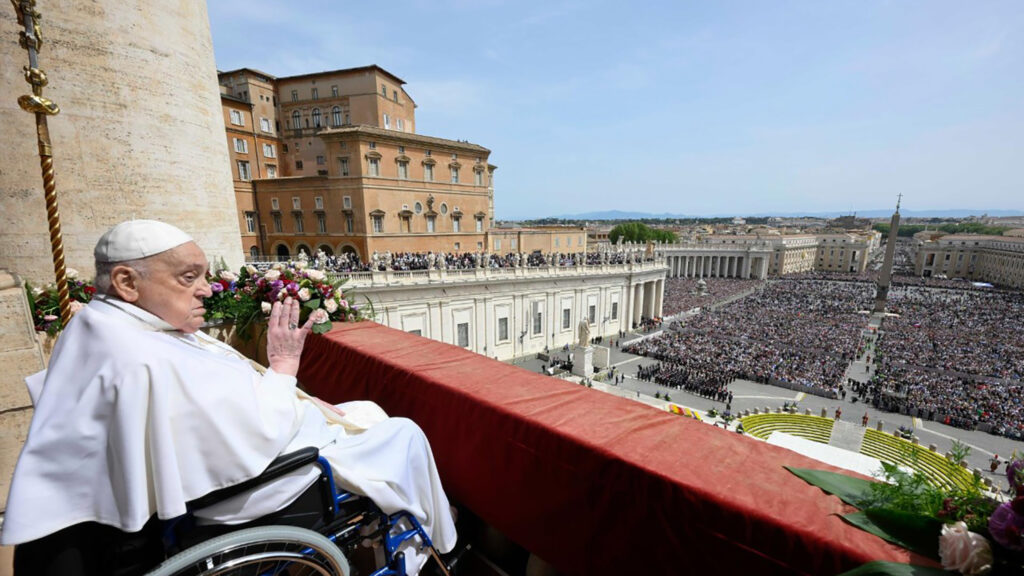
On Easter Monday, a special reference could not be missed. “With particular affection – in the light of the Risen One – today we remember Pope Francis, who precisely on Monday in the Octave of Easter last year gave his life to the Lord. Remembering his great testimony of faith and love, let us together ask the Virgin Mary, Seat of Wisdom, that we may become ever more light-filled proclaimers of the truth,” the Holy Father said.
Leo XIV repeatedly referred in his homilies and messages to the teaching of Pope Francis. This was also the case during Sunday’s homily, when he quoted Francis’s exhortation Evangelii gaudium, saying that Christ’s resurrection “does not belong to the past; it contains a vital force that has permeated the world. Where everything seems dead, sprouts of resurrection reappear from all sides. It is a force unmatched. It is true that many times it seems that God does not exist: we see injustice, evil, indifference, and cruelty that do not cease. However, it is equally certain that amidst the darkness, something new always begins to grow, which sooner or later bears fruit.”