
With the support of local governments
In the 13th century, with the support of the city’s local governments, the so-called “parish schools” developed. The education there was at a very poor level, focusing more on teaching children prayers and lessons from the Catholic catechism. Most often, such parish schools had a so-called “four-department” level of education, which today translates to these schools having only four grades.
During the Partitions
In the 19th century, when the partitions took place in Polish lands, Polish children could attend the existing schools, but this education lacked subjects such as their native Polish language and national history.
Krzemieniec Lyceum
At the turn of the 18th and 19th centuries, a key educational center for secondary education in Poland was, for example, the Krzemieniec Lyceum, where Polish language was taught to a very limited extent. Mathematics and natural sciences took precedence there.
Educational Chamber
Educational matters in the Duchy of Warsaw were managed by the so-called Educational Chamber. Stanisław Kostka Potocki and Stanisław Staszic were educational activists on its behalf. Among its leading achievements was the adoption of a law on the special organization of urban schools and the establishment of rural elementary schools.
After 1815 in Poland
After the Congress of Vienna in 1815, the central body of educational administration established was the Government Commission for Religious Denominations and Public Education. But, as we know, this was still a period of partitions, so basic education generally declined.
Despite everything, higher education institutions were established in our country
But as we know, great Polish patriots, such as Stanisław Staszic, for example, founded higher education institutions in Poland, of course, subordinate to the partitioning governments. In 1816, the Academy of Mining and Metallurgy in Kielce was established, and a year later, the School of Forestry and the School of Civil Architecture were founded in Warsaw. The partitioning authorities allowed the establishment of these schools because over half of the students were Russian youth.
After the fall of the November Uprising
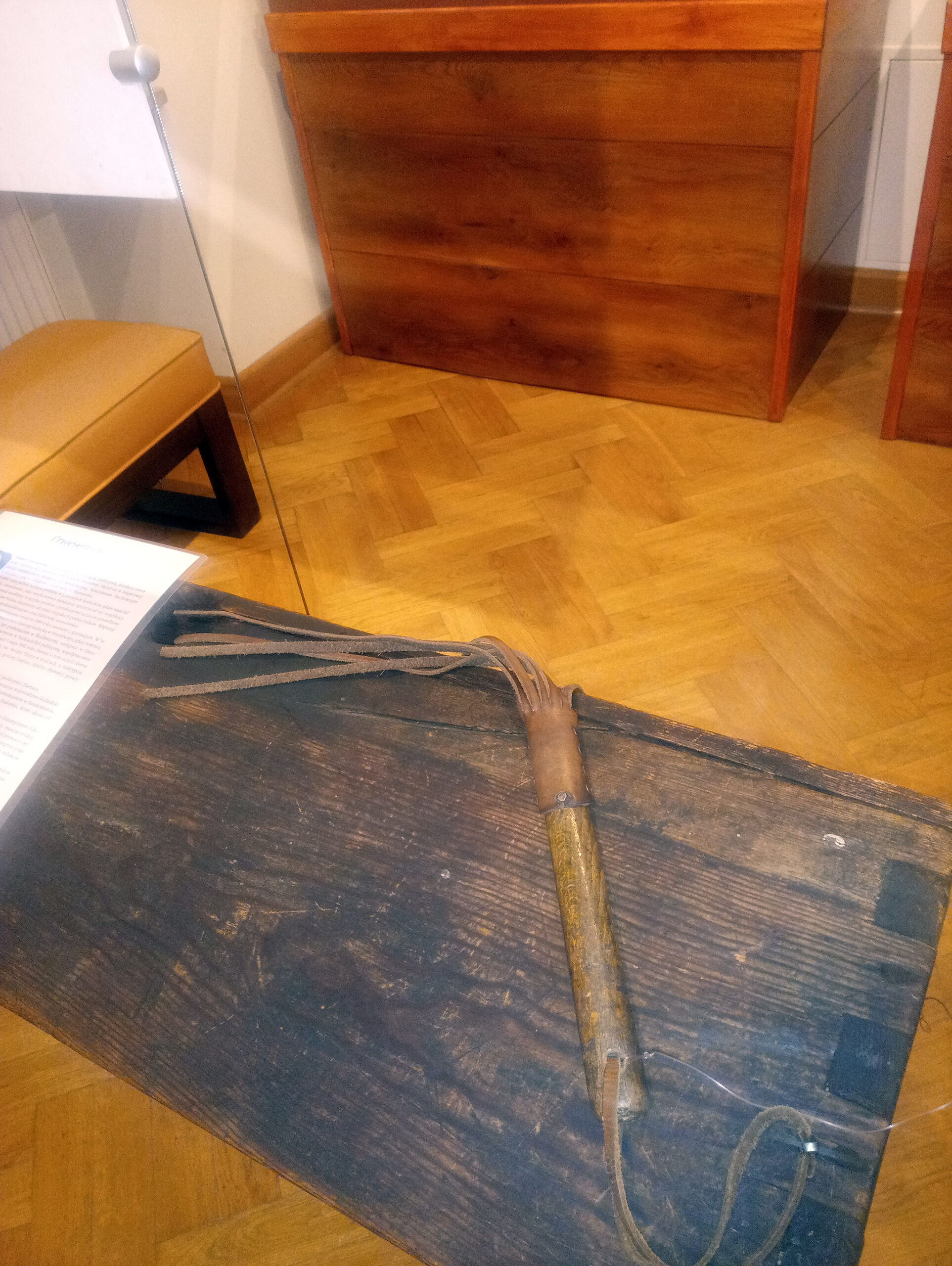
Following the November Uprising, the partitioning authorities closed, for example, the University of Warsaw and Vilnius University in 1831, and introduced compulsory Russian language in elementary and secondary schools, in which, for example, religion was also taught. Radical Russification measures were also implemented, and when children were disobedient, they were beaten with whips or leather straps at the beginning and end of each lesson. Many elementary schools were simply liquidated, and even prayer meetings were banned, as the tsarist authorities believed that any education could be smuggled in there.
After the January Uprising
The January Uprising also led to the liquidation of many schools educating youth at the secondary level. And in the elementary schools preserved in larger cities, even mathematics and geography were taught in Russian. The Russification of education, of course, led to clandestine educational activities. Secret educational classes were held at that time, where Polish children were taught their native language and national literature along with history. The Flying University was also established then, and incidentally, the development of journalism occurred. In 1807, a Guide for Self-Taught Individuals was even published, which older youth used, eagerly passing on knowledge to younger children.