Before willow was used
Currently, willow, known to everyone, is the most commonly used material for weaving, for example, pot decorations and baskets. In the past, juniper roots, cattail, and even, though rarely, reeds were often used instead. In ancient times, so-called “łub” (splintered wooden strips) were also used. These strips were most often made from ash, aspen, acacia, and compacted straw.
Selection of raw material
The appropriate selection of raw material and weave allowed for the creation of virtually any item needed on the farm. The most commonly used willow items in old farms were made using the so-called wavy weaving technique, which was used to make the baskets known to all. In the past, so-called “niziaki” were also woven, which were low baskets needed for fishing or storing fish. “Niziaki” also served as traps, weirs, or “fishing traps,” and “barrels” for dry goods, such as grain. Fences were also made from willow. Food products, such as smoked meats and bread, were stored and transported in willow baskets.
There were various human needs
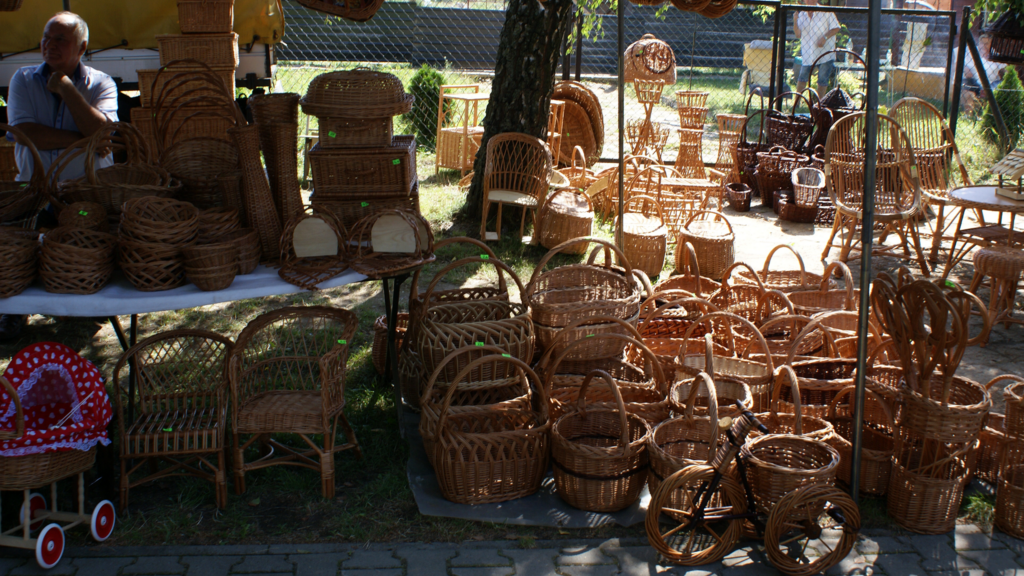
Depending on human needs, willow baskets of various sizes were made. In rural households, many baskets of different sizes were used. They were used for gathering potatoes, for making, for example, nests for poultry, while oval baskets commonly called “opałki” or “łozy” were used for carrying hay, firewood, or for storing chaff. Wagons with so-called “półkoszki” (half-baskets), which were of course made of willow, were also often used.
Various shapes
Just as in ancient times, we can still find various forms and shapes of willow baskets today. Large ones are mostly used for daily farm work. Small, and above all light, ones are used, for example, when picking mushrooms or shopping. Willow furniture takes on more fanciful shapes. Baskets are woven using various techniques, which depend on the region of their weaving. The type of weave and the color of the willow, as one might easily guess, serve as an additional decoration.