
Unusual Tax
This extremely bizarre tax was introduced in the Roman Empire by a special decree of Emperor Vespasian, which took place in 70 AD. This tax was also in force during the reign of Emperor Nero. In ancient times, urine had a very wide range of applications. Its most known use was for washing stab wounds sustained in wars, and urine was also used for laundry. The Roman fullers of that time, commonly called “fullo”, had to perform their duties precisely with the use of urine. This urine was delivered to them in specially designated tubs, simply called “fullki” or “fulli”.
Urine not only from animals
Urine for washing, both human and animal, contains urea, which is converted into ammonia after 24 hours. As one can easily guess, this is a suitable substitute for expensive laundry detergent. This ammonia can perfectly remove dirt, including grease. The components of urine, as we can see, can excellently whiten washed fabrics, but they also effectively removed animal hair from the fibers.
Urine and its properties
The inhabitants of Rome noticed that urine had whitening properties. It was believed that if it whitened fabrics, it was worth using it for whitening in a broader sense. Only no one would have suspected then that the Romans would want to use it for whitening teeth. During the Roman Empire, rinsing the mouth with a suitable mixture made of sheep’s urine and a small amount of sand became popular. Urine was also collected from individual toilets, and then it was stored for a day in special vats for this procedure. When these vats were full, the “fullo” would take them away. It is actually difficult to determine whether the tax on urine trade was paid by fullers and tanners, or only by those trading it. When the Roman Empire fell, some joked that it had gone down with the urine.
Son of Emperor Vespasian
Emperor Vespasian was most criticized by his son, named Titus. He accused his father of not dealing with serious matters of the empire. It was then that the emperor threw a handful of money at his son and asked what they smelled like. Titus replied after a moment that they smelled normal, just like money. Vespasian then smiled and commented… “But they come from the urine trade!”… So you see, Titus, money never stinks, and it gives our nation appropriate wealth. According to ancient scholars such as Suetonius and Dio, Vespasian’s famous words “Pecunia non olet”, meaning “money does not stink”, gave the emperor an unwritten title… “The fragrant lord of Rome”.
Treasury of Rome
The tax on urine trade greatly enriched the treasury of Rome. It was even said that “Rome stands on urine.” When the same procedure was attempted in other countries of the Old Continent, their inhabitants rebelled, considering urine to be something disgusting. Therefore, ash was used for washing there, and ammonia for bleaching was bought from alchemists known to them.
And in Poland
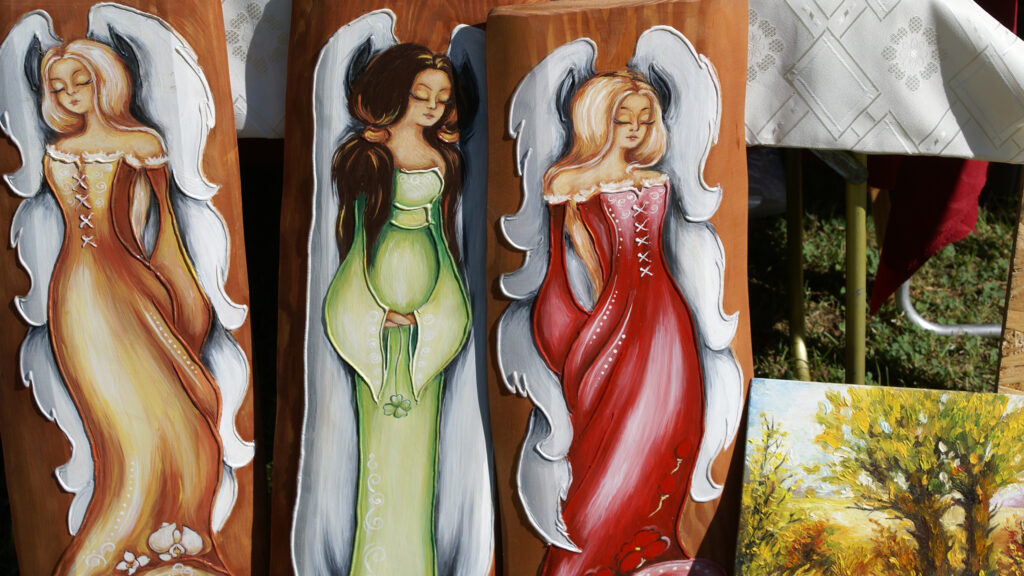
In Poland, ancient traders believed that in order to earn enough from their trade, they had to carry figurines of Angel patrons of trade to the markets. In the Polish mountains, therefore, over time, a profession emerged of making miniatures of these angels, which bring good luck to merchants. The editorial staff of “Dziennik Polonijny” had the opportunity to see an exhibition of Angels, patrons of trade, in Pakosław, Mazovia.