
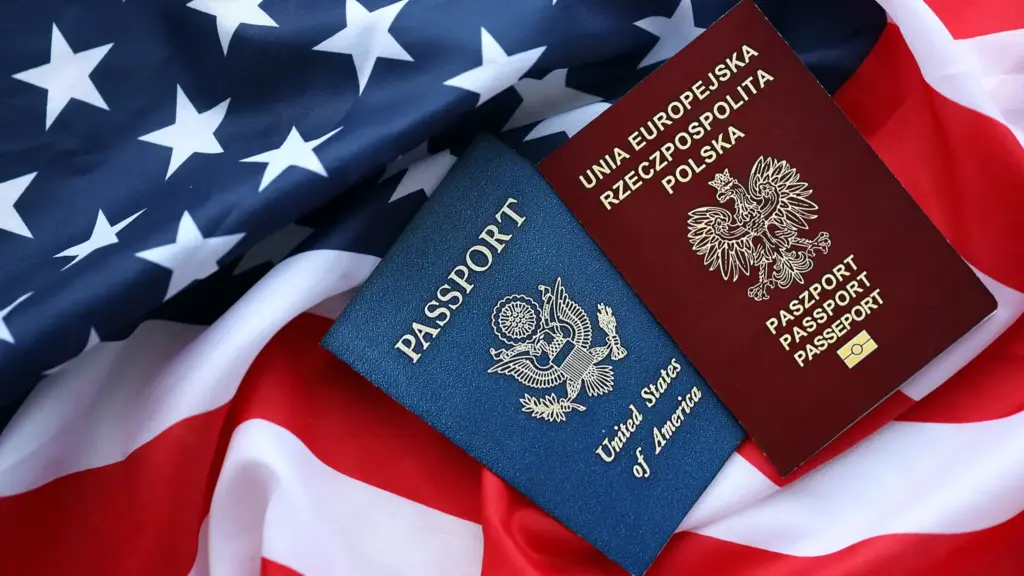
No. The mere fact of naturalization in the United States does not deprive you of Polish citizenship. Under Polish law, citizenship can only be lost through a formal renunciation with the consent of the President of the Republic of Poland – it is not lost “automatically” due to acquiring a foreign passport. A Pole who becomes a US citizen, in practice, therefore has two citizenships: Polish and American.
This is one of the most common questions I get from readers preparing to file Form N-400. A myth circulates that the oath of allegiance taken during naturalization “cancels” a Polish passport. However, the legal reality is different – and much more favorable for the Polish diaspora. Below, I break down the topic into its constituent parts: what Polish law says, what American law says, how to travel on two passports, and what obligations you assume when you have dual citizenship.
Do I lose Polish citizenship when I become a US citizen?
No, and this is the foundation of the entire topic. According to the Polish Constitution, a Polish citizen cannot lose their citizenship unless they renounce it. Loss occurs only after the President of the Republic of Poland grants consent to renounce citizenship – and usually takes effect 30 days from the date of the President’s decision (unless the President specifies a shorter period). In other words: to stop being Polish, you must actively apply for it. Filing an application for naturalization in the USA does not, by itself, initiate any procedure on the Polish side.
Significantly, Polish authorities adhere to the principle of exclusivity of Polish citizenship within the territory of the Republic of Poland. This means that, for the Polish state, a person holding dual citizenship is treated exclusively as a Polish citizen – with all the consequences that entails when they are in Poland. This interpretation is confirmed by both the Ministry of Interior and Administration and the Border Guard.
Can I legally have two passports?
Yes. From a Polish perspective, there are no obstacles to a Polish citizen simultaneously holding citizenship in another country – the law does not prohibit it. From an American perspective, US law also does not require choosing one citizenship or abandoning the previous one. The State Department explicitly states that a US citizen may hold citizenship in another country, and that naturalization itself does not require the loss of prior citizenship.
However, one thing must be noted: whether dual citizenship is possible also depends on the law of the “second” country. In the case of Poland, Poles who have been naturalized in the USA realistically function with two passports. Some countries (e.g., this does not apply to Poland) revoke citizenship upon acquiring foreign citizenship, but in the Polish-American relationship, this problem does not occur. If you are planning your path to an American passport, also check our text [LINK: naturalization step by step].
Which passport do I use to enter Poland, and which to the USA?
This is the question where most people stumble at the airport. The rule is simple and symmetrical: you enter and exit Poland on your Polish passport, and you enter and exit the USA on your American passport.
On the Polish side: if the Border Guard determines that a person also has Polish citizenship, they treat them exclusively as a Polish citizen. In practice, this means the obligation to present a valid Polish document authorizing border crossing – primarily a valid Polish passport (or a temporary passport or ID card). The upside of this rule is that a Polish citizen is not subject to sanctions for exceeding the permitted period of stay because, in Poland, they are not a “foreigner.” The downside: if your Polish passport has expired, you may have trouble when leaving – so check the expiration date in advance and apply at the consulate if necessary. More in the text [LINK: Polish passport in the USA – consulate].
On the American side, a reciprocal rule applies: a US citizen must enter and exit the United States using a US passport. US law does not allow an American citizen to enter the country on a foreign passport. The practical conclusion is that when traveling between Warsaw and New York, you actually use both documents – each at the appropriate border.
What obligations does a person with dual citizenship have (taxes, consulate)?
Dual citizenship means not only two passports but also a double set of dependencies – especially tax-related ones. The most important fact: the United States taxes its citizens on income earned worldwide, regardless of where they live. A US citizen living in Poland is generally still required to file taxes with the American tax authority (IRS). Poland, in turn, is based on the principle of tax residency.
To prevent the same income from being taxed twice, there is a Polish-American agreement on the avoidance of double taxation, and US law provides tools such as the Foreign Tax Credit (FTC) or the Foreign Earned Income Exclusion (FEIE). However, this is a complex matter, and the details – thresholds, forms, deadlines – change and depend on individual circumstances. Therefore, for specifics, I refer you to a tax advisor and to current IRS and Polish tax administration sources. Do not guess amounts or limits based on forum posts.
The second group of obligations and rights concerns consular matters. As a Polish citizen, you can use Polish consular assistance, obtain a Polish passport, handle civil status matters (e.g., registration of a child’s birth certificate), and inheritance matters. Remember, however, the principle of exclusivity: when you are in Poland, Polish authorities do not recognize your “American” status – do not wave your American passport expecting to be treated like a tourist. If the matter concerns stay, documents, or legal status in the USA, it is worth considering a consultation with a lawyer – in the directory you will find [LINK: PolishPages immigration lawyers category].
What about children born in the USA?
A child born in the United States acquires American citizenship by law (jus soli). At the same time, if at least one parent is a Polish citizen, the child usually also acquires Polish citizenship by descent (jus sanguinis) – regardless of the place of birth. In practice, many children of the Polish diaspora are born with two citizenships from day one.
To “make visible” this Polish status of the child in documents, parents usually register (transcribe) the American birth certificate in Polish civil registry books, assign the child a PESEL number, and obtain a Polish passport. You can determine the specific list of documents and procedures at the Polish consulate – this is a matter worth addressing early, before planning your first trip to Poland.
Dual citizenship in a nutshell
- Naturalization in the USA does not revoke Polish citizenship – Polish law does not provide for the automatic loss of citizenship upon acquiring a foreign passport.
- Polish citizenship is lost exclusively through formal renunciation with the consent of the President of the Republic of Poland.
- Within its territory, Poland treats such a person exclusively as a Polish citizen (principle of exclusivity).
- US law permits dual citizenship – there is no need to choose a single citizenship.
- You enter Poland with a Polish passport and the USA with an American passport.
- The USA taxes citizens on worldwide income; the PL–USA agreement and reliefs (FTC, FEIE) protect against double taxation – details from an advisor.
- A child born in the USA to a Polish parent usually has dual citizenship; it is worth confirming both citizenships at the consulate (birth certificate transcription, PESEL number, passport).
📱 Download the PolishPages app:
App Store (iPhone) | Google Play (Android)
Bartosz Karczmarski, Poland.US (Voice of the Polish Diaspora in the USA). This text is for informational purposes only and does not constitute legal advice. Always check current regulations at the Polish consulate, gov.pl, and uscis.gov, and for individual matters, consult a licensed attorney. More guides at poland.us.