
Theater in the city
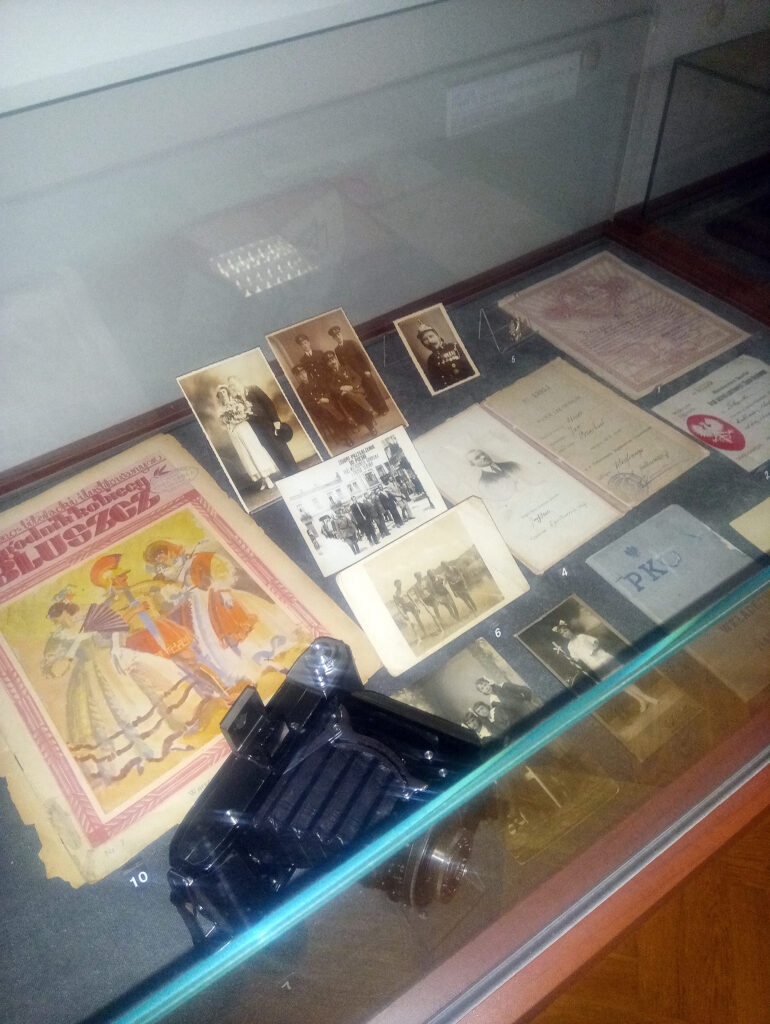
As we know, the city of Kielce always focused on the optimal development of education, the Stefan Żeromski professional theater, local press, and social life based on associations, reading rooms, and city parks. The foundation of cultural life for Kielce residents during the interwar period was the activity of the Stefan Żeromski Theater. After Poland regained independence in 1918, the aforementioned theater actively operated, often shaping the very refined tastes of Kielce residents, especially those of the younger generation.
In Mrs. Janina’s ‘Pink Salon’
During the interwar period, in Kielce, the so-called Pink Literary Salon operated in the private apartment of Mrs. Janina Bińkowa. Every Friday, the city’s literary elite gathered there to present their poems and literary stories, whether better or worse, to the limited audience that could fit in Mrs. Bińkowa’s apartment.
Education above all
The development of schooling was, of course, very important during the interwar period. This refers, of course, to schooling covering general and secondary education. It is also obvious that this influenced the increase in education among Kielce residents, which in turn increased the demand for press, libraries, and bookstores emerging in the city.
‘Tutoring on the Steps’
The period immediately after the expulsion of the hostile occupiers from our country created an urgent need for education for citizens. Therefore, to equalize the level of education of Kielce youth, a tutoring center, commonly known as “Tutoring on the Steps,” was opened in a tenement house on Ogrodowa Street, which was accessed by steps. The most important goal was to help, free of charge, in compensating for knowledge gaps among high school graduates, and not only them.
Walks in the City Park
As we read in the pre-war press of Kielce, walks in the City Park were very popular at that time. People met each other there and could exchange information, and even political observations. Regular visits to confectioneries and cafes were also a daily routine for a larger group of Kielce residents. This is where lovers met, or for example, ladies from charitable societies who wanted to discuss the further course of their charitable activities. According to pre-war Kielce weeklies, the city took special care of the aesthetics and organization of public space. At that time, the city was also undergoing modernization, aiming to significantly improve sanitary conditions, taking into account modern urban planning for that period.
At that time, many valuable collections of Polish painting were gathered in the National Museum, so, as one might easily guess, this institution became the center of artistic life in the city.
Kielce, during the interwar period, became a modern city, integrating various social groups, of course, through culture and the popularization of education.