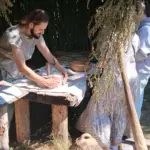

Clay vessels
In the lands of our country, clay vessels came into use around 5400 BCE. At that time, Celtic agricultural peoples arrived here, possessing a well-mastered skill in making clay vessels. They were used both for cooking food and as cult vessels, in which offerings were made to Celtic gods. Initially, the Celts did not know the art of firing these clay vessels. They were therefore fragile and unsuitable for preparing dishes in them at very high temperatures. The main raw material for making clay vessels was, of course, clay, which was used with various admixtures, for example, sand or crushed material. These substances, as one might easily guess, additionally strengthened the structure of the clay pot. These vessels were hand-molded from so-called clay coils. After being formed and dried, they were then fired in a bonfire. Around 300 BCE, Celts who were able to use a potter’s wheel in their pottery work arrived in Polish territories.
Different types of clay
Celtic potters used various clay deposits located near the so-called above-ground smelting furnaces they built. The type of these clays did not always suit the Celtic potters. By using various types, they concluded that clay naturally occurs as fatty and lean clay. Fatty clay contains a small amount of sand in its composition. It is more ductile and plastic at the same time. However, vessels made from it easily crack during firing. Therefore, the Celts concluded that it is best to mix these two types of clay.
This method of making pots was also used by Poles, who acquired this art of pot making from the Celts. “Dziennik Polonijny” found traces of Celtic potters who lived years ago in Lower Silesia and in today’s Świętokrzyskie Voivodeship.