Andrea Tornielli
“This weakening of international law is truly disturbing: justice has been replaced by force” – Cardinal Pietro Parolin, Secretary of State, tells Vatican News about the ongoing war in the Middle East and notes with concern that “multipolarity characterized by the primacy of power and self-referentiality is dangerously strengthening.”
Your Eminence, how are you experiencing these dramatic hours?
With great pain, because the peoples of the Middle East, including the already fragile Christian communities, have once again plunged into the horror of war, which brutally cuts short human lives, causes destruction, and draws entire nations into spirals of violence with uncertain outcomes. Last Sunday, during the Angelus prayer, the Pope spoke of a “tragedy of immense proportions” and the risk of an “irreversible abyss.” These words are more than eloquent to describe the moment we are currently experiencing.
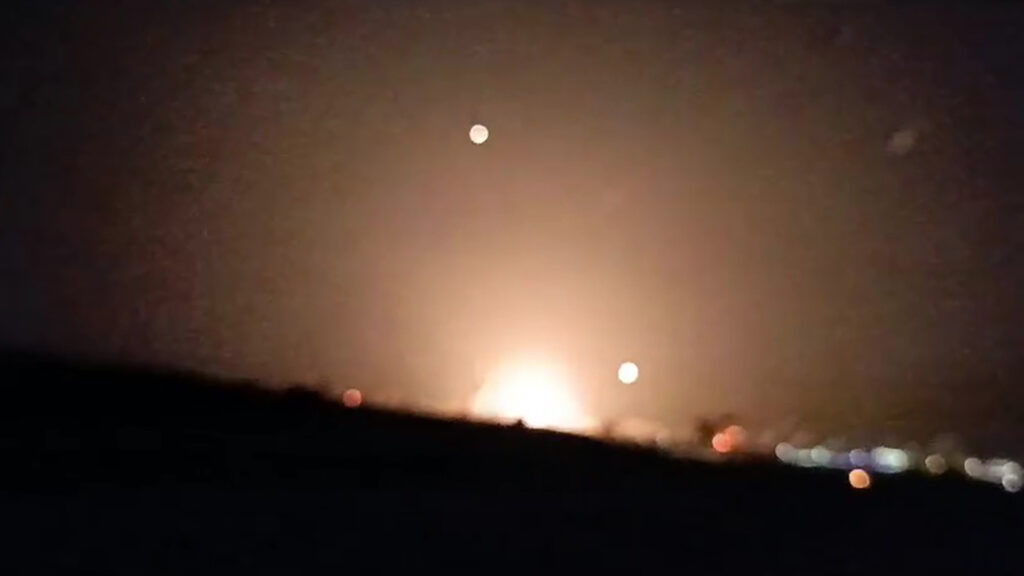
What does Your Eminence think about the American-Israeli attack on Iran?
I believe that peace and security should be nurtured and achieved through the opportunities offered by diplomacy, especially that conducted within multilateral organizations, where states have the possibility to resolve conflicts in a bloodless and more just manner. After World War II, which claimed about 60 million victims, the founding fathers, in creating the United Nations, wanted to spare their children the horrors they themselves had experienced. Therefore, they included clear guidelines for conflict management in the UN Charter. Today, these efforts seem to have been squandered. Moreover, as the Pope reminded the Diplomatic Corps at the beginning of the year, “diplomacy promoting dialogue and seeking consensus among all is being replaced by a diplomacy of force, of individual states or groups of allies,” and it is believed that peace can be achieved “with weapons.”
When speaking of the causes of war, it is difficult to unequivocally determine who is right and who is wrong. What is certain, however, is that war always brings casualties and destruction and causes devastating effects on the civilian population. Therefore, the Holy See prefers to recall the necessity of using all tools offered by diplomacy to resolve disputes between states. History has already taught us that only politics – through the arduous process of negotiation and attention to the balance of interests – can build trust between nations, foster development, and preserve peace.
The justification for the attack was to stop the production of new missiles, essentially a “preemptive war”…
As the UN Charter indicates, the use of force should be treated exclusively as a last resort and an exceptionally serious measure, after exhausting all tools of political and diplomatic dialogue, after careful assessment of necessity and proportionality, based on reliable findings and justified motives, always within a multilateral governance system. If states were granted the right to “preemptive war” according to their own criteria and without a supranational legal framework, the entire world could be set ablaze. This weakening of international law is truly disturbing: justice has been replaced by force, the force of law has been replaced by the law of force, with the conviction that peace can only be born after the annihilation of the enemy.
What is the significance of the massive street demonstrations in recent weeks, bloodily suppressed in Iran? Can they be forgotten?
Certainly not, this too was a cause of deep concern. The aspirations of peoples must be taken into account and guaranteed within the legal order of a society that ensures everyone the opportunity to freely and publicly express their views – this also applies to the dear Iranian people. At the same time, one might ask whether it is truly believed that a solution can come through launching missiles and dropping bombs.
Why are international law and diplomacy experiencing such a crisis today?
The awareness that the common good truly serves everyone, that the good of the other is also my good, and therefore justice, prosperity, and security are realized to the extent that everyone can benefit from them, has weakened. This principle underlies the creation of the multilateral system and courageous projects such as the European Union. This awareness has weakened, and in its place, the appetite for pursuing one’s own interests has grown.
This also has another consequence: the system of multilateral diplomacy in relations between states is experiencing a deep crisis, partly due to states’ distrust of legal obligations that limit their actions. Such an attitude is the other side of the will to power: the desire to act without limits, to impose one’s own order on others, to avoid the dramatic but noble effort of politics – based on discussion, negotiation, benefits for oneself, and concessions to others. Multipolarity characterized by the primacy of force and self-referentiality is dangerously strengthening. Unfortunately, principles such as the self-determination of peoples, territorial sovereignty, and the rules governing war itself (ius in bello) are being undermined. The entire body of international law in areas such as disarmament, development cooperation, respect for fundamental rights, intellectual property, and trade exchange and transit is being questioned and gradually set aside. And above all, it seems that the awareness of what Immanuel Kant wrote as early as 1795 has been lost: “A violation of right in one place on earth is felt in all places.” Even more serious, in some respects, is the invocation of international law depending on one’s own convenience.
What is Your Eminence referring to?
I mean that there are situations in which the international community is outraged and mobilizes, and others in which it does not react or does so much more weakly, giving the impression that there are violations of law that must be sanctioned, and others that can be tolerated; civilian victims to be lamented, and others that are considered “collateral damage.” There are no category A and category B victims, nor people who have a greater right to life simply because they were born on one continent and not another, or in a specific country. I would like to emphasize the importance of international humanitarian law, whose observance cannot depend on circumstances or on military or strategic interests. The Holy See firmly reaffirms its condemnation of all forms of involving civilian populations and civilian objects – such as homes, schools, hospitals, or places of worship – in military operations and demands that the principle of the inviolability of human dignity and the sanctity of life always be protected.
What short-term prospects does Your Eminence see for this new crisis?
I hope and pray that the appeal for responsibility that Pope Leo XIV made last Sunday will be accepted and move the hearts of those who make decisions. May the clamor of weapons cease as soon as possible and negotiations resume. The negotiations themselves must not be deprived of meaning: it is necessary to give them adequate time so that they can yield concrete results, acting with patience and determination.
Furthermore, we must recognize that the international order has undergone a profound change compared to the one outlined eighty years ago with the creation of the UN. Without nostalgia for the past, it is necessary to counteract all attempts to delegitimize international institutions and to support the strengthening of supranational norms that help states peacefully resolve disputes through diplomacy and politics.
What hope remains in the face of all this?
Christians have hope because they trust in God, who became Man, who in Gethsemane commanded Peter to put his sword back into its sheath, and who on the Cross personally experienced the horror of blind and senseless violence. They also have hope because, despite wars, destruction, uncertainty, and a widespread sense of disorientation, voices still rise from many parts of the world demanding peace and justice.
Our peoples desire peace! This appeal should shake rulers and all those involved in international relations, prompting them to redouble their efforts for peace.