
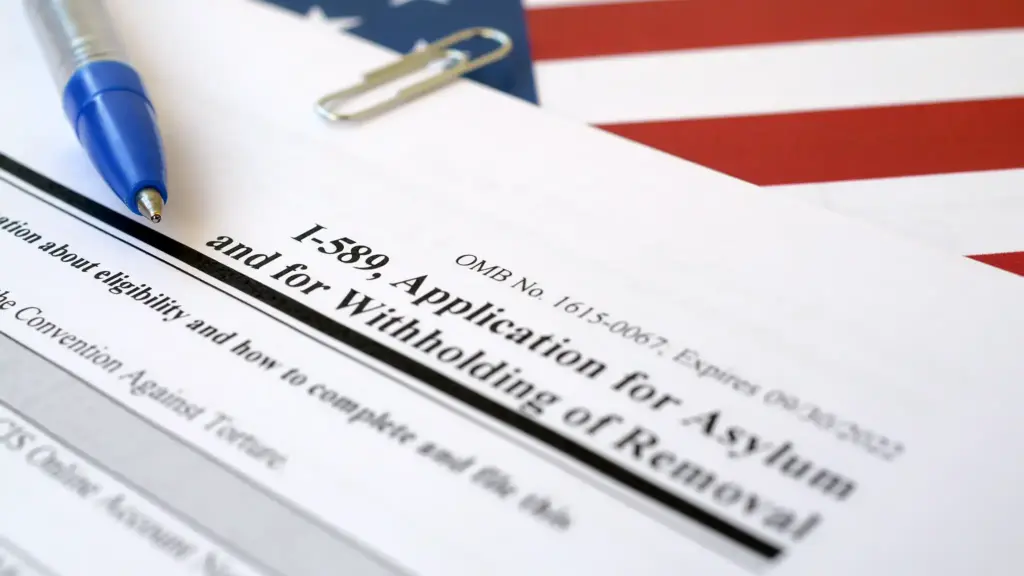
The regulation took effect immediately, without prior consultation. However, referral to court does not mean denial of asylum or deportation—the case is reviewed anew by an immigration judge.
The Department of Homeland Security has changed the rules for handling asylum applications filed on one’s own initiative, outside of deportation proceedings. The regulation was published in the Federal Register on July 28, 2026, and entered into force the same day—without prior public consultation. Comments can be submitted until September 28, but only after the fact.
What the change entails
Previously, a person who applied for asylum could count on an interview with an asylum officer. This interview was the moment to present their story—in a non-adversarial manner, meaning without an opposing party, unlike in immigration court.
The new rule allows the officer to bypass this stage and refer the case directly to an immigration judge, based solely on documents. The agency may choose to do so, but is not obligated; the rule imposes no requirement.
Importantly for those already waiting: the regulation also applies to applications filed previously, provided an interview date has not yet been scheduled.
Referral without an interview is possible, among other reasons, when the applicant is not eligible to apply for asylum, cannot receive it due to statutory bars, does not merit discretionary asylum, or when the application fails to meet the merits requirements. The regulation notes that this list is not exhaustive, and the agency may indicate additional categories of cases in the future.
One of these grounds deserves attention. An officer may determine that the applicant does not merit discretionary asylum, without first examining whether they qualify for it at all. Therefore, the order of analysis is no longer binding.
There are two limitations, however. The agency must make such a decision before scheduling an interview date, and the rule applies exclusively to individuals who lack a legal basis of stay in the US. Anyone with valid status retains their interview.
What this change does not mean
It is necessary to clearly distinguish what the rule changes from what it does not.
A referral is not a denial. The case is not closed—it goes to immigration court, where a judge reviews it anew, regardless of what the officer determined. The agency still conducts interviews both before granting and before denying asylum; the mechanism applies solely to referrals.
A referral is not deportation. Forwarding a case to court initiates proceedings in which one can apply not only for asylum, but also for forms of protection that the immigration agency has no authority to grant whatsoever.
The figure of 444,724, repeated in press reports, does not mean cases referred to court. This is the upper limit of applications potentially covered by the rule—31 percent of the more than 1.43 million backlog of cases. The agency’s own estimate speaks of approximately 132,000 referrals annually in the future.
On the other hand, there is a caveat that is easy to miss in the opposite direction. Reviewing a case “anew” does not guarantee a full hearing with testimony. The regulation cites a 2025 ruling stating that the immigration judge decides the length and nature of the hearing themselves and may forego full evidentiary proceedings if they conclude that the circumstances presented do not justify granting protection.
Who it affects in practice
The main criterion in practice is the one-year deadline for filing an asylum application from the time of arrival in the US. Agency data shows the scale: among late applications that went to immigration court after an interview, nearly 77 percent were referred precisely because this deadline was exceeded or no exception to it was demonstrated. We write more extensively about the deadline and exceptions in our guide on political asylum in the US.
Exceeding the one-year deadline does not close the door to all forms of protection—withholding of removal can be applied for before a judge despite the delay.
Excluded from the rule are, among others, individuals with legal status, cases with an already scheduled interview date, and cases covered by the class-action settlement concerning families separated at the border (Ms. L v. ICE). Unaccompanied minors are not subject to the one-year deadline, so they cannot be referred on that basis—but they can be if the officer decides they do not qualify for asylum for other reasons.
Why without consultation
The Department explains bypassing the standard procedure with two arguments. First, it considers this to be a procedural rule—it changes the way applicants present their case, but in the agency’s assessment, it does not violate their rights. Second, it invokes the exemption concerning foreign affairs.
However, the justification includes two admissions worth noting. The agency acknowledges that for some individuals, the opportunity to tell their story directly to an officer “may matter in some cases,” and admits that some applications referred under the new rule might have been approved had an interview taken place.
Individuals whose cases are pending should consult their situation with a licensed immigration attorney—especially if the application was filed more than a year after arrival or if one of the exceptions to this deadline applies to the case.
Sources:
- Federal Register — “Affirmative Asylum Referrals Without Interview”, DHS/USCIS interim final rule (document 2026-15190, 91 FR 47101, published July 28, 2026, RIN 1615-AD18, 8 CFR Part 208): https://www.federalregister.gov/documents/2026/07/28/2026-15190/affirmative-asylum-referrals-without-interview
This material is for informational purposes and does not constitute legal advice. Asylum cases depend on individual circumstances—consult a licensed immigration attorney.
Bartosz Karczmarski · July 31, 2026