Karol Darmoros
Everyone has their priorities
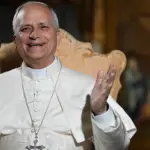
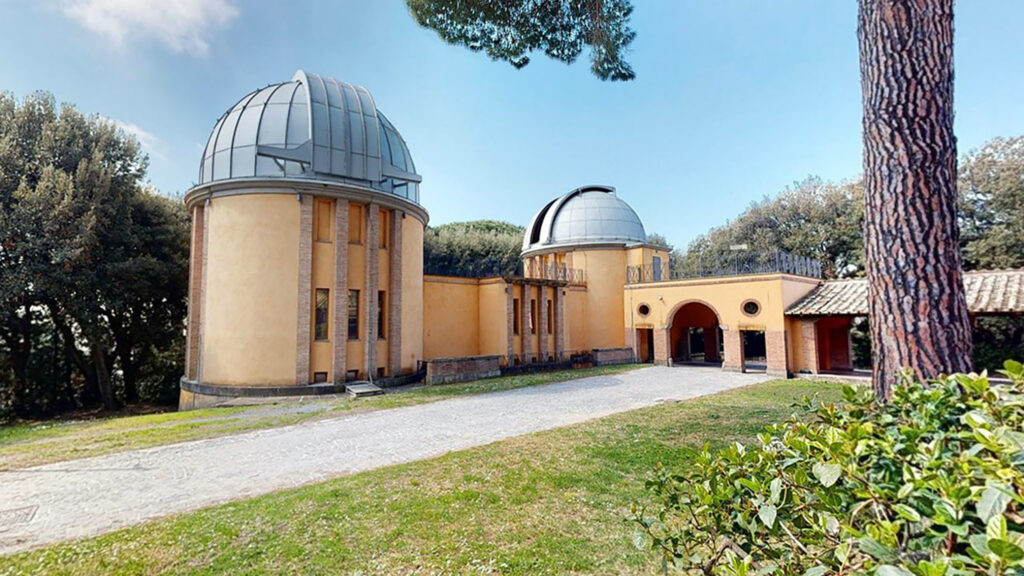
As he emphasizes, researchers today work in many fields – from cosmology and galaxy formation to meteoritics and the Solar System. “It is difficult to speak of one priority scientific field, because each researcher has their own priority field related to their area of research,” explains Fr. D’Souza, who has been heading the Vatican Observatory for several months. At the institutional level, however, the goal is “to enable a significant investment of resources to support and strengthen the research of individual members and the entire group.”
Robotization of the telescope
A key task is to complete the robotization of the VATT (Vatican Advanced Technology Telescope) on Mount Graham in Arizona. Although 95% of the system already operates automatically, a new camera will allow for full remote operation, without a constant human presence. The plan also includes transitioning to a “service” mode, enabling the execution of multiple observational projects in a single night.
Meteorites and new technologies
The meteorite laboratory will complete 3D scanning of approximately 1200 specimens, and the catalog will be made available online, which is expected to open new opportunities for international cooperation. Special graphics processing units (GPUs) will be installed in Castel Gandolfo, which will significantly accelerate calculations and better utilize artificial intelligence methods in astronomical data analysis.
New research
This year, new research areas are also planned to be opened, including astrobiology and group theory. Among the research that may soon yield important results are works on combining gravity with quantum physics and on a better understanding of black holes.
Bridge of faith and science
The Observatory also continues initiatives demonstrating the dialogue between faith and science, organizing conferences and workshops that emphasize that space research can be a space for the encounter of reason and faith.