Lidia Dudkiewicz
The Path Through Suffering
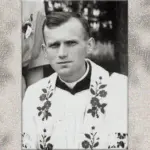
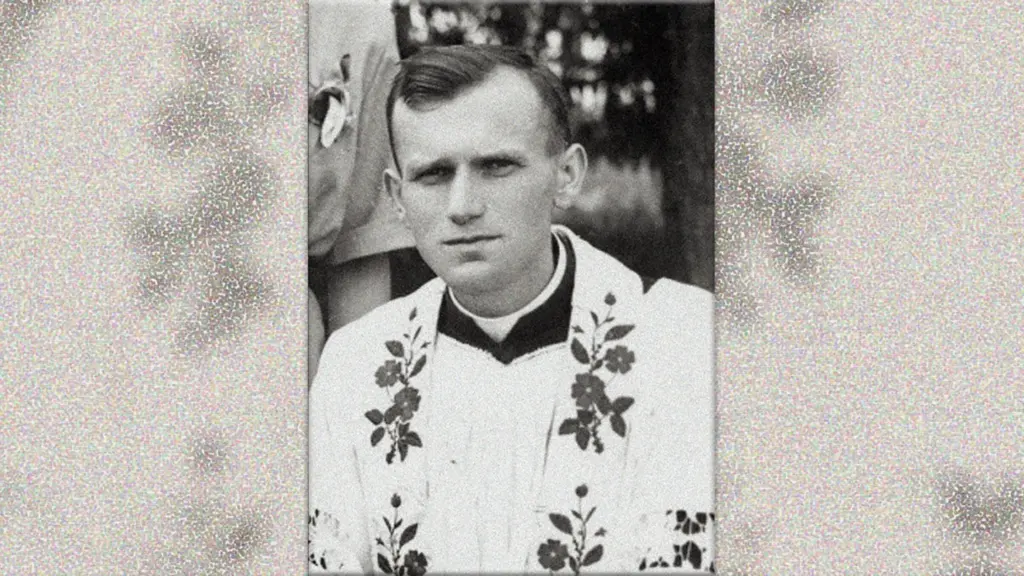
In his book “Gift and Mystery,” John Paul II wrote: “The sacrament of priesthood (…) I received from the hands of the unforgettable Prince Cardinal Adam Stefan Sapieha (…). However, the Prince Metropolitan himself chose this day because I was soon to leave for Rome for further studies. I received ordination alone, in the private chapel of the Krakow bishops. My colleagues were not to be ordained until the following year.”
Karol Wojtyła lost those closest to him at an early age. When he was nine years old, his mother died; three years later, he lost his older brother, a doctor who contracted a fatal infection while saving a patient. The future pope was left in the world with only his father, but he also had to face his loss at a young age. He thus experienced a unique stripping away before he heard the call to the priesthood. It seems as though from the beginning he was prepared by Providence to completely give himself to God through service in the Church.
It All Began in Wadowice
His path to the priesthood and the papacy led through his family home in Wadowice, Polish studies at Jagiellonian University, physical labor in Krakow during the Nazi occupation, an underground theater of the word, a clandestine seminary, and above all, through the people who helped him discover the gift and mystery of his vocation.
In one of his interviews, John Paul II confessed that although his mother lived for a short time, she managed to pass on a great love to him, teaching him the sign of the cross and prayers. She told everyone that her son would be “someone great.” He recalled: “My mother wanted to have two sons—a doctor and a priest; my brother was a doctor, and despite everything, I became a priest.” He remembered his father as a prayerful man who served as a model of diligence and self-discipline.
From the period of his studies at the gymnasium in Wadowice, a well-known fact is that during a parish visitation conducted by the Metropolitan of Krakow, Archbishop Adam Stefan Sapieha, the welcoming speech was delivered by Karol Wojtyła. The Archbishop then asked Fr. Edward Zacher, the catechist, what field of study the boy was choosing after graduation. Upon hearing that it was Polish philology, he supposedly said: “It’s a pity it’s not theology.”
Likewise, the curate of the Wadowice parish church, Fr. Kazimierz Figlewicz, who served as Karol Wojtyła’s confessor for years, told him at a certain point: “Christ is showing you the way to the priesthood.”
Occupation Years in Krakow
A huge influence on the spiritual development of young Karol Wojtyła during his time in Krakow was Jan Tyranowski, an official who worked as a tailor. He served as a lay spiritual director for the future seminarian: “From him, I learned, among other things, elementary methods of self-improvement that anticipated what I later found in the seminary. Tyranowski, who shaped himself on the works of St. John of the Cross and St. Teresa of Jesus, introduced me for the first time to these unusual readings for my age at the time,” John Paul II said of this man of deep inner life and extraordinary apostolic zeal.
When, during the years of the German occupation, Karol Wojtyła and his fellow students worked as manual laborers in the quarry in Zakrzówek, the blaster Franciszek Łabuś, to whom he was assigned as an assistant, allowed him to read books on the sly. He would often say: “Karol, you should have become a priest. You would sing well because you have a nice voice, and you would have it good…”
He Left Art and Theater for the Priesthood
Karol Wojtyła’s decision to enter the seminary was made in the autumn of 1942. He recalled the discovery of his vocation as follows: “As a result of the outbreak of the war, I was torn away from my studies and the university environment. During that time, I lost my father, the last person from my immediate family. All of this constituted a process of being uprooted from my previous plans, in a way torn from the soil where my humanity had hitherto grown. However, this was not a negative process. For at the same time, a light was increasingly appearing in my consciousness: God wants me to become a priest. One day I saw this very clearly: it was a kind of inner illumination. This illumination carried within it the joy and certainty of a different vocation. And this awareness filled me with a great inner peace.”
Looking at the Holy Father’s path to the priesthood, one must note the special spiritual presence in his life of St. Brother Albert—Adam Chmielowski, to whom he dedicated his drama “Our God’s Brother.” The figure of this poor man from Krakow always fascinated him. He confessed outright: “I saw in him a model that suited me: he abandoned art to become a servant of the poor—the ‘swollen ones,’ as they were called. His history greatly helped me to leave art and theater and enter the seminary.”
Priestly Ordination and Wawel First Masses
Karol Wojtyła undertook his seminary studies in secret. On November 1, 1946, he was ordained a priest in the chapel of the Krakow bishops at 3 Franciszkańska Street. His first Mass at Wawel took place on November 2, All Souls’ Day, when he was able to celebrate three Masses. He chose the crypt of St. Leonard as the place to celebrate the Eucharist in order to “express a special bond with all those who rest in this cathedral (…), and who are the great <Spirit-Kings> who guide the nation through the centuries.” John Paul II, revealing his own path to the priesthood, described his vocation as a gift that infinitely surpasses man and a great mystery of divine election.