Karol Darmoros
From two to eighteen
Loaj ran a sewing workshop in the Jenin area of the West Bank. He sewed clothes for the Palestinian and Israeli markets, employing over a dozen people. When he had to flee, he left the entire facility behind. To this day, he does not know what happened to his machines.
When Magdalena Janiszewska, foreign projects expert at Caritas Poland, visited his new workshop, Loaj was still working alone. Thanks to support, he bought two machines and renovated the room. He spent his earnings on additional equipment.
After three months, he already had 18 machines and employed ten people. Some of them could work from home while simultaneously caring for children with disabilities. “All this money goes back into the local economy,” Janiszewska emphasizes. Supporting one family created jobs for others.
From survival to self-reliance
The “Family to Family” program began in 2016 in war-torn Syria. Initially, families received money for basic needs. “We decided that people should be able to decide for themselves what to spend this money on,” says Radosław Sterna, head of the humanitarian and development aid department for the Middle East at Caritas Poland.
Since 2018, the program has also supported micro-entrepreneurs, helping to open bakeries, tailoring shops, and workshops. Over the decade, assistance has reached 60,000 families and over 2,000 small businesses in Syria, Lebanon, Palestine, and Ukraine.
Work strengthens communities
Sterna points out that small workshops give work to neighbors, provide services, and become meeting places. In Syria, 97 percent of the families supported by the program are Christians. The ability to make a living from their own work helps them stay in their homeland, where their communities are weakening due to war, persecution, and emigration.
The expert points to another problem: statistically smaller Christian families are sometimes considered wealthier per capita, making them ineligible for certain humanitarian programs. Supporting entrepreneurship helps preserve Syria’s multi-religious character.
Dignity and solidarity
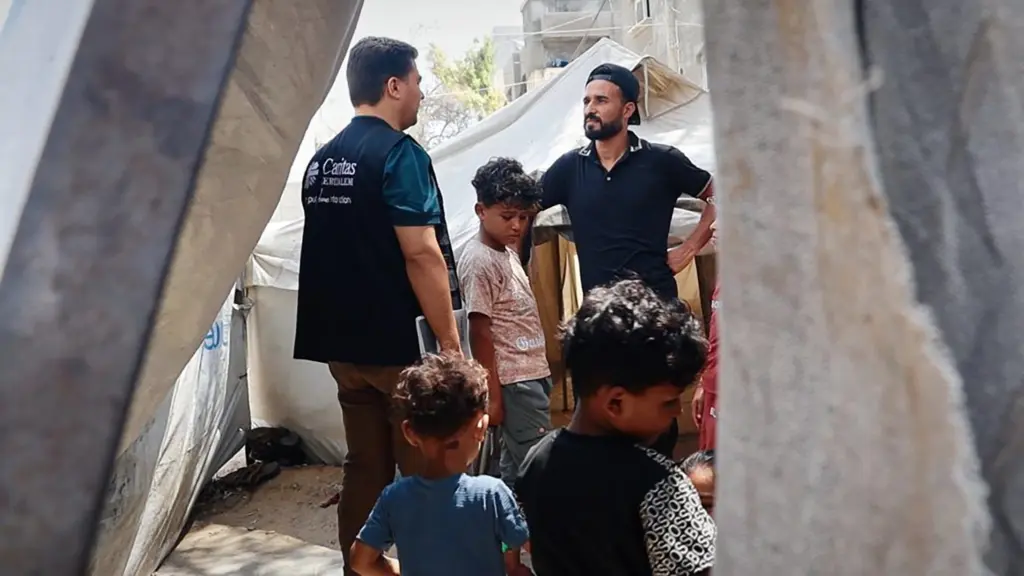
Janiszewska emphasizes that cash assistance “restores decision-making power, agency, and above all, dignity.” In the Gaza Strip, families choose whether to allocate support to food, medicine, or fuel. In the West Bank, Caritas helps rebuild livelihoods for people who have lost the ability to work.
“They feel that the world has not forgotten about them,” the expert says of Palestinian families. She notes that Polish donors, despite cultural differences, well understand the concern for the safety and future of children.
The program continues to grow. Micro-projects are also being implemented in Idlib, Syria, and in 2027 Caritas wants to extend similar support to entrepreneurs in Lebanon.