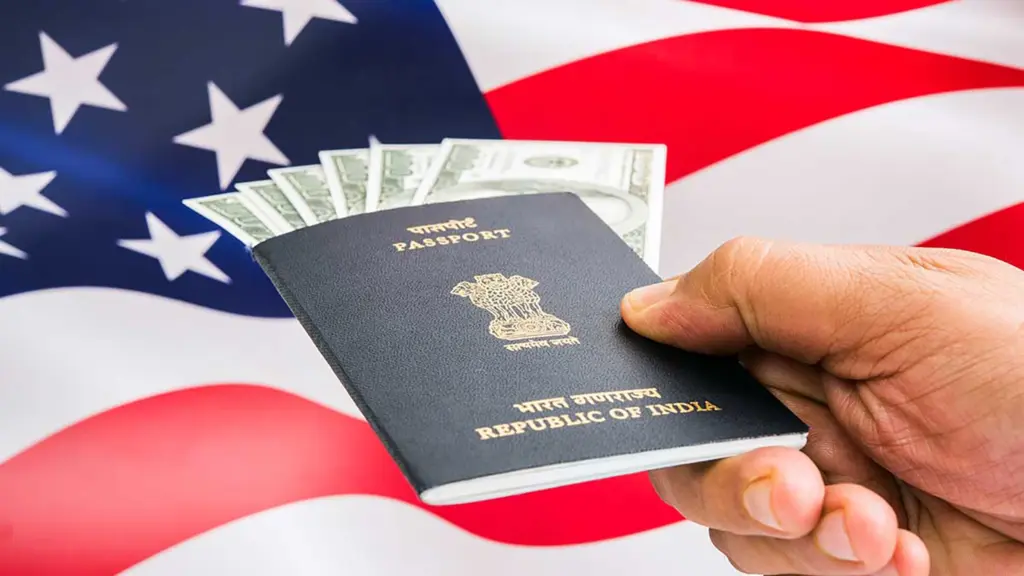
The matter concerns a portion of new H-1B petitions—those requiring consular processing, as the employee was outside the United States at the time of filing. For Polish IT specialists, engineers, and physicians seeking employment in the US, this is one of the most costly and legally contentious immigration changes in recent years. The original, one-year Proclamation 10973 was set to expire on September 20, 2026. A day earlier, the White House decided otherwise.
What exactly the president signed
The new document bears the same title as the original proclamation—”Restriction on Entry of Certain Nonimmigrant Workers”—and explicitly refers to Proclamation 10973 of September 19, 2025. The rules remain identical: the entry into the US of foreign nationals applying for H-1B status is restricted unless a $100,000 payment is included with the petition, subject to exceptions that may be granted in individual cases—for a specific person, company, or entire industry—by the Secretary of Homeland Security if deemed in the national interest.
On the same day, the president also signed a separate executive order, “Enhancing Program Integrity and Interagency Coordination in the Administration of the H-1B Nonimmigrant Visa Program.” It directs the Departments of State, Labor, and Homeland Security to consult with the Departments of Commerce and Education and the Small Business Administration (SBA) when evaluating H-1B applications, as well as to consider recent or planned layoffs of American workers by the petitioning employer.
Fee formally extended, but still contested in court
It is worth clarifying a point that is easy to confuse: the proclamation itself extends the validity of the rule, but does not resolve the ongoing legal dispute regarding its legality. On June 8, 2026, Federal Judge Leo Sorokin (District Court for the District of Massachusetts) struck down the $100,000 fee in the case of California, et al. v. Noem, ruling it an unlawful tax levied without congressional approval. On July 24, 2026, the US Court of Appeals for the First Circuit denied the government’s request to stay the ruling pending appeal, stating that the administration had not demonstrated a strong likelihood of success on the merits. In practice, this means that despite the new proclamation, the $100,000 fee still cannot be enforced—until the matter is finally resolved, potentially by the Supreme Court.
Why the administration decided on an extension
In the justification for the new proclamation, the White House cites data from the first year of the restriction. Since September 21, 2025, the $100,000 fee has been paid for over 700 petitions. H-1B registrations by major IT outsourcing firms dropped by 92 percent—from 24,946 to 2,055—and the number of consular processing applications decreased by nearly 97 percent. At the same time, in the FY2027 season, the share of candidates with a US master’s degree among registrants rose from 45.1 percent to 66.1 percent, and job offers from the two highest wage tiers accounted for 46.3 percent of selected registrations, compared to 17.8 percent for the lowest wage tier. The administration also cites data on unemployment among recent graduates—5.7 percent in June 2026 compared to 5.8 percent in September 2025—as an argument that the problem, while somewhat mitigated, still justifies maintaining the restrictions.
What’s next for the fee and the separate $103,265 proposal
The proclamation also provides for a future mechanism: no later than 30 days after the conclusion of the upcoming H-1B lottery, the Secretaries of State, Labor, and Homeland Security, along with the Attorney General, are to jointly recommend to the president whether to extend the restriction again. Regardless of this track, public consultations are ongoing (until September 24, 2026) on a separate DHS proposal that would introduce a permanent $103,265 fee for every cap-subject H-1B petition—unlike the proclamation fee, this would apply to all cap petitions regardless of the application pathway.
What this means for Polish employees and employers
For Polish citizens applying for H-1B via consular processing and for the US companies employing them, it is crucial to follow two independent tracks simultaneously: the formal extension of the restrictions by the White House and the litigation that still determines whether the fee actually has to be paid. Employers planning H-1B petitions in the coming months should consult regularly with an immigration attorney—the legal status can change overnight depending on subsequent court rulings.
Polish lawyers from our directory will help with matters related to work visas and immigration formalities – Polish Pages directory.