Papal Foundation Aid to the Church in Need
The Foundation was established nearly 80 years ago. Today, it operates in more than 140 countries and collaborates with over 1,300 dioceses, carrying out more than 5,000 projects annually. As a papal foundation, it is part of the Church. It has offices in 24 countries, and in each of them, the function of the Church’s representative is held by an ecclesiastical assistant.
Understanding the Church Better
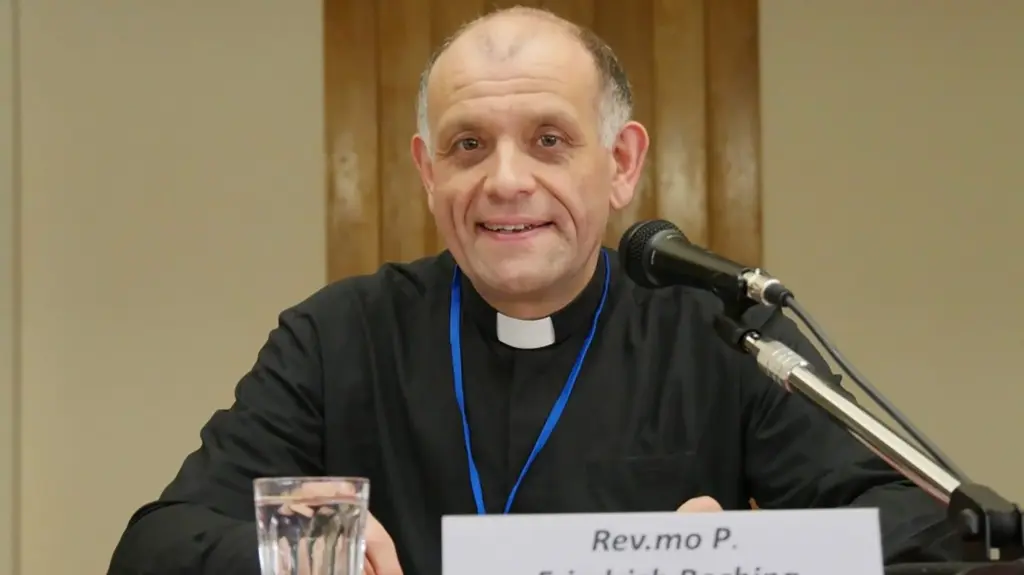
“We came here to meet one another, as well as our new superior, Cardinal Kurt Koch, who heads the Dicastery for Promoting Christian Unity. We came so that each of us could gain a deeper understanding of the universal Church,” says Msgr. Bechina.
The Foundation’s Tasks
Msgr. Bechina emphasizes that the Foundation is able to carry out its activities thanks to the generosity of many donors. However, this is not just about transferring money, but about implementing projects that support evangelization and pastoral care in various parts of the world.
“We help Churches and the faithful in need. Part of our mission is to tell stories about people and Churches persecuted for their faith. At the same time, we must remember that persecuted Churches have a unique wealth that they share with us. They have hope,” he points out in an interview with Vatican News.
Focusing on Evangelization
Asked about specific projects and decisions, Msgr. Bechina explains that the meeting in Rome was not of a business nature. As he notes, Cardinal Koch delivered a very important lecture on evangelization.
“These were very valuable words for us, because our main goal is to work for the Church and evangelization. We build churches, we help priests, laypeople, and consecrated persons prepare well to proclaim the Word of God. We do not deal with water treatment or offer medical help, because other Catholic organizations do that much better,” he explains.
Helping the Church Survive
Speaking about places where the Church needs the most support, Msgr. Bechina points to the Near and Middle East, where many churches have been destroyed and Christians are falling victim to displacement.
“Thanks to our donors, we can help local Christian communities, give them a little hope, and persuade them not to leave their homes and countries. By supporting local church structures and the priests and religious serving there, we help the Church survive,” he says.
Financing the Education of Priests from Africa
Msgr. Bechina also points to the situation in Africa, where there are many candidates for the priesthood, but often a lack of funds and appropriate places for their formation.
“We have 250 future priests or priests studying abroad, some of them in Rome. They receive direct financial support from us,” he explains.
The Foundation also supports Churches in Venezuela and Colombia, among other places, as well as in other countries affected by natural disasters, civil war, or other crises requiring a rapid response.
A Brief Meeting with the Pope
“This time we only attended the general audience. It was nice to take a picture with the Pope and exchange a few words with him. The Pope knows our Foundation. When he was a bishop in Peru, he was one of our project partners, so he already cooperated with us back then. He wants us to take responsibility, especially in the field of evangelization,” says Msgr. Bechina.
The Foundation Supports Vatican Diplomacy
“We spoke with several of the Pope’s closest collaborators. They told us that since our Foundation also deals with advocacy and raising awareness about the persecuted Church, it can sometimes speak forcefully and directly about matters that the Apostolic See cannot officially speak about for various reasons,” Msgr. Bechina emphasizes.