
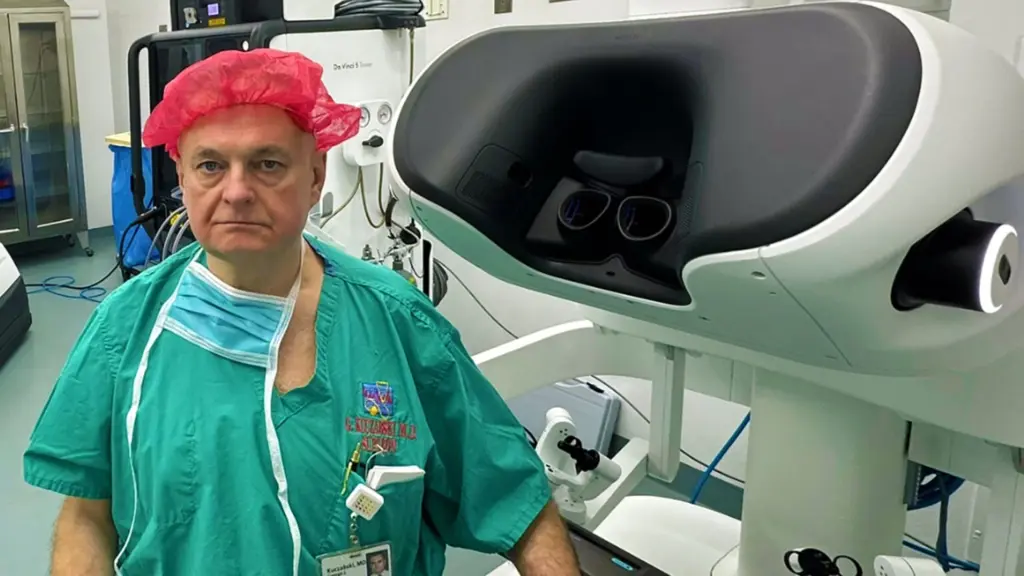
Hernia or gallbladder surgery with the da Vinci 5 robot is a minimally invasive procedure performed through a few small incisions, which typically involves less postoperative pain and a faster return to everyday activities than open surgery.
A diagnosis of a “hernia” or “gallbladder stones” usually raises one question: does this mean a large incision and weeks of recovery? The answer depends on the surgical method, and today—in the hands of a surgeon with access to modern equipment—there are several. Traditional open surgery, laparoscopy, and robotic surgery differ in incision size, precision, and typically the recovery time as well.
Dr. George J. Kuczabski, a general surgeon on Staten Island, performs hernia and gallbladder procedures using the da Vinci 5 surgical robot—the latest generation robotic system. In this guide, we explain how this method differs from open surgery, what conditions qualify for it, and what the decision-making process and recovery look like.
How da Vinci 5 Robotic Surgery Works
The da Vinci 5 system is a tool in the surgeon’s hands, not a self-operating robot—the operator controls every movement of the surgical arms from a console, viewing a 4K, magnified, three-dimensional image of the operative area. Instead of a single large incision required in open surgery, the procedure is performed through several millimeter-sized incisions through which instruments and a camera are introduced.
The precision of the robot’s arms allows for movements difficult to perform with the hand alone—such as a full rotation of the instrument’s wrist in the tight space of the abdominal cavity, while filtering out the surgeon’s natural hand tremors. In practice, this means more accurate tissue dissection around the gallbladder or within the hernia canal, which is especially important during procedures in hard-to-reach anatomical locations.
A full range of procedures is performed using this method: gallbladder removal (cholecystectomy), inguinal, ventral, and umbilical hernia repairs, as well as colon and rectal surgeries. General information on the principles of laparoscopic and minimally invasive surgery can be found on the MedlinePlus website maintained by the U.S. National Library of Medicine.
When Robotic Surgery vs. Laparoscopy or Open Method
Not every case automatically qualifies for robotic surgery—the decision is made by the surgeon based on the location and size of the lesion, previous surgeries in the area, and the patient’s overall health. Smaller, uncomplicated hernias or standard gallbladder removal are often well-suited for the robotic method or conventional laparoscopy.
The U.S. Food and Drug Administration (FDA) publishes general information on robot-assisted surgical systems, including indications and limitations of this technology—it is worth reviewing if you are looking for an independent source of knowledge about the method itself: FDA information on computer-assisted surgical devices.
In more complex cases—large hernias, adhesions from prior surgeries, complicated gallbladder inflammations—the surgeon may choose an open method if it provides safer access to the operative area. The final decision is always made during a consultation, after evaluating imaging studies and patient history—there is no single universal choice for everyone.
Schedule a consultation to find out which method fits your situation: 518-844-4511.
Recovery: What to Realistically Expect
Recovery after a minimally invasive procedure varies from person to person, but the general direction is predictable: a few small incisions heal faster than one large one, and postoperative pain is usually easier to manage. Many patients leave the office or hospital the same day or the day after the procedure, depending on the type of surgery and their health status.
The first few days after surgery typically involve a gradual return to light activity—walking, avoiding heavy lifting, and monitoring incision sites for redness or discharge. A full return to heavier physical labor or sports takes more time and should be discussed individually with the surgeon during a follow-up visit.
This is where another advantage of the PCP-surgeon model becomes apparent: the physician managing the patient outside the operating room can monitor recovery on an ongoing basis, without the need to schedule separate follow-up visits with an independent surgeon. We write more about what care combining PCP and surgery looks like in our guide family physician and surgeon on Staten Island.
What to Consider Before Hernia or Gallbladder Surgery
- Whether the surgeon performs the given procedure regularly with the specific robotic system. Experience with specific equipment, not just general surgical experience, matters for the smoothness of the procedure.
- What the realistic alternatives are—robot, laparoscopy, open method. A good surgeon will explain why they recommend a specific method in your case rather than applying one method to all patients.
- Who provides postoperative care. It is worth knowing whether follow-up visits take place with the same doctor who performed the surgery or if you need to find another specialist.
- Whether the office speaks your language throughout the entire process—from consultation to surgical consent. Understanding the risks and the course of the surgery in your own language matters when making an informed decision.
- What insurance covers the procedure. The office on Clove Road accepts most insurance plans—it is worth confirming this before scheduling surgery.
Dr. George J. Kuczabski’s office on Staten Island meets these criteria — check out the full profile and contact details on PolishPages.
Why Local Access to Robotic Surgery Matters
Advanced robotic surgery is usually associated with large academic hospitals in Manhattan, not a local office on Staten Island. The availability of the da Vinci 5 system closer to home means less travel, easier access to follow-up visits, and the ability to benefit from the same technology without having to move between New York City boroughs.
For the Polish community living on Staten Island and surrounding areas, this also means that discussing a serious medical decision—such as surgery—can take place in Polish, with a doctor who understands not only the language but also the cultural context of the questions patients ask.
If your doctor has suggested hernia or gallbladder surgery, it is worth discussing the available methods during a consultation before making a decision. Call to schedule an appointment: 518-844-4511.
This article is for informational purposes only and does not constitute medical advice. Every situation is different—consult a licensed surgeon to assess which surgical method is appropriate for your case.