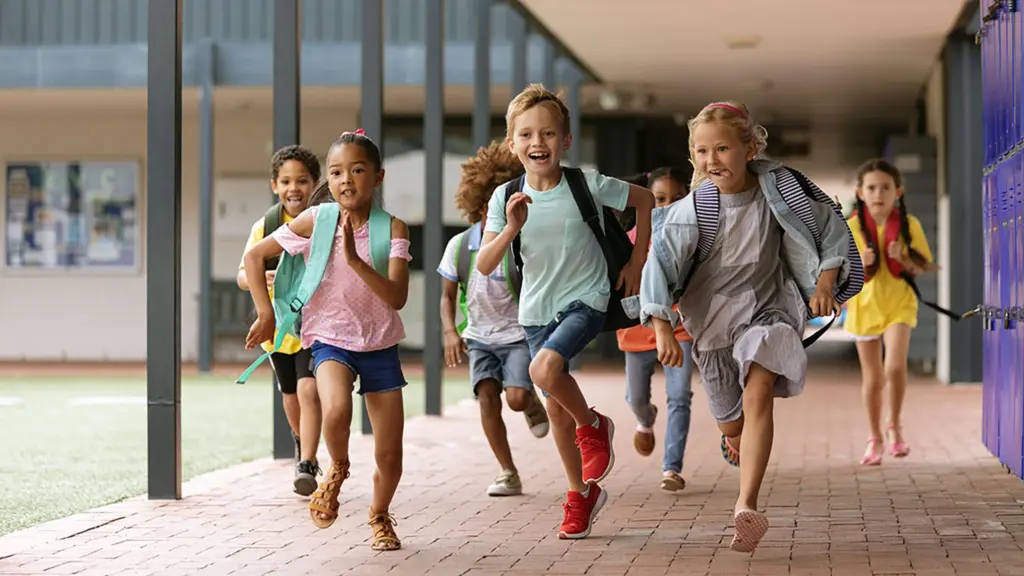
As summer draws to a close, Polish Saturday schools on the US East Coast are opening enrollment for the new school year. Affiliated with the Polish Supplementary School Council of America, the network comprises 71 facilities across ten states — in the 2025/2026 school year, 8,165 students were taught by 785 teachers within them.
For thousands of Polish-American families, August is the time when, alongside purchasing textbooks for American schools, a second question arises — whether the child is also returning to Saturday school. The largest network of such facilities on the East Coast is managed by the Polish Supplementary School Council of America (PSSCA) based in Huntington on Long Island — an organization that celebrated a century of operations in 2025.
A century-old response to immigration policy
The history of the Council dates back to the early 20th century, when the first Polish supplementary schools began to emerge at parishes in New York — the first one opened in Manhattan in 1915. However, the educational movement was curtailed by changes in American immigration policy after World War I, which targeted bilingual ethnic schools. In response to this situation, the Polish Supplementary School Council was established in 1925 on the initiative of Wacław Bojan-Błażejewicz, editor of “Nowy Świat”. The PSSCA obtained formal registration as a non-profit organization only in 1962, at the General Meeting in New York.
Where Polish Saturday schools operate today
Today, the PSSCA network includes schools in ten states: New York, New Jersey, Pennsylvania, Connecticut, Massachusetts, Rhode Island, Florida, Texas, Georgia, and North Carolina. The Polish & Slavic Federal Credit Union has remained the main sponsor of Polish-American education for years, and the Council also collaborates with the Consulate General of the Republic of Poland in New York, the Piłsudski Institute, and several Polish universities, including UMCS, the University of Warsaw, and the Jagiellonian University.
Language learning that yields real credits
Enrolling in Saturday school is for many families much more than just maintaining the language at home. Since 2014, the PSSCA has administered its own WLCE (World Language Comprehensive Exam), for which high school students can receive 3 credits applicable toward American high school graduation and sometimes also college. Since 2024, the Council has also coordinated the STAMP 4S exam, providing access to the Global Seal of Biliteracy — an official confirmation of bilingualism honored by American schools and some universities. Separately, there is a certificate exam in Polish as a foreign language, for which the PSSCA obtained authorization from the Polish Ministry of Science and Higher Education in 2016. Graduates of schools affiliated with the Council can also apply for scholarships for further education starting from 2011.
How to enroll a child
The PSSCA does not handle central, unified registration — each of the 71 schools operates at its respective parish or center and sets its own admission schedule, tuition fees, and exact start date for classes. Parents looking for a facility in their area can check the list of schools in a given state on the centralapolskichszkol.org website or call the Council’s office directly at (516) 279-7609. Since some schools close enrollment before the school year begins, it is best to apply as early as possible — especially if the child is scheduled to take the WLCE or STAMP 4S exam in the current school year.
Families looking not only for a school, but also for other Polish institutions and services in their area, can find them in the Polish Pages directory of schools and educational facilities.
Anna Lemańska, Poland.US (Voice of the Polish Diaspora in the USA). Based on information from the Polish Supplementary School Council of America (centralapolskichszkol.org). More from the life of the Polish diaspora at poland.us.