Piotr Kowalczuk
Land as a symbol of hope and inner strength
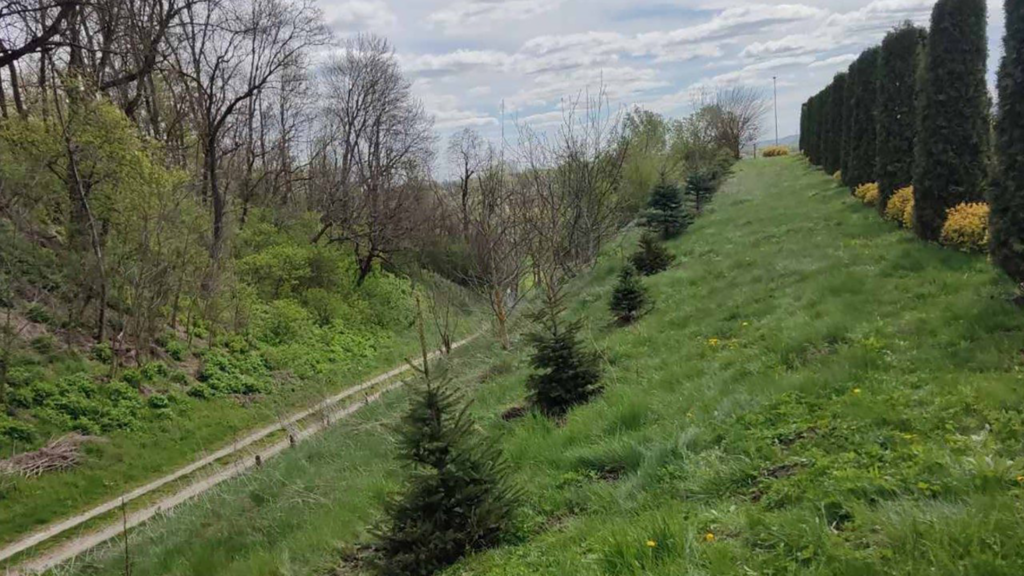
“A paradoxical expression of the hope and strength of Ukrainians,” points out Volodymyr Sheremeta, “are the perfectly arranged garden beds and flowerbeds next to houses destroyed by shelling in many Ukrainian villages and towns. If we plant trees and cultivate the land today, we express faith in tomorrow. Ukrainians have always had a special, respectful attitude towards the land.” He adds that “the Creator was particularly generous to Ukraine and its people: 30% of the world’s resources of fertile black soil are located right here. This is a priceless gift.”
Consequences of the war
“However, preserving and protecting this gift becomes extremely difficult during wartime. Just think of the vast mined areas,” Sheremeta points out, “their demining will take decades. Every explosion of ammunition releases toxic chemicals into the atmosphere, which then settle on the soil for many years. This makes this land unsuitable for agriculture for a long time. On the other hand, it is also a challenge and an encouragement to act where we can contribute to the renewal of God’s creation. Every positive act, such as establishing a garden or planting a fruit tree, contributes to healing nature’s wounds.”
The Church’s ecological service and the renewal of the land
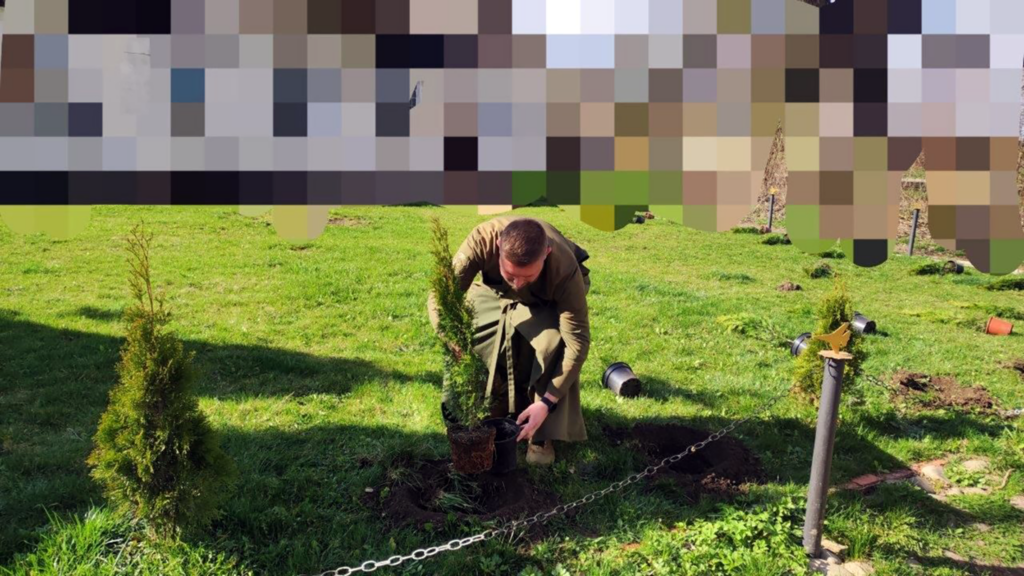
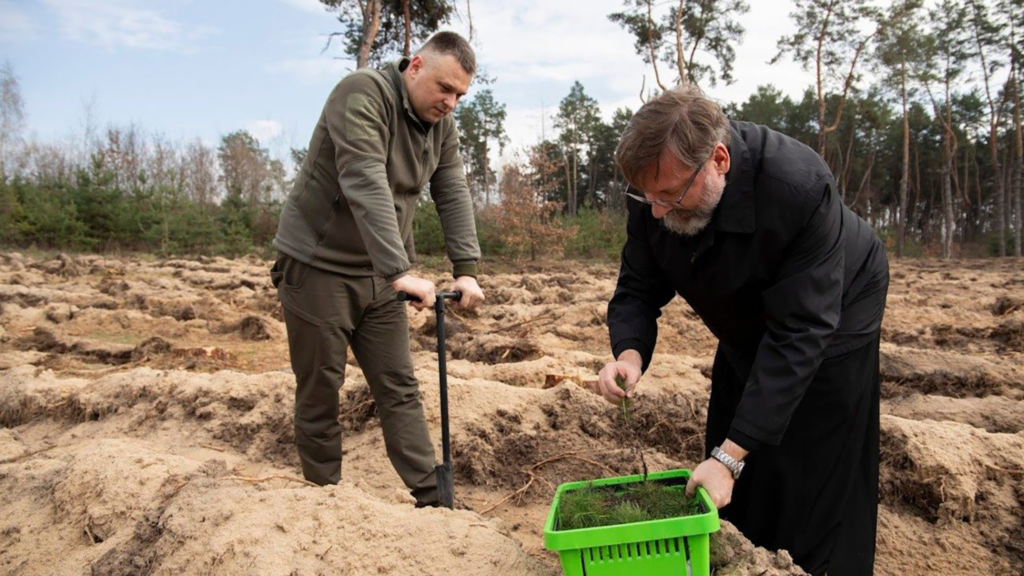
Since its establishment in 2007, the Ecological Bureau of the Ukrainian Greek Catholic Church has set itself a dual goal: to promote responsibility for the land and to propagate specific practices for its renewal. “We achieve this, among other things, by promoting tree planting,” says the head of the Ecological Bureau. “This direction has always held an important place in our activities and is one of the elements of fulfilling God’s commandment and ecological vocation: to cultivate and care for the earth. Thanks to our support, hundreds of parish gardens have already been established, and millions of fruit, ornamental, and forest tree seedlings have been planted.”
Working the land as therapy and support for people
Volodymyr Sheremeta notes that in times of war, this activity takes on an even deeper meaning, and gardening or agricultural work becomes not only a form of therapy but also a manifestation of spiritual perseverance and solidarity with others: “On the one hand, planting trees and gardening helps overcome stress, apathy, and fear. It is a process of creating life against the destruction of war. On the other hand, it provides real help to the social groups most affected by the war. Crops from church gardens and vegetable plots are often donated to displaced persons, low-income families, or sent to meet the needs of soldiers. Moreover, involving displaced persons from Russian-occupied territories in this work in church gardens and vegetable plots helps them not only integrate but also restore their psychological well-being. This is both hortitherapy and agrotherapy.”
Planting trees is faith in the future
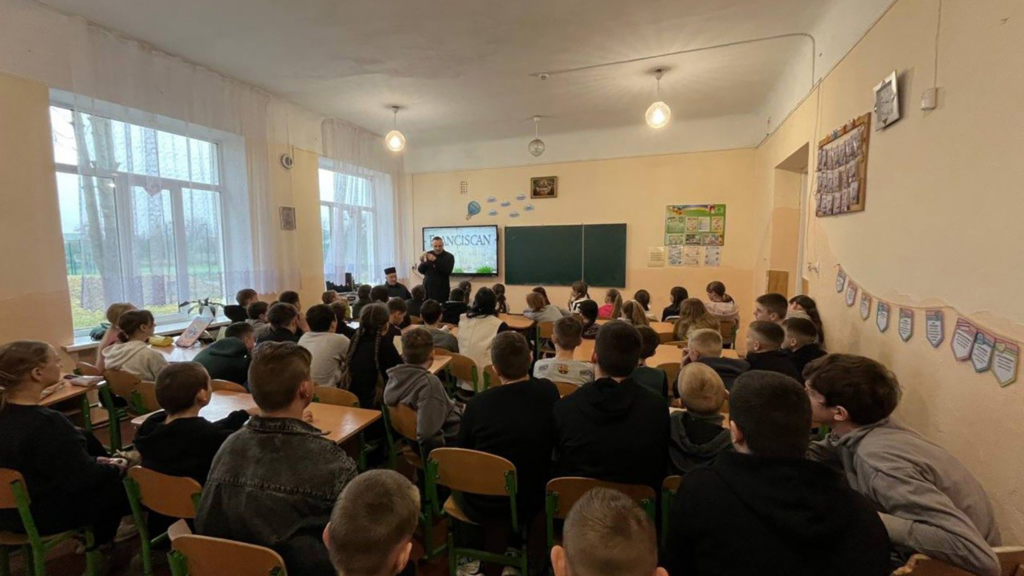
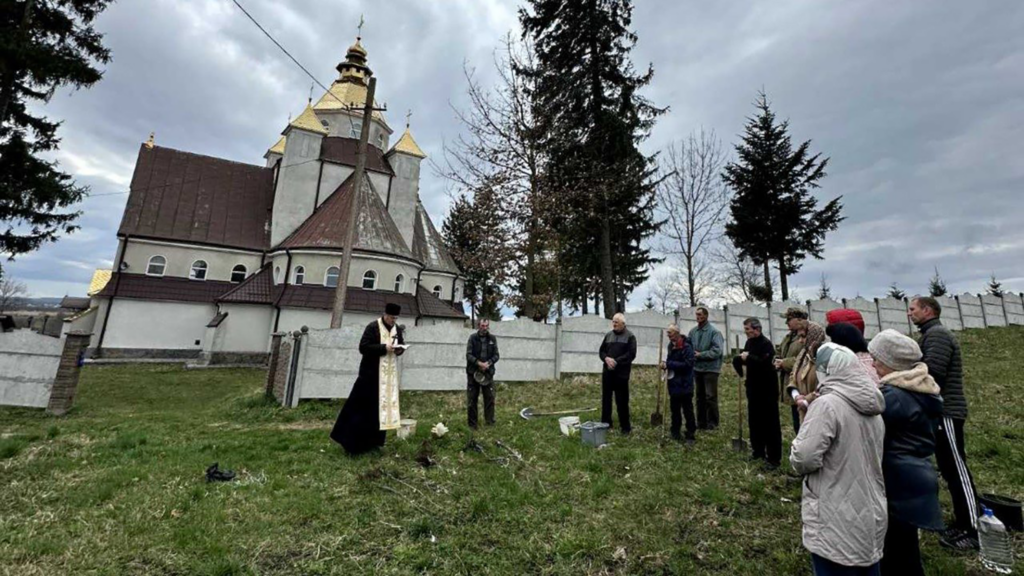
During the war, with the support of the Ministry of Environmental Protection and Natural Resources of Ukraine, the Ecological Bureau initiated the “Plant a Tree of Peace” initiative. Ukrainian nature reserves supported this initiative by providing seedlings. “This spring,” says Volodymyr Sheremeta, “we organized this campaign, conducted in spring and autumn, for the twentieth time. It is mainly carried out in parishes, but we also plant trees in public places, for example, in schools and kindergartens.”
Cultivating even a small patch of land is patriotism
Volodymyr Sheremeta points out that in the face of the war crisis, home and church gardens and orchards play a fundamental role in providing fresh produce for families and those in their care: “More than half of rural residents have, if not a small garden, then at least a vegetable patch and fruit trees.” He emphasizes that during wartime, when the agricultural sector is constantly threatened, “cultivating even a small patch of land becomes an act of patriotism. It also has a significant spiritual dimension.” “Speaking about the Church’s ecological ministry, the activities of the Ecological Bureau, and gardens and green spaces, we are not just talking about growing vegetables or fruits. We are also sowing the seeds of a new ecological awareness,” says Volodymyr Sheremeta. “We involve children in the work, and it teaches them responsibility for their homeland, for the common home that the Creator gave us, for the common heritage that must be preserved, multiplied, and passed on to future generations.”