Minister of Justice and Prosecutor General Waldemar Żurek announced that Polish authorities would take steps to bring the former minister back to the country. The case is reported by, among others, Wirtualna Polska, Interia, RMF FM, Polsat News, Telewizja Republika, and Associated Press.
From Budapest to Washington
Until Saturday, Ziobro was in Hungary, where in early 2026 he received political asylum from Viktor Orbán’s government. His long-time associate, Marcin Romanowski, received the same form of international protection. The situation of both politicians changed after the recent parliamentary elections in Hungary, in which Péter Magyar’s Tisza party won. The new prime minister, sworn in on May 9, declared before the elections that his government “would not be a haven for international criminals.” Ziobro’s departure to the USA coincided with Magyar’s swearing-in day. According to RMF FM findings, the apartment in Budapest that Marcin Romanowski rented until April 30 was already empty on May 1; it is currently unknown where he is.
Ziobro’s lawyer, Bartosz Lewandowski, stated in an interview with Polsat News that along with international protection status, his client received a travel document provided for in the Geneva Convention. Such a document, commonly referred to as a Geneva passport, allows a person under international protection to travel to states that recognize it. However, it does not imply immunity or protection from criminal or extradition procedures. Lewandowski stipulated that the details of the departure are covered by attorney-client privilege. According to unofficial findings by Onet, Ziobro may have entered the USA thanks to a journalistic visa issued by Telewizja Republika — the station confirmed on Sunday that the former minister would be its political commentator from the United States.
Extradition procedure and Washington’s role
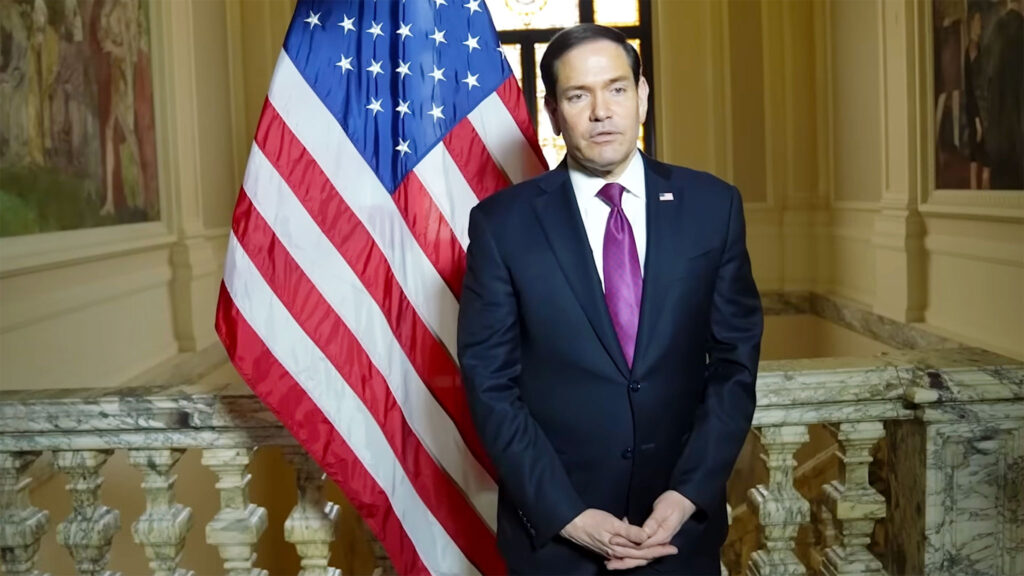
The extradition procedure from the USA to Poland is based on an existing bilateral agreement and requires actions by both Polish authorities and proceedings on the American side. In practice, the matter can have two tracks: a judicial one, which examines the legal grounds for extradition, and a political-diplomatic one, as the final decision on handing over a person to the requesting party in the USA rests with the Secretary of State, currently Marco Rubio.
This is why Ziobro’s case may go beyond a standard legal dispute. Poland will argue that it concerns criminal proceedings related to the management of public funds and possible abuse of power. The former minister’s defense, however, will raise the argument of the political nature of the case and the international protection status previously granted in Hungary. Former National Prosecutor Janusz Kaczmarek, in an interview with Wirtualna Polska, recalls a precedent from 2006, when he traveled to the USA with then-Minister of Justice Zbigniew Ziobro to discuss the extradition of Edward Mazur in the case of General Marek Papała’s murder. The American court ultimately rejected that request.
Formal obstacles on the Polish side
The National Public Prosecutor’s Office, in a statement published on May 11, admitted that procedural obstacles stand in the way of a potential extradition request. The District Court in Warsaw has not yet ruled on the prosecutor’s request from February 10, 2026, for the issuance of a European Arrest Warrant for Ziobro. The prosecutor requested a hearing date three times — on April 13 and 16, and May 5. Prosecutor’s Office spokesman Przemysław Nowak stated directly at a press conference on Sunday: “Zbigniew Ziobro is not an internationally wanted person. He was not wanted yesterday, nor is he wanted today.” The court hearing date for the defense’s appeal against temporary arrest has only been set for September 8, 2026. The Prosecutor’s Office estimates that a potential extradition procedure from the USA could prove to be a process “not only lasting many months, but many years.”
On the same day, the prosecutor sent an official letter to the US Ambassador to Poland, Thomas Rose, requesting to ascertain whether Ziobro and Romanowski are indeed in the United States, when and on the basis of what documents they crossed the border, and whether they are applying for refugee status or asylum. In April 2026, Ambassador Rose assured Deputy Prime Minister Radosław Sikorski that Washington “has no plans” to grant asylum to the former minister.
Context of the case
The National Public Prosecutor’s Office accuses Ziobro of 26 offenses related to the management of the Justice Fund during his tenure as Minister of Justice. Some of the charges concern, according to investigators, leading an organized criminal group and using his position for criminal purposes. Others relate to the purchase and use of the Pegasus system. Ziobro consistently rejects these charges and claims he acted in accordance with the law; he also emphasizes that he will remain outside Poland until, as he assesses, “real guarantees of the rule of law are restored.” The Sejm lifted the former minister’s immunity on November 7, 2025, in relation to all 26 charges.
Key facts
- What: Zbigniew Ziobro announced that he has been in the USA since May 9 after leaving Hungary; he will be a political commentator for Telewizja Republika.
- Poland’s Reaction: Minister Żurek announced actions aimed at extradition; on May 11, the prosecutor sent a letter to US Ambassador Thomas Rose. The District Court in Warsaw has not yet ruled on the EAW request.
- Criminal Case: The Prosecutor’s Office accuses Ziobro of 26 offenses, including those related to the Justice Fund and the Pegasus system; the defense disputes the merits of the charges.
- Sources: National Public Prosecutor’s Office (gov.pl), Wirtualna Polska, Interia, RMF FM, Polsat News, Telewizja Republika, Associated Press.
We are following the topic further on poland.us. For a detailed catalog of Polish-American companies and institutions in the USA, please refer to PolishPages.com.
📱 Download the PolishPages app:
App Store (iPhone) | Google Play (Android)