
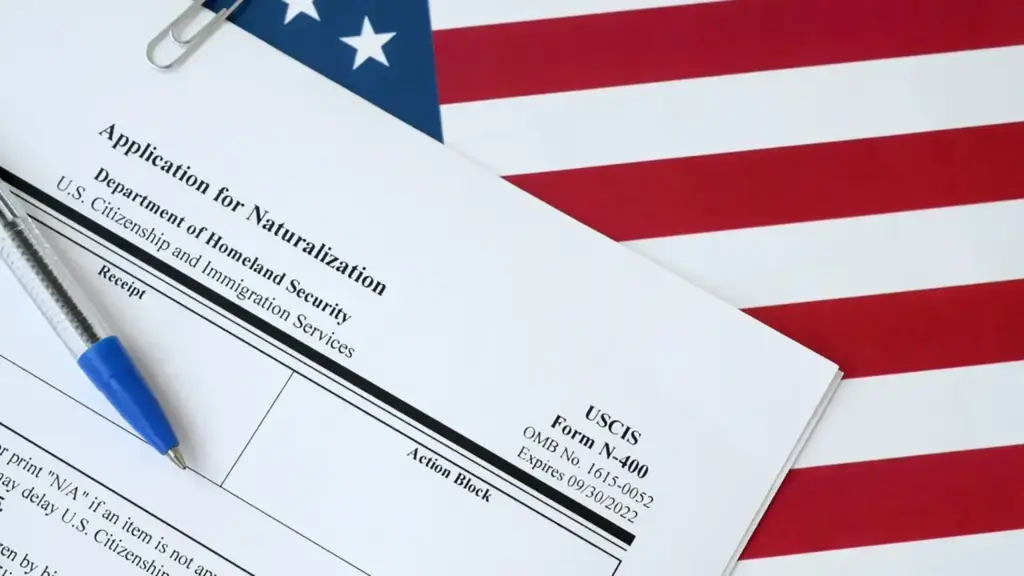
The principle that anyone born in the US is an American—jus soli, enshrined in the 14th Amendment to the Constitution—has been at the center of a legal battle between the Trump administration and the courts for months. On June 30, 2026, the Supreme Court ruled clearly in the case of Trump v. Barbara: the citizenship clause covers children born in the US to whom no “extraterritorial fiction” applies—meaning practically all children born on national territory, regardless of their parents’ immigration status.
The administration did not consider the matter closed. On August 6, 2026, the president signed a new executive order, “Continuing to Protect the Meaning and Value of American Citizenship” (Executive Order 14418, published in the Federal Register on August 11 as doc. 2026-16403). The decree directs government agencies to deny recognition of citizenship to children where neither parent is a US citizen, if one of four additional circumstances applies.
What exactly the August decree assumed
The decree listed four categories of children allegedly excluded from birthright citizenship: when a parent is an “alien enemy” (a member of a terrorist organization); when a parent is a “foreign government employee”—a category defined broadly to include not only ambassadors, but also consulate employees who are citizens of that country, or personnel of international organizations covered by immunity; when a parent entered into a “commercial transaction” to “purchase or obtain access” to the child’s citizenship—including simply purchasing a plane ticket so the mother could give birth in the US; and when a child was born on US territory where citizenship does not derive from a federal statute.
Immigration lawyers immediately pointed out that the third category—colloquially known as “birth tourism”—could in practice encompass any mother who bought a ticket to the US, regardless of her actual intentions.
What Judge Boardman ruled
The case Casa Inc. v. Trump (no. 8:25-cv-00201) before the US District Court for the District of Maryland is being litigated by CASA and the Asylum Seeker Advocacy Project (ASAP)—the same organizations that previously succeeded in blocking Trump’s original January 2025 decree. The court had previously certified a class in this case consisting of children born in the US since February 19, 2025, whose parents are neither US citizens nor permanent residents (green card holders).
On September 2, 2026, Judge Deborah L. Boardman issued a preliminary injunction blocking the enforcement of the August decree against children in this class. In her opinion, she wrote that the new categories of exclusions bear almost no resemblance to the narrow exceptions to birthright citizenship recognized by the Supreme Court in Barbara. As she summarized: “Barbara is the law. The President must follow it.”
What this means for Polish families right now
For Poles in the US—including those without green cards, on work or student visas, or without legal status—the ruling means that nothing changes in practice today: a child born on US territory remains a US citizen from birth, in accordance with the 14th Amendment and federal statute (8 U.S.C. § 1401), just as before the August decree. The court order covers the entire class of children born since February 19, 2025, so it also applies to children who were born in recent months.
However, this does not mean the issue is closed once and for all. The administration may appeal, and a separate DHS executive regulation from September 4, 2026, implementing the portion of the decree concerning “foreign government employees,” formally already exists—though the administration has conceded it will not take effect as long as the court injunction in the CASA case remains in place. Families whose situation could theoretically fall under one of the four categories in the decree (e.g., a parent employed in a diplomatic mission or international organization) should closely monitor developments with an attorney.
What next
The case of Casa Inc. v. Trump is not over—a preliminary injunction is a step preceding a full judgment, and Judge Boardman’s rulings in similar cases from this administration have previously been appealed. It is worth watching whether the administration appeals to the Fourth Circuit Court of Appeals and whether the case ends up before the Supreme Court again—even though the high court already unequivocally confirmed the principle of birthright citizenship in Barbara in June 2026.
This material is for informational purposes only and does not constitute legal advice. Family situations should be consulted individually with an immigration attorney, especially if someone in the family works for a diplomatic mission or international organization.
Polish immigration attorneys from the Polish Pages directory can help with matters related to citizenship and the status of children born in the US.