
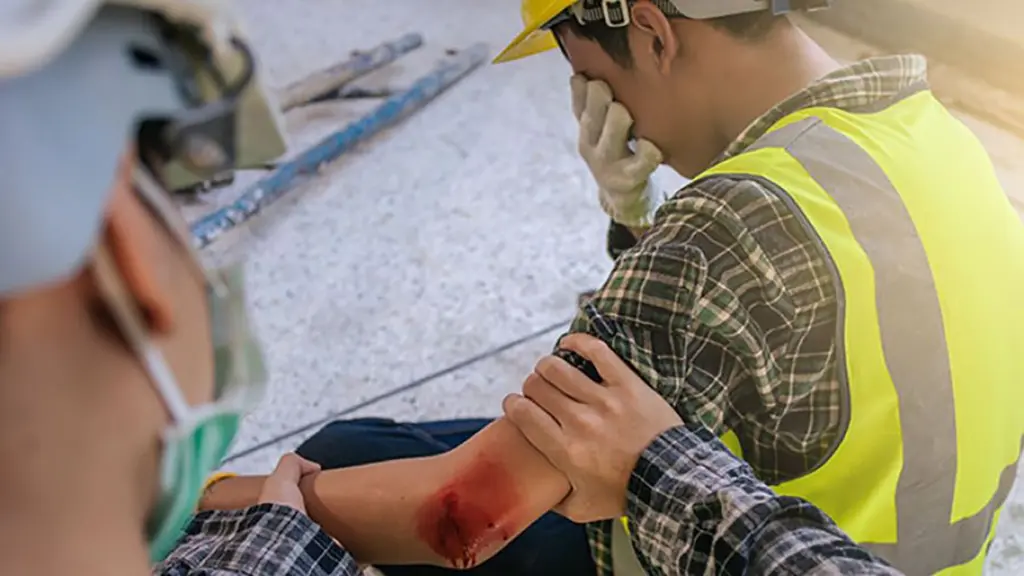
Some construction workers in New York never report an accident, fearing questions about immigration status or the loss of a job. Protection under Labor Law §240 and §241, together with workers’ compensation benefits, applies regardless of status and regardless of how wages were paid — including cash work.
Behind every recorded jobsite injury in New York there is a second, quieter set of cases: the ones nobody ever reported, because the injured worker was afraid of what a report might cost him. Attorneys handling accident cases in the city’s immigrant communities say the pattern repeats itself with unsettling regularity, and that the most expensive part of it is the first week of silence.
The silence that follows an accident
A worker comes home with a bruised shoulder or a wrenched back, treats it with whatever is in the medicine cabinet, and is back on the scaffold two days later. The crew is waiting. The job pays by the day. The family in Poland is counting on the transfer.
The reasons for staying quiet repeat themselves in almost every case. Fear of losing the job comes first. Then the worry that a report will sink an employer who happens to be a fellow countryman. Strongest of all is the belief that a person without settled immigration status has no standing in an American court.
Contractors sometimes add pressure of their own, offering an injured worker a small sum “for treatment” in exchange for keeping the matter off the books. The consequences of that arrangement stretch out over years. Untreated and undocumented injuries to the spine, shoulders or knees resurface later, at a point when tying them to one specific incident is no longer realistic — and when the chance to treat them disappears, so does the chance of having anyone else pay for it.
What New York law actually says
The statutes are unambiguous on this point. Protection for people performing construction work — including Labor Law §240 and §241, which deal with falls from height and jobsite safety — does not depend on immigration status, and it does not depend on whether wages arrived by check or in an envelope. The duty sits with the property owner and the general contractor. Separately, an injured worker is entitled to workers’ compensation benefits, and federal safety standards on construction sites are enforced by OSHA, the federal workplace safety agency, which accepts worker complaints regardless of status.
New York courts have for years confirmed the right of undocumented workers to bring injury claims. In practice that means a case turns not on papers but on evidence: medical records from the first days, witnesses, photographs of the scene. What that looks like step by step when the job was paid in cash is set out in the firm’s guide to a construction worker’s rights after an accident on a cash job.
Expert perspective: the first week decides the case
The mechanics of these cases are repetitive: the longer an injured worker waits, the less of the case survives. A jobsite changes from week to week, the scaffold comes down, the crew scatters across other jobs, and an untreated injury becomes hard to connect to any particular day. Deadlines run in the background too — for insurance notices and for the lawsuit itself. More on Nicole Brenecki’s work in construction injury matters is available on the firm’s listing and client reviews on PolishPages.
For Polish workers in Greenpoint, Maspeth and Ridgewood the practical conclusion is a modest one. Reporting an accident — even by text message to a foreman — and seeing a doctor in the first days does not commit anyone to a lawsuit. It simply leaves the door open. Silence closes it for good.
Falls from height have long been the focus of New York’s construction-safety rules, and for immigrant workers the language barrier and plain fear make a bad situation worse. Anyone weighing what to do after a jobsite accident can find the firm’s practice areas and contact details in the PolishPages directory.
This article is for informational purposes only and does not constitute legal advice. Attorney Advertising. In individual matters involving a workplace accident, consulting a licensed attorney is advisable.