
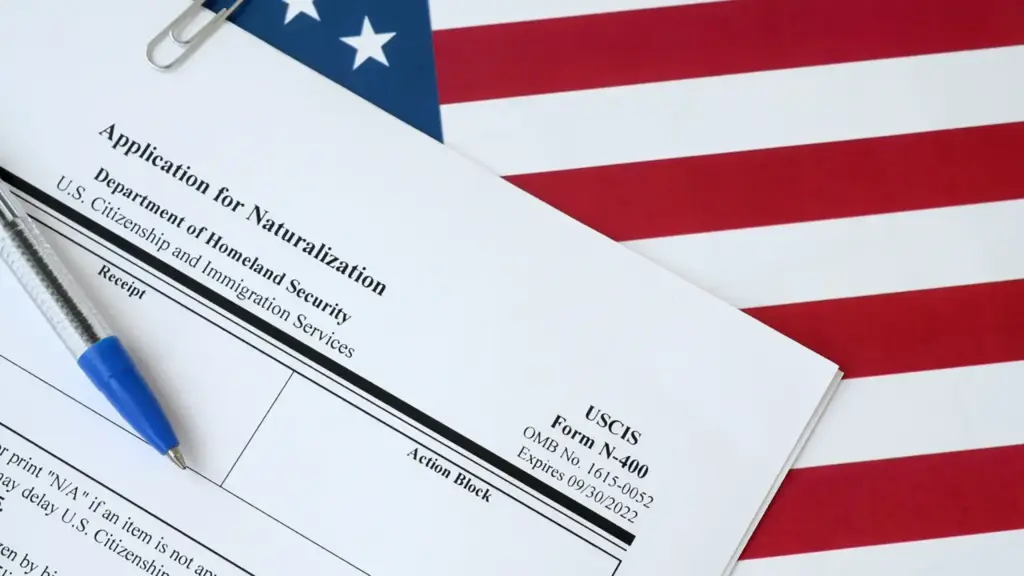
Signing an application to USCIS is a formality that is easy to underestimate — and starting this summer, violating it could cost more than lost time. A new federal rule specifies what happens when the agency accepts an application for processing only to discover later that the signature on it was invalid.
What changed: rejection is not the same as denial
Prior to the rule change, the USCIS regulation (8 CFR 103.2(a)(7)(ii)(A)) only referred to rejecting an application without a valid signature — but strictly at the intake stage. The practice of denying applications with a defective signature discovered AFTER acceptance had previously functioned only as an internal agency policy from 2018, without backing in the regulation itself.
The rule published in the Federal Register (91 FR 25479, document 2026-09289) now explicitly codifies this: “If USCIS accepts a benefit request and determines later that the request was not submitted with a valid signature, USCIS may reject or deny the request” — the agency has the formal right to choose between rejection and denial. This is an interim final rule, meaning it takes effect immediately while simultaneously opening for public comments (accepted until July 10, 2026; 31 comments were received).
Why the difference matters to your wallet
Rejection means a refund of the fee and the ability to resubmit the application — but with no right to appeal. Denial is a different situation: the application is considered fully adjudicated, the fee is forfeited, and the applicant is formally found ineligible. At the same time, they have the right to appeal using Form I-290B, which costs $800 to file.
One exception: applications for a certificate of citizenship (Forms N-600 and N-600K) may only be rejected, never denied — because under this category only one such application can be filed, making a denial harsher for the applicant than in other matters.
Who is affected
The rule covers all forms submitted to USCIS that require a signature — the justification lists examples such as Form I-129 (nonimmigrant worker petition), I-140 (immigrant worker petition), N-400 (naturalization), and I-918 (U status). The definition of what constitutes a valid signature does not change — it concerns situations where a signature turns out to be copied, pasted, stamped, signed by someone other than the applicant, or generated by software.
Data cited in the rule’s justification shows that the scale of the problem is growing: in fiscal year 2021, 300 applications were denied due to a defective signature, and in 2025 already 2,953 — with a five-year average of 1,192 per year. The agency also describes specific cases of abuse, including a consulting firm that submitted approximately 3,000 Form I-140 petitions with a copied signature.
What this means for the applicant
The practical takeaway is simple: the signature on every USCIS form — handwritten or electronic in an approved system — must genuinely be made personally by the applicant, and anew each time. Copying a signature from a previous document, using a template prepared by someone else, or signing on someone else’s behalf “for convenience” now carries the risk of losing the fee without a refund, rather than just being a formal inconvenience. For applications tied to numerically capped queues, discovering a defective signature after years of waiting could additionally mean losing one’s place in line.
As with other USCIS formalities described on Poland.us — for example, the step-by-step naturalization procedure — it is worth personally checking every required signature before submitting an application, instead of relying on a document prepared by someone else.
For matters related to USCIS applications and potential appeals, Polish attorneys from our directory can help.
This material is for informational purposes and does not constitute legal advice. Evaluating a specific case requires consultation with a licensed immigration attorney.