
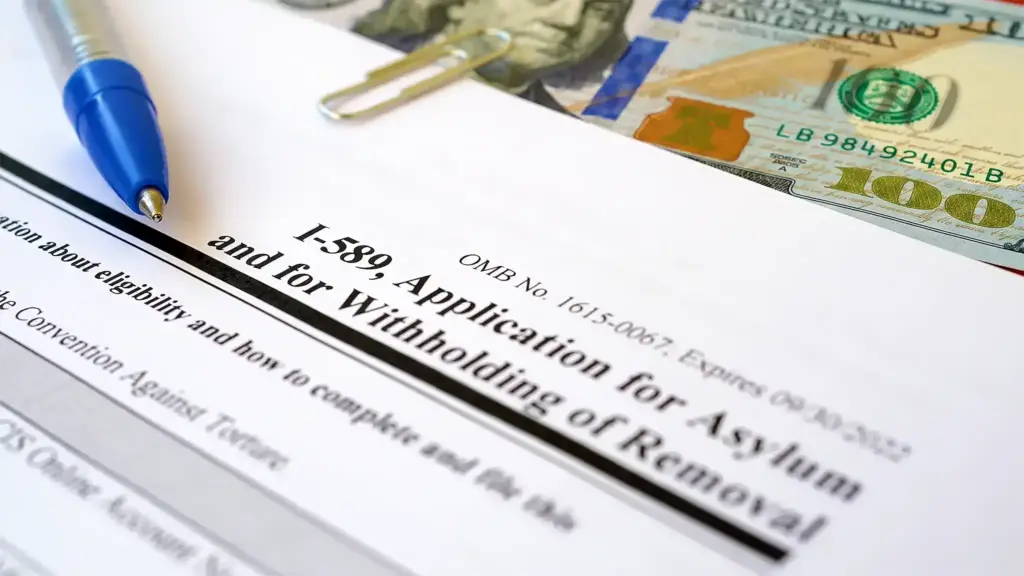
For decades, applying for asylum in the USA was free of charge. This was changed by a budget bill under which U.S. Citizenship and Immigration Services introduced new fees—effective for applications submitted after July 22, 2025.
Two separate fees
The first is $100 upon filing Form I-589, which is the application for asylum and for withholding of removal. It is paid once, along with the application.
The second is a novelty in the American immigration system: the annual asylum fee. It is paid by anyone with a pending application for each calendar year they wait for a decision. The law set its amount at $100, but the amount is adjusted annually for inflation—the current value for a given year is provided by the agency in a notice.
The annual fee must be paid exclusively online. There is no option to pay by money order or check.
Who is affected and since when
The obligation applies to anyone who filed Form I-589 after October 1, 2024, and whose case remains unresolved for 365 days. The first fee becomes due on the anniversary of filing the application, and subsequent ones on the same day of each following year.
This is important for people who have been waiting for a decision for a long time—the obligation does not apply solely to new applications, but also to those filed nearly two years ago.
The agency announces that it will notify interested parties itself: it sends personalized notices stating the amount, deadline, payment method, and the consequences of failing to pay. Therefore, for the first fee, you do not need to calculate the days from the application filing date yourself.
No exemptions or reductions
This is the most important difference compared to previous immigration fees. For many forms, you can apply for a fee waiver by submitting Form I-912. For the fees introduced by this law, this is out of the question—they cannot be waived or reduced.
The agency also notes that the new fees do not replace existing ones, but are charged additionally. Each must be paid as a separate transaction.
One exception — families separated at the border
Starting February 5, 2026, the agency paused the collection of these fees from individuals covered by the class action settlement regarding families separated at the border (Ms. L v. ICE) and their family members. This happened pursuant to a court order, which—as the agency notes—it disagrees with and is considering further steps.
Anyone who belongs to this group and previously received a payment demand that they did not settle before February 5 does not have to pay it—the notice has been withdrawn.
Individuals from this group filing an asylum application must, however, complete a special formality: write a note on the first page of Form I-589 stating their settlement class membership and send the application by mail. Submitting it online risks rejection.
What to check
Individuals with a pending application should ensure that the agency has their current mailing address—the fee notice is sent personally, and overlooking it has consequences for the case.
The current fee amount for a given year is best checked directly in the agency’s fee schedule, as amounts change annually. Your individual situation should be discussed with a licensed immigration attorney—especially if the case has been ongoing for several years and multiple annual fees may have accumulated.
Sources:
- U.S. Citizenship and Immigration Services — „USCIS Updates Fees Based on H.R. 1″ (alert from July 18, 2025, updated February 4, 2026): https://www.uscis.gov/newsroom/alerts/uscis-updates-fees-based-on-hr-1
- U.S. Citizenship and Immigration Services — G-1055, Fee Schedule (edition of May 29, 2026; alert regarding Ms. L v. ICE): https://www.uscis.gov/g-1055
This material is for informational purposes and does not constitute legal advice. Fee amounts change annually, and individual situations require consultation with a licensed immigration attorney.
Bartosz Karczmarski · August 3, 2026