
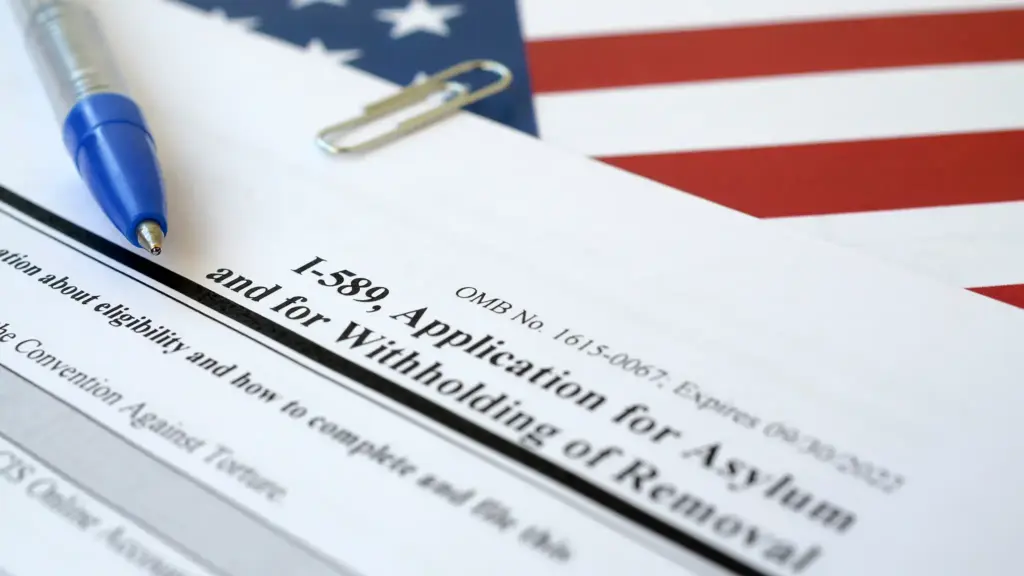
The application is filed on Form I-589, usually within one year of arrival. There are two paths: affirmative and defensive.
Asylum is often confused with a “general request for a residence permit,” but it is a completely different institution – strictly linked to persecution. It is also one of the most complex and rapidly changing areas of immigration law, where a formal error or delay can jeopardize the chance for protection. Below, we explain the basics: who can apply, within what timeframe, through what avenues, and what to expect along the way.
Who can apply for asylum?
The right to asylum is granted to an individual who cannot or is unwilling to return to their country because they have experienced persecution or have a well-founded fear of experiencing it. The key, however, is that the persecution must stem from one of five grounds: race, religion, nationality, political opinion, or membership in a particular social group. A difficult economic situation or general violence in the country alone is usually not enough – a connection to one of these protected grounds is needed.
Importantly, protection can be sought regardless of how the individual arrived in the USA. The application also covers a spouse and children under 21 years of age, provided they are in the United States.
How much time do you have? The one-year deadline
This is one of the most important rules of the entire process: an asylum application must generally be filed within one year of the last arrival in the USA. Exceeding this deadline may forfeit the right to apply for asylum.
There are exceptions to the rule – the deadline can be exceeded if “changed circumstances” significantly affecting eligibility or “exceptional circumstances” justifying the delay can be demonstrated, and the application is filed within a reasonable time after these circumstances cease. However, this is a matter of judgment and difficult to prove, so it is best to treat the one-year deadline as non-negotiable and act in advance.
Affirmative or defensive asylum?
The process follows one of two paths, depending on the applicant’s legal situation. Affirmative asylum applies to individuals who are not in proceedings before an immigration court (EOIR) – the application is then reviewed by USCIS, and an interview with an asylum officer is part of the process. Defensive asylum is the path for individuals already in deportation proceedings – the application is then reviewed by an immigration judge, as a “defense” against removal from the country.
In both cases, the basis is the same Form I-589. The context and the deciding authority differ, but the essence – demonstrating persecution on one of the five grounds – remains the same.
What about individuals detained at the border?
Recently, the scope of expedited removal proceedings has significantly expanded. According to administrative decisions, it now covers a broad group of individuals detained not only directly at the border but also deeper within the country if they cannot prove the required period of continuous presence in the USA (around two years). In practice, this means that for many individuals, a credible fear interview – an interview to determine if there is a credible fear of persecution or torture – has become the first and crucial line of defense, rather than a procedural margin.
Furthermore, for some individuals entering through the southwest border, a presumption of asylum ineligibility has been introduced, which further complicates matters. A positive interview outcome allows the proceedings to continue – for example, before USCIS or an immigration court – which is why how one presents their story at this stage is of immense importance. This is also a moment when legal support can be invaluable.
Can one work while waiting for a decision?
Asylum proceedings can be lengthy, so the question of work is important. An asylum applicant can apply for employment authorization (EAD) after 150 days from filing the application – provided that no decision has yet been made, and the delay in proceedings is not due to the applicant’s fault. Note an important change: as of December 5, 2025, the maximum validity of such a document has been shortened from five years to 18 months (for applications filed or renewed after this date), and automatic EAD extensions have been abolished. Therefore, it is necessary to keep track of deadlines and renew the document in advance to avoid a break in the right to work.
Until an EAD is obtained, an individual in the process usually does not have the right to legal work, so it is worth planning this period in advance.
Who else does asylum cover and what is the path to a green card?
If asylum is granted, the beneficiary (an asylee) obtains the right to legal residence and work, and one year after receiving status, can apply for a green card. Protection can usually also extend to immediate family – spouse and children – which for many individuals is a crucial element of the entire case.
What changes in 2026?
Asylum is an area exceptionally susceptible to political and legal changes. The most noticeable novelty is fees: filing Form I-589 currently costs $100 (it was previously free), plus an annual asylum fee (AAF) of $102 for each year the case is pending. Importantly, according to USCIS information, starting May 29, 2026, the agency may reject pending I-589 applications if the annual fee is not paid by the designated deadline.
Access to work is also changing. In addition to shortening EAD validity to 18 months (from December 2025), a DHS proposal from February 2026 is in legislative works, which could extend the waiting period for the first EAD application from 150 to even 365 days and allow for temporary suspension of accepting such applications when the average processing time exceeds 180 days. This is still a proposal, not yet binding law – but it shows the direction of changes.
Since rates, deadlines, and detailed rules are subject to monthly amendments, the current status should always be checked directly on the USCIS website – and, due to the importance of the matter, consulted with an attorney.
What most often determines the success of a case?
In practice, details often decide the outcome: a consistent and credible narrative, evidence confirming persecution (documents, certificates, country condition reports, witness testimonies), and adherence to deadlines and all formalities. Discrepancies in testimonies, missing documentation, or delays can sway a decision even when the story itself is true. That is why careful preparation of the application and – if possible – legal support already at the stage of gathering evidence is so important. It is also worth remembering that document translations must meet agency requirements, and every detail provided in the application should be consistent with what the applicant will later say during the interview.
In a nutshell
- Basis: persecution or a well-founded fear thereof due to race, religion, nationality, political opinion, or social group.
- Form: I-589 – common for affirmative and defensive paths.
- Deadline: generally 1 year from last arrival (narrow exceptions).
- Work: EAD can be applied for after 150 days from filing; from December 2025, the document is valid for 18 months (previously up to 5 years).
- After asylum: after one year, path to green card; protection also covers immediate family.
- 2026 Fees: $100 for filing I-589 and $102 annual fee (AAF); failure to pay risks application rejection.
An asylum case is often the most important proceeding in one’s life – with high stakes and a narrow margin for error. This is one of those areas where professional legal support is not a luxury, but a necessity. You can find verified Polish-speaking immigration lawyers who will guide you step-by-step through the process in the PolishPages.com directory.
This material is for informational purposes only and does not constitute legal advice. Asylum law is complex and frequently changes – deadlines, fees, and rules may differ at the time of reading. Current information can be checked on the USCIS website (uscis.gov), and individual cases should absolutely be consulted with a licensed immigration attorney.
Based on official USCIS materials regarding asylum and Form I-589.
📱 Download the PolishPages app: App Store (iPhone) | Google Play (Android)
Author: Bartosz Karczmarski · Poland.us / Głos Polonii · July 9, 2026