Wooden Shoes
The term ‘chodak’, as one might guess, refers to shoes made of wood as well as very simple shoes made of leather. These leather ‘chodaki’ were characteristic footwear for Balkan Slavs. To this day, the Dutch, French, Belgians, and less often the Spanish, are primarily known for working in wooden ‘chodaki’. In Poland, they also appeared as work shoes, but in concentration camps such as Auschwitz. In western Poland, people rather wore so-called ‘półdrewniaki’, which, as one might guess, were shoes with a wooden sole but necessarily a leather upper.
Characteristics of Clogs
Clogs, which cover a significant part of the foot, have been handmade since the Middle Ages. Various files and chisels were used for this activity. The process of their creation was significantly improved in the 19th century. Birch, willow, beech, and less often poplar wood were used for the production of clogs. These are, of course, rather light and easy-to-work wood species. However, an important rule was that individual pairs of clogs should be made from the same type of wood.
Above all, durability
The primary advantage of clogs is their incredible durability. Walking in them for extended periods caused painful pressure from the wood on the foot. In the past, hay or straw was placed inside them to avoid discomfort.
For the poor
Clogs were initially associated with poverty; it often happened that leather shoes could only be dreamed of. In the 19th century, they were mainly footwear for farmers, fishermen, and various factory workers. In later years, wooden footwear rather lost its significance. During the post-war crisis, they continued to function because their purchase did not pose a major financial problem.
20th Century
In the 1970s, they appeared in a new form. They were then a fashionable and desired product, especially by young people. Fashion designers also became interested in them. They then took on various shapes and heel heights.
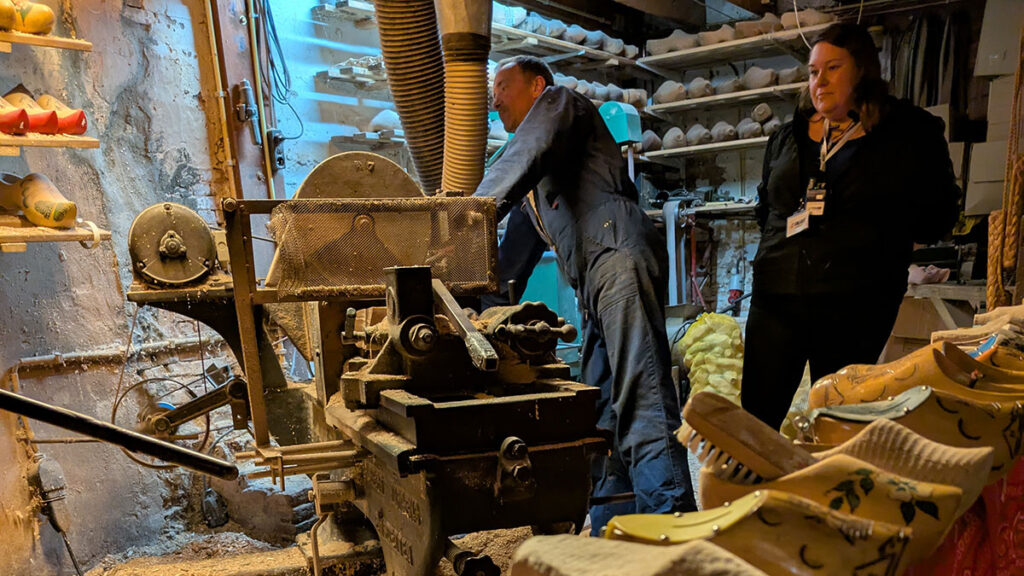
“Dziennik Polonijny” in the Netherlands closely examined the process of carving wooden shoes as well as their natural drying.