Then it was a good idea, because due to the roughness of the sand, some clothes could be washed clean. Our ancestors considered “beating” dirt out of clothes, for example with a washing paddle or by simply hitting soaked clothes against rocks, to be the best washing method.
First washing paddles
The first “beaters” or so-called washing paddles had the shape of hard, unbreakable, and above all, quite thick, short wooden paddles. Washing with them involved first soaking dirty clothes, necessarily in cold water, and then hitting these clothes with the aforementioned paddle. After which, the clothes had to be rinsed thoroughly with water. Over time, housewives began to add mixtures of ash and tallow to their washing.
A tub was necessary for washing
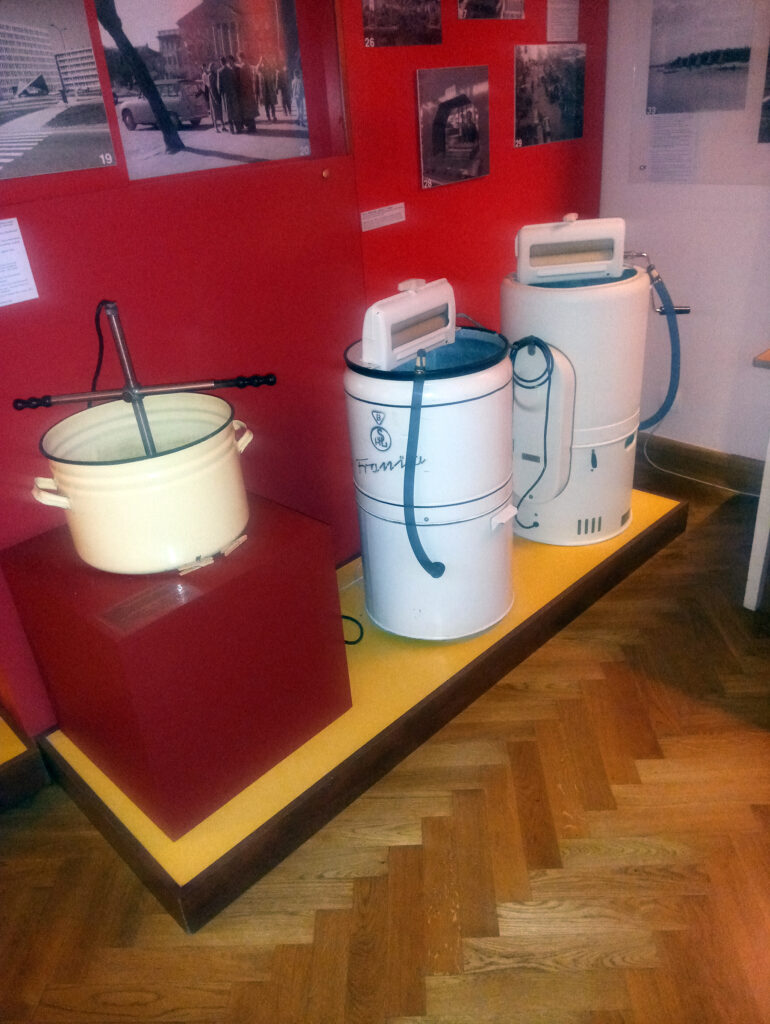
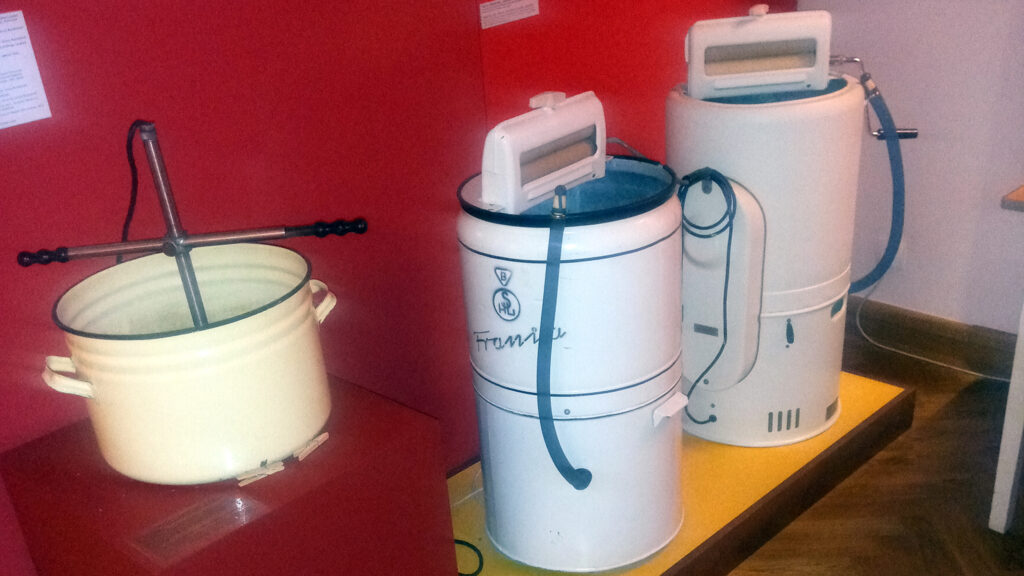
In subsequent years, the current of swift water was nevertheless replaced by a tub. It was also noticed during washing that all dirt was easier to remove from fabrics under the influence of warm water. In villages, one could find a large basin replacing the tub, with a so-called spring-loaded cup, commonly known as a “ruchak,” which created a vacuum during washing, increasing its effectiveness. In the rural songs of Mr. Marian Tylka, we read that …the washing with a “ruchak” at that time simply looked like mashing potatoes… All these processes related to washing, both with a washing paddle and a “ruchak,” were very laborious, so humanity had to invent something to rationalize these activities.
Early 20th Century
In the early years of the last century, a so-called “washboard” was known in every household. After soaping dirty clothes with grey soap, one had to rub them against the corrugated metal sheet, called a “washboard.” Such washing also required time and physical strength. But the 1960s introduced a kind of revolution in washing. This was when the rotor washing machine, known as Frania, appeared. The appearance of electric rotor washing machines on the Old Continent ended the use of the washboard, which remained only in homes where there was no electric light yet.