Svitlana Dukhovych, Fr. Marek Weresa – Vatican
Generators, thermal blankets, field kitchens, and tents are urgently needed, Vatican News reports.
In an interview with Vatican media, Oleksandr Magdalits, program manager for food security and emergency response at Caritas Ukraine, talks about the situation on the ground and the solidarity efforts of the Greek Catholic Church.
The drama of the cold
The Caritas Ukraine representative indicated that a series of missile and drone attacks on critical infrastructure caused serious damage to the national energy system. The situation is further exacerbated by a significant drop in temperatures.
The situation in Kyiv regarding the energy crisis – although data is constantly changing – means that over 1,100 multi-story residential buildings are without heating. Electricity supplies are partially interrupted, and many supply sources have been damaged. It is estimated that the crisis affects at least half a million residents of the capital and the region. Kyiv and its surroundings currently need energy supply restoration. “We do not see the possibility of fully restoring electricity and heating in the coming months,” Oleksandr Magdalits indicated.
Another problem resulting from power outages is frozen sewage systems. “These buildings are now without toilets, and thawing will not be possible before summer. Hospitals, kindergartens, and schools are also completely or partially disconnected from the grid and are looking for alternative energy sources where possible,” added the Vatican media interlocutor.
The most dramatic situation concerns people with disabilities or limited mobility, elderly people living alone, and families with small children. Magdalits pointed out: “It is not always possible to reach them, and aid is most often concentrated in public spaces or designated buildings – it does not reach every apartment. There are photos showing icicles inside stairwells. And behind closed doors live people who, due to their health, are unable to even leave their homes.”
Complicated logistics
Speaking about the forms of reaching those in need, the Vatican Radio interlocutor indicated that emergency lines are functioning, but currently 500,000 people need help and it is extremely difficult to contact emergency services. Therefore, the activities of the local Caritas focus on the possibilities of providing real help. This also includes supporting and coordinating social activities. “This energy crisis is a huge challenge for protecting the lives of the most vulnerable people across the country,” he added.
Reaching every person in need has become a problem. “We are forced to ask not only for financial support but also for material aid, because many people have been deprived of basic necessities. There are food products in stores, but often they cannot be cooked. There is water, but it cannot be heated. Warm clothes exist, but in many apartments the temperature does not exceed six or seven degrees: the cold seriously threatens people’s health,” adds Oleksandr Magdalits.
Overcrowded hospitals
The ongoing energy crisis – according to the Caritas Ukraine representative – constitutes a serious violation of international law. “We are witnessing deliberate pressure on the civilian population, with full awareness that the most vulnerable will suffer the most. This is a deliberate, intentional infliction of suffering,” he added.
The crisis also affects hospitals. Most have generators to ensure electricity supply, but the heating problem remains very serious, as not all facilities have their own boiler rooms. Some medical institutions cooperate with local authorities and charitable organizations in seeking support. Evacuation of medical units is practically impossible, as there is nowhere left to transfer patients. Nursing homes and other specialized facilities were overcrowded even before this current crisis, due to the evacuation of people from the most dangerous regions in Ukraine.
When a plate of hot soup can improve health
Coordination meetings are held daily with the participation of state authorities, emergency services, government representatives, and aid organizations, including Caritas. “These meetings are crucial, because our country’s ability to survive is based precisely on this unity,” emphasized Oleksandr Magdalits.
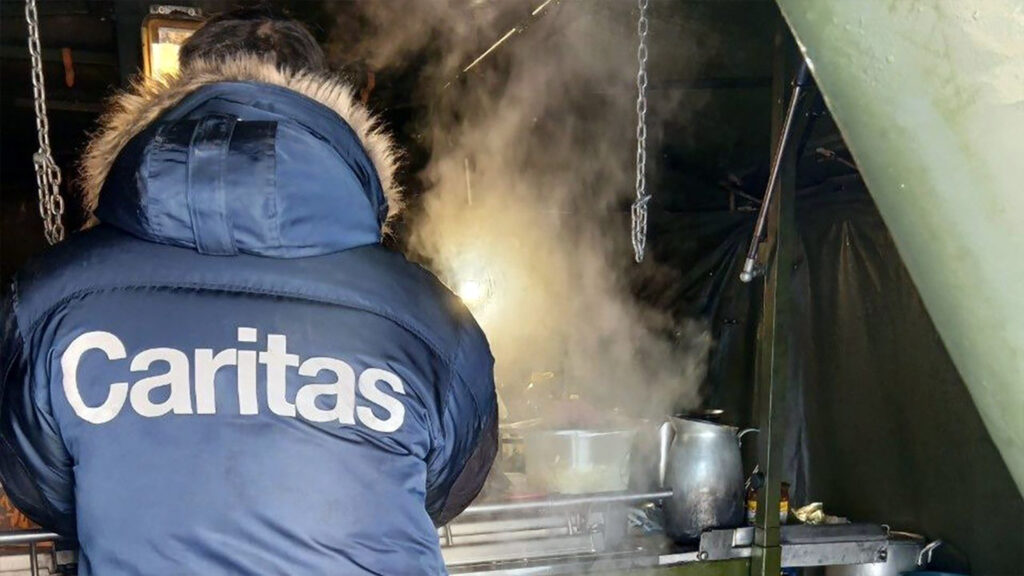
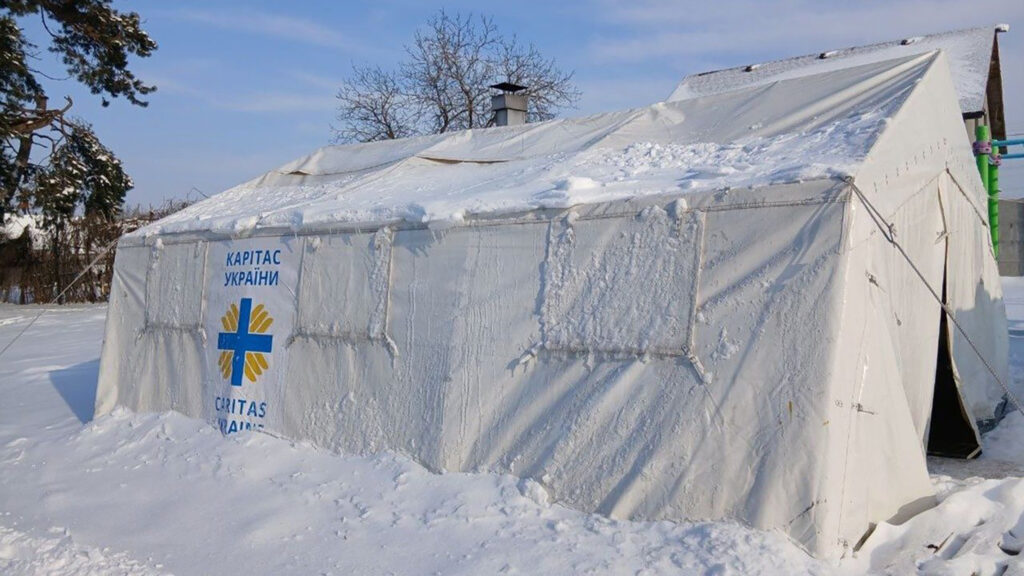
Currently, over 40 “heating points” organized by emergency services are operating in Kyiv; 10 such points are run by the National Guard. State authorities have also created 10 more such stations in various districts of the city, where people can warm up, spend the night, prepare a meal, and receive basic assistance. Caritas participates directly in the operation of these centers and at the same time actively works with Greek Catholic parishes, providing hot meals. This is extremely important: even a plate of hot soup can significantly improve a person’s physical condition.
The Caritas Ukraine representative lists: “We have already started distributing hot meals at five points in Kyiv and three localities in the region – Fastiv, Irpin, and Vyshhorod. However, the needs concern not only Kyiv: the entire region and other parts of the country are also affected. For example, as much as 70% of the Kharkiv region is currently without electricity. Caritas is also present and active there.”
Among the items of “urgent need” are: generators, sleeping bags, thermal blankets, thermoses, flashlights, field kitchens, and tents. Oleksandr Magdalits emphasizes: “Every form of help is immensely valuable, and we try to deliver it to those in need as quickly as possible. Only together can we face this deliberate and intentional attack on the most vulnerable people.”