Edoardo Giribaldi, Karol Darmoros
Freedom and truth
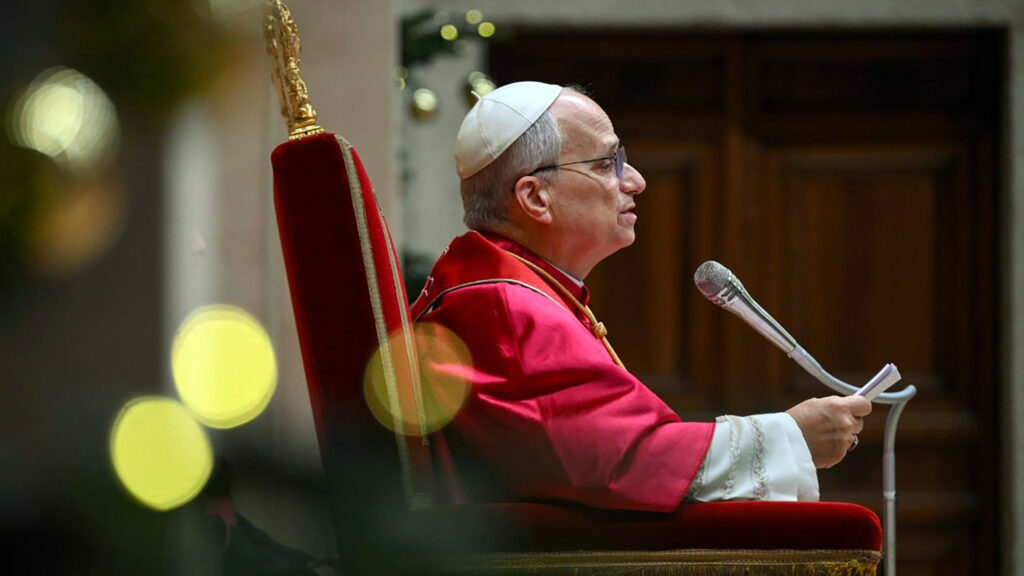
In his address on January 9, the Pope drew attention to the paradox of the “weakening of the word,” which is sometimes justified today by freedom of expression. As he emphasized, “freedom of speech and expression is guaranteed precisely by the certainty of language and the fact that every term is anchored in truth.”
Orwellian Newspeak
According to Fr. Piccolo, the papal warning brings to mind Orwell’s “1984,” where control of language leads to control of thought. In the world of Newspeak, the goal was clear: “If you don’t have the words, you can’t think,” says the Dean of the Faculty of Philosophy at the Pontifical Gregorian University. Many concepts there meant their opposite, and the Ministry of Truth systematically falsified reality.
The fragility of the word
The Jesuit points out that the problem of language weakening was already present in Martin Heidegger’s reflection, who warned against reducing speech to a technical means of communication. As Fr. Piccolo explains, the word loses its power when it is detached from the meaning and history it carries.
Words as tools
The contemporary inflation of concepts encourages abuse. “Freedom of expression is not the freedom to say anything,” emphasizes Fr. Piccolo, recalling the thought of the English philosopher John Langshaw Austin: “Words are our tools, and we should use clean tools.”
The responsibility of language
Finally, the Jesuit refers to St. Augustine and his concept of “inopia loquendi,” which reminds us of the poverty of the word – the understanding that language is not a perfect reflection of thought, but merely an attempt to express it. Therefore – emphasizes Fr. Piccolo – it is necessary to educate young people about the value and consequences of words, and for media professionals to base their communication on truth and honesty, and not merely on visibility or success.