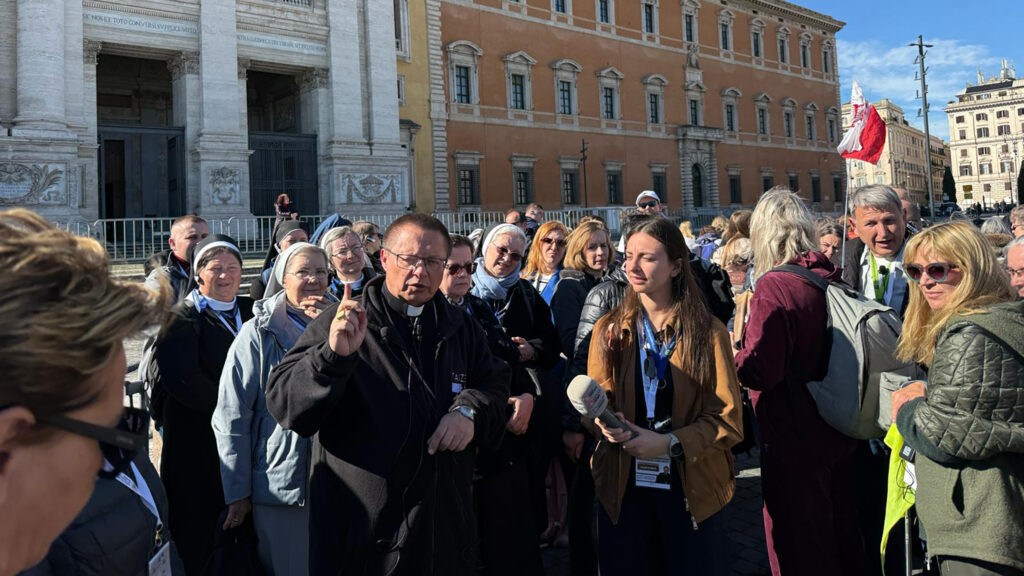
Natalia Pieśniewska – Church and Hospice of St. Stanislaus BM in Rome.
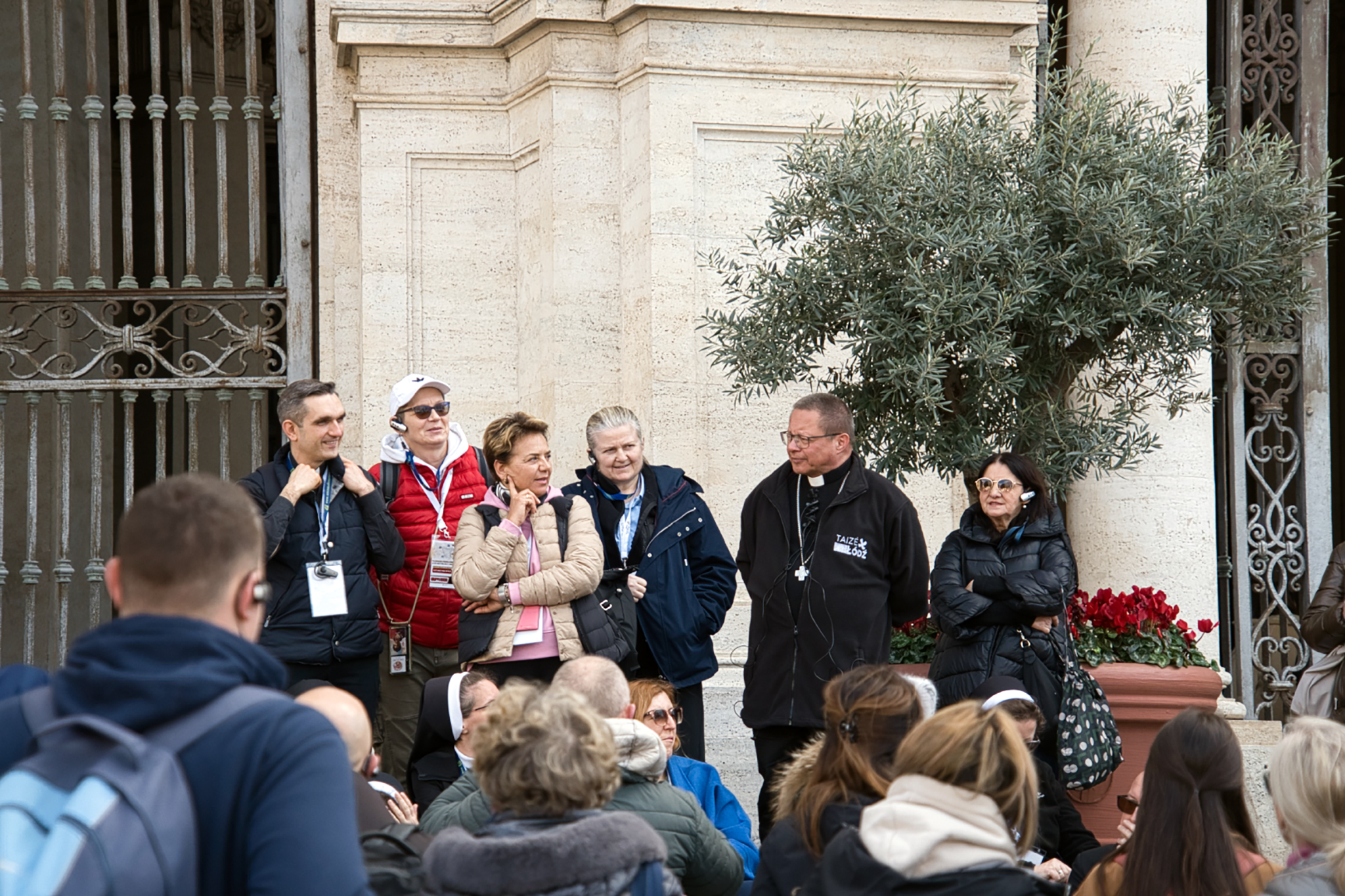
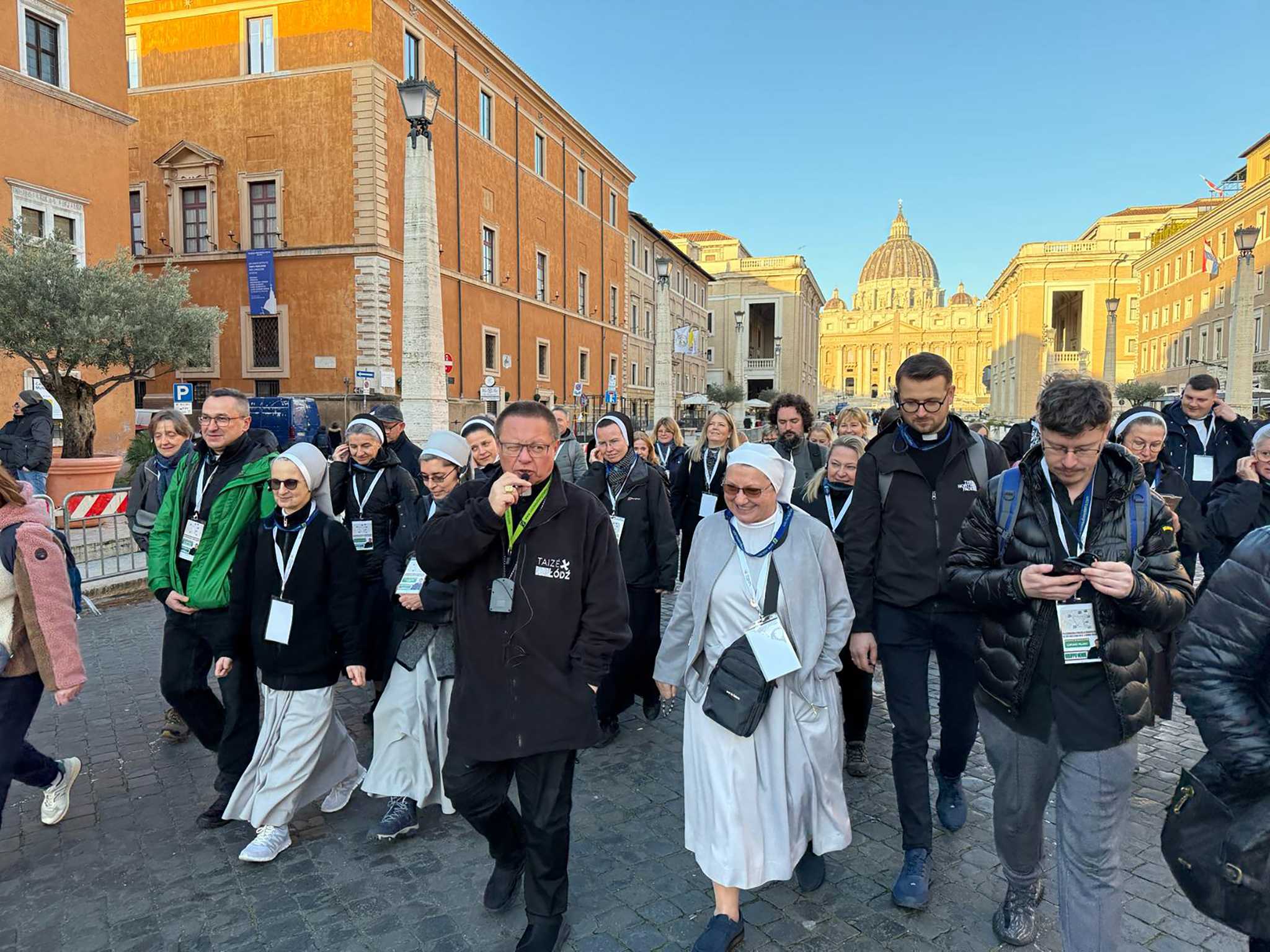
The organizer of the Polish diaspora pilgrimage to the seven churches was the Church and Hospice of St. Stanislaus BM in Rome. This special journey was led by Fr. Cardinal Grzegorz Ryś, Metropolitan Archbishop of Krakow and protector of the Church and Hospice of St. Stanislaus Bishop and Martyr in Rome.
The pilgrimage to the seven churches is one of the oldest Roman pilgrimage traditions, initiated in the 16th century by St. Philip Neri. The route is approximately 25 kilometers long and leads through the entire city – from the outskirts and catacombs to the most important basilicas of Rome: St. Peter’s Basilica, St. Mary Major Basilica, St. Lawrence Outside the Walls Basilica, Basilica of the Holy Cross in Jerusalem, St. John Lateran Basilica, St. Sebastian Basilica (the Polish diaspora pilgrimage reached the nearby Catacombs of St. Domitilla), and St. Paul Outside the Walls Basilica.
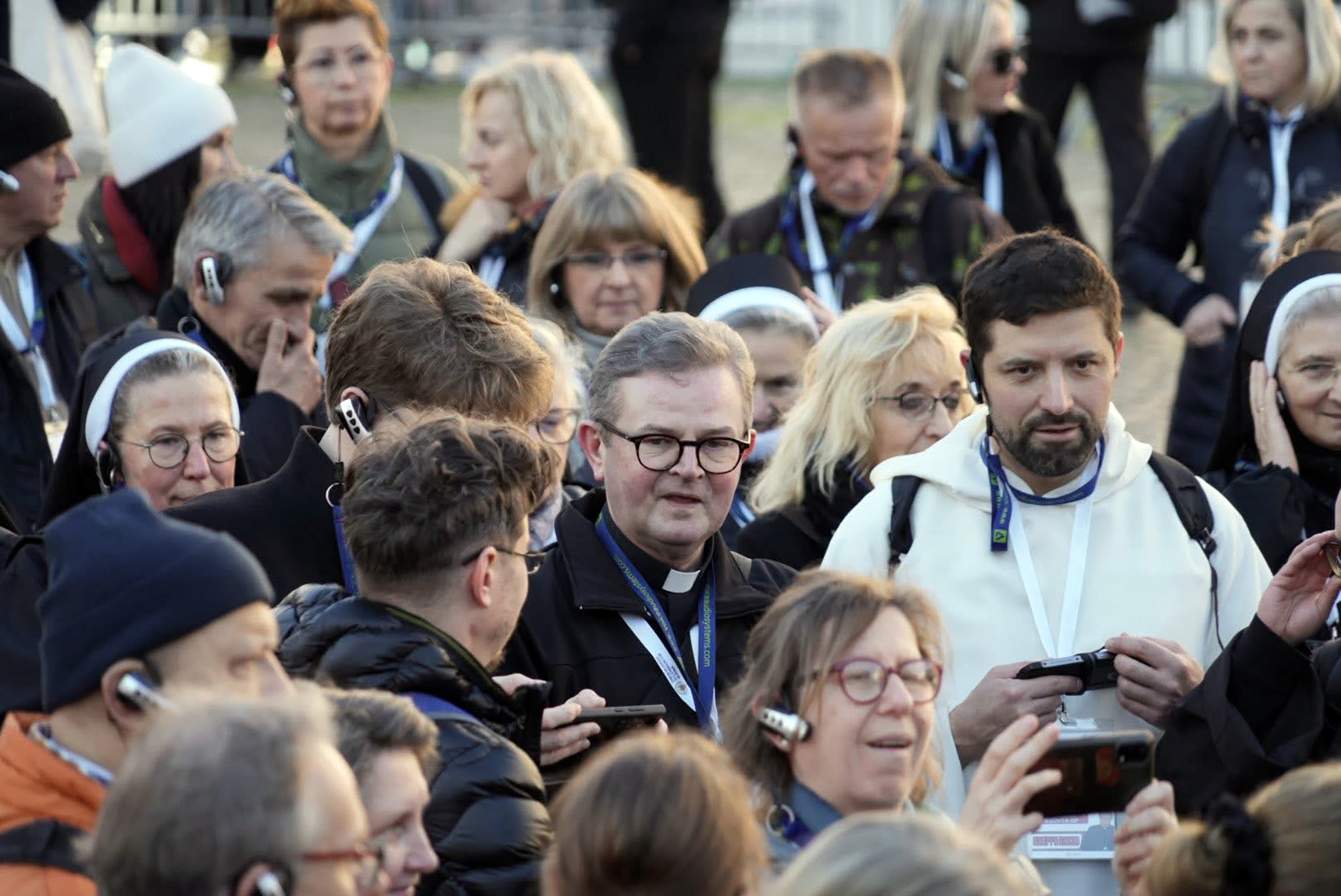
Over 200 people participated in the pilgrimage. Among them were priests, nuns, representatives of the Roman Polish community, guests and pilgrims from Poland, representatives of the diplomatic corps, and numerous communities, including the Domestic Church.
Fr. Paweł Ptasznik, rector of the Church and Hospice of St. Stanislaus BM, emphasized the significance of this event:
“I am glad that such a large representation of Poles present in Rome undertakes this pilgrimage, referring to an ancient tradition. It is a common path, during which we can acquire the spirit that has accompanied the Roman Church since the 16th century. It is also important because the pilgrimage is part of the celebration of the Holy Year and is associated with the possibility of obtaining a plenary indulgence. I am grateful to Fr. Cardinal Grzegorz Ryś for his presence among us, which is a great strengthening for our community.”
The spiritual dimension of the pilgrimage was discussed by its originator and organizer in the Roman Polish community, Fr. Tomasz Jarosz, administrator of the Church and Hospice of St. Stanislaus BM in Rome. As he explained, the initiative was born during preparations for a similar event that took place in the Jubilee Year with couples from the Domestic Church.
“The uniqueness of this pilgrimage also lies in the fact that we are accompanied by an extraordinary guide – Fr. Cardinal Grzegorz Ryś. I can personally say that it was he who taught me how to pilgrimage to the Seven Churches. He instilled the idea of this journey in me thirteen years ago, when, as an auxiliary bishop, he made a pilgrimage to Rome with our class of deacons,” emphasized Fr. Jarosz.
“It is a journey not only through Rome, but above all into the depths of one’s own heart. It is a time of strengthening faith, courage in getting to know oneself, and thereby also in giving oneself to another person and accepting them as they are. The pilgrimage also constitutes an important preparation for Lent,” said Fr. Jarosz.
Eucharist in the Catacombs of St. Domitilla – prayer for the Homeland and peace in the world
A special moment of the pilgrimage was the Eucharist celebrated in the Catacombs of St. Domitilla for the intention of the Homeland and peace in the world. The Holy Mass was presided over by Fr. Cardinal Grzegorz Ryś, who reminded that the oldest cult of martyrs was always associated with the Eucharist. Altars were erected over their graves, emphasizing that the Eucharist is the sacrament of love, of which they gave the highest testimony.
“Martyrs teach us how to experience the Eucharist. They teach love, which is not just justice and reciprocity, but a selfless gift of oneself,” emphasized the cardinal.
A path of reconciliation and transformation of the heart
Referring to the Gospel, the cardinal reminded that the true path to the altar leads through a heart capable of forgiveness and reconciliation. Although the pilgrims covered many kilometers, the spiritual journey remains the most important.
“The Eucharist calls us to love even in difficult situations, to try to understand another person, even if it requires going beyond our own way of thinking,” he said.
As he pointed out, the testimony of the martyrs is not about fascination with suffering, but about the ability to love in a world full of hatred. That is why their graves became places for the celebration of the Eucharist – the sacrament of love.
Encounter with God in the heart and in another person
Participants in the pilgrimage emphasized that its meaning extends far beyond physical effort and kilometers covered.
“The pilgrimage can be experienced as a physical challenge, but its true meaning is spiritual. It is an encounter with Jesus in one’s heart and in another person,” noted one of the pilgrims.
Another person drew attention to the inspiration flowing from the attitude of St. Peter and the first witnesses of faith: “This pilgrimage prompts me to reflect on my own mission and on how to be great in my humility, fulfilling my daily calling.”
Prayer carried with a personal intention
One of the participants shared a very personal testimony: “My intention is related to my husband’s illness. I carry it in my heart at every stage of this journey. Participating in the pilgrimage has been my long-standing dream. I am all the more grateful to be here.”
She also emphasized the significance of the presence of Fr. Cardinal Grzegorz Ryś: “I respect him greatly as a man and a priest. His way of speaking about God is simple, yet profound. I pray that there will be as many such shepherds as possible who lead people to God with love and wisdom.”
Community of faith and school of love
The Polish Diaspora Walking Pilgrimage to the Seven Churches in Rome was not only the hardship of the journey covered, but above all a profound experience of the community of faith. It became a time of prayer for the Homeland and peace in the world, a space for spiritual reflection, and a reminder that every path to God begins in a heart ready to love and forgive.