Olivier Bonnel – Vatican
From Awali in Bahrain, where his vicariate is located, Bishop Aldo Berardi, Apostolic Vicar of Northern Arabia, does not hide his concern at a time when the war in the region has entered a new level.
A very complicated situation
On Friday, February 28, the first day of bombing, Bishop Berardi sent a message to all priests, monks, and nuns of his vicariate, which covers four countries of the Arabian Peninsula: Kuwait, Saudi Arabia, Bahrain, and Qatar. He emphasized that it is a “time of uncertainty,” asking everyone to remain in safe places, persevere in prayer, and follow the recommendations of local authorities.
After Leo XIV’s Sunday appeal for peace, Bishop Berardi admits that he expected the Pope to speak, and the situation is truly complicated.
“The situation in the region was already very complex geopolitically and economically, and now, after this Israeli-American intervention, I won’t say all hell broke loose, but no one expected it,” says the hierarch. He adds that desires for revenge have intensified according to the logic: “you touch me – I touch you; you attack me – I attack you.”
Churches closed
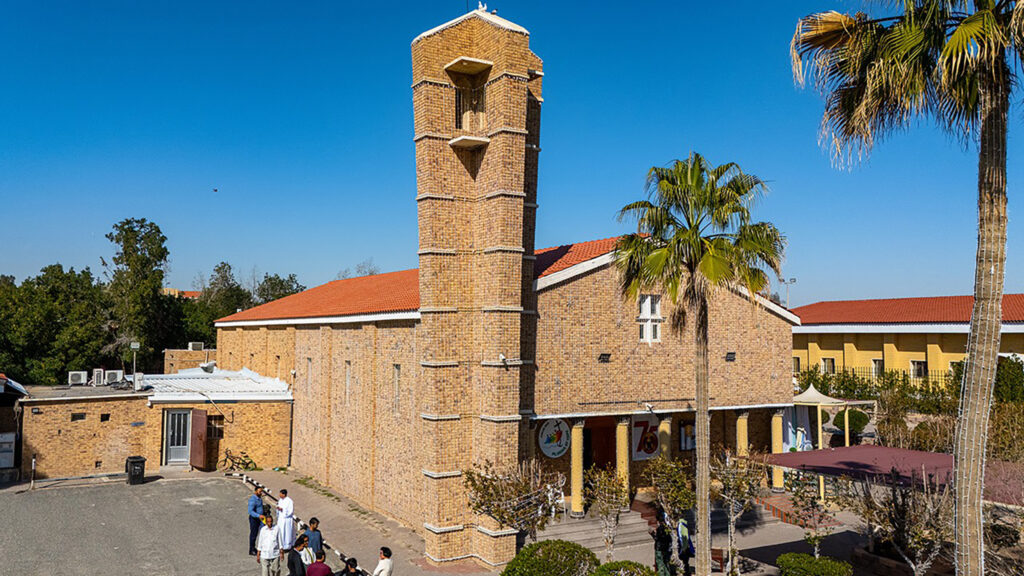
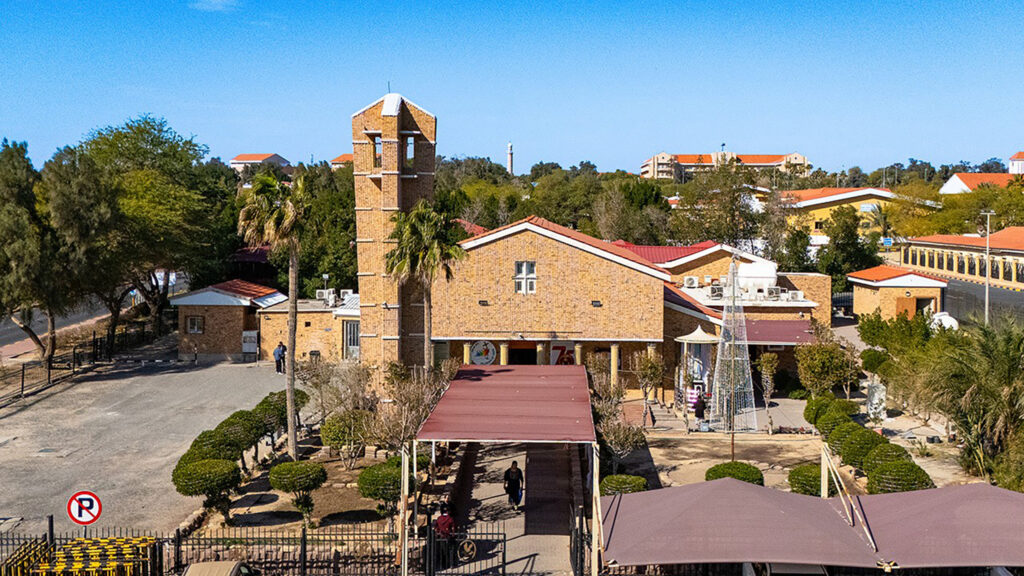
Speaking with Vatican News around 1:30 PM, Bishop Berardi recounts that just half an hour earlier, a missile flew over the bishopric, and its debris – after being shot down – fell next to the cathedral. “A fire broke out near the building. This truly worries us because the cathedral is new. Missile attacks have been ongoing since yesterday. So we have closed all churches to avoid danger. They are not direct targets, but fragments and explosions can damage buildings, and above all, injure people. Alarms sound regularly, so everyone stays at home. For safety reasons, we do not go out. Life is moving in slow motion, and our churches are closed,” adds the bishop.
In the evening, priests jointly celebrate Mass for peace – this is what the Apostolic Vicar asked the priests of each parish to do. This takes place via video transmission, for Manama and for Kuwait. “The faithful asked for the opportunity to participate, but we do not want to take risks. In Qatar, for example, the church was closed by the police – the entire religious complex was closed, no one enters or leaves. There, too, fragments fell near the sacred buildings. Everyone is praying and we are waiting for the situation to calm down,” adds Bishop Berardi.
There is a risk that the entire region will explode
Referring to the Pope’s warning that the spiral of violence could get out of control and become an “irreversible abyss,” the Apostolic Vicar of Northern Arabia admits that such a threat exists. “In this part of the world, grievances are deep and have a centuries-old history. When such great violence escalates, when the pride of nations is wounded and attacked violently, the response is often equally violent. One enters an abyss and a spiral, not knowing where it will lead us,” explains the bishop.
“There is a risk that we will fall into a spiral of revenge and mutual violence that could consume us. We must pray that peace will be restored and that we will not be drawn into this spiral. If everyone enters the fight because they feel attacked, there is a risk that the entire region will explode,” warns Bishop Berardi.