Paolo Ondarza – Vatican
Barbara Jatta, director of the Vatican Museums, emphasized: “The Vatican Museums are – in accordance with the will of the popes – a home open to all. Our mission is to preserve and share this heritage.”
Conservation work full of emotion
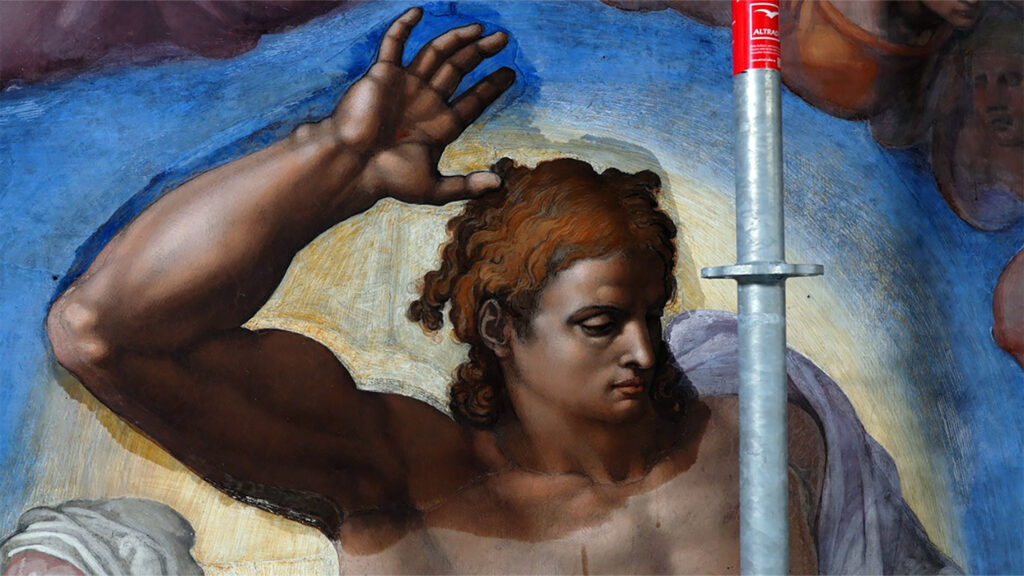
Conservators have been carrying out extraordinary conservation work on Michelangelo’s Last Judgment in recent weeks. From the walls, the intense palette of colors discovered during the “restoration of the century” carried out in the 1990s by Gianluigi Colalucci under the direction of Carlo Pietrangeli – which astonished everyone at the time – is slowly emerging.
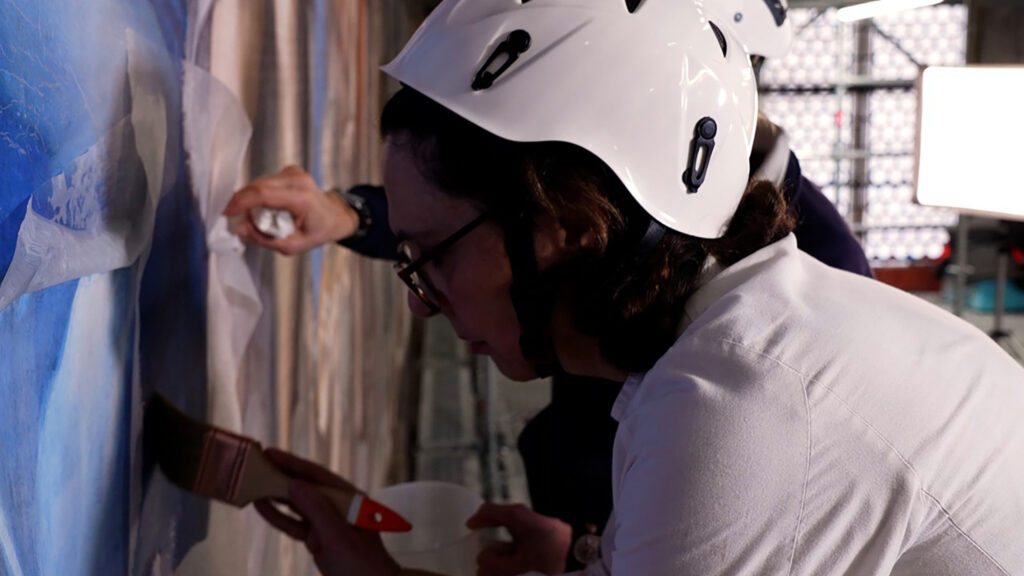
Barbara Jatta and chief conservator Paolo Violini, who has been associated with the Vatican collections for many years, reminded journalists of these emotions and described the work on seven levels of scaffolding right next to the 180-meter surface of the world’s most important fresco.
“This is not a restoration, but conservation”
The director clearly stated that it is not a full restoration treatment, but an extraordinary conservation involving the removal of a thin layer of lattato di calcio (calcium deposit), which was not actually visible to the naked eye. This is done by gently applying Japanese paper soaked in distilled water.
“The color is as if dormant”
Walking on the metal structure, one can almost touch the monumental figures sculpted by Michelangelo’s spirit and imagination. Sections of the fresco have been divided into approximately 450 “plaster fragments,” according to the original 16th-century work sequence – this division also serves as a work map for the current conservators.
When removing the thin layer of paper with powder, the contrast between the conserved and unconserved surface is stunning.
Paolo Violini recalls that after the first major restoration of the frescoes three decades ago, the colors emerged from the dark patina and delighted everyone. Recently, however, the colors again seemed muted, until it was understood that this was the result of the accumulation of a thin, easily removable layer of sediment.
Valuable details
Historical and artistic reflections have also been included in the conservation:
In the Last Judgment, there are portraits of the artist’s contemporaries – both friends and critics. One of the earliest critics of the fresco, the papal master of ceremonies – Biagio Martinelli from Cesena, was depicted by Michelangelo as Minos with donkey ears.
Michelangelo also included two self-portraits – one as the skin of St. Bartholomew, the other hidden in the resurrection scene. The latter may refer to his fall from the scaffolding, which he survived, and symbolically reflects his own experience of closeness to death and life. The theme of death and resurrection is therefore crucial to his artistic vision.
Sistine Chapel open
Despite the ongoing work, the Sistine Chapel remains accessible to visitors, also thanks to a special reproduction of the painting placed on the canvas covering the scaffolding.
Barbara Jatta emphasized that the Vatican Museums are an open place shared with the whole world, and conservation also has an aspect of cultural heritage and the transmission of Christian and universal values.