
Vatican News
Fear after the experiences of 2003
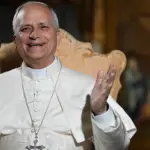
Asked about the situation he is witnessing and his own fears, Cardinal Sako speaks of great anxiety and uncertainty, which stem, among other things, from the similarity to what Iraqis experienced in 2003 (i.e., during the Second Gulf War – editor’s note), when “chaos, disorder, desires for revenge, and attacks” prevailed in the region. He emphasizes the fear resulting from the proximity to Iran and the fact that many Iraqis are also Shiites. The hierarch explains that the unstable situation is influenced by both the beliefs of some Muslims, stemming from religion and “having nothing to do with reality,” as well as the “secular” views of those who “pursue their own interests.”
“So we have a dispersion of decisions and assessments here,” he says. “We fear a new violent escalation that threatens to turn into a large-scale regional war.”
Christians’ fears for Nineveh
The Chaldean Patriarch of Baghdad emphasizes that “war is not a solution,” and diplomacy should help solve the problems. “We Christians are very concerned, because if attacks begin on the Nineveh Plain, where there are currently 50,000 Christians, these people will leave their homes and this time they will not return.”
He lists Christian towns in Nineveh that have been attacked by missiles or drones, including Batnaya and Bartella, as well as Erbil, the capital of Iraqi Kurdistan, where there is a large Christian quarter. Although the largest Christian town, Qaraqosh, is calm for now, fears are growing. Asked if Erbil is particularly threatened today, he says: “We don’t know, maybe Baghdad too. They could attack a church or clergy to cause confusion. We are very cautious, but we don’t know.”
On Sunday, at the request of Cardinal Sako, a prayer for peace will be recited during Mass in all Chaldean churches. The Patriarch asks them to be cautious, but also not to lose courage and hope.
5 years since Pope Francis’ historic visit
Cardinal Sako also refers to the meeting between Pope Francis and the spiritual leader of Iraqi Shiites, Grand Ayatollah Ali al-Sistani, which took place exactly 5 years ago, on March 6, 2026. He emphasizes the enormous importance of this event and the need for religious leaders to reiterate the appeal for peace and fraternity, following the example set by the Holy Father then.
“The meeting with al-Sistani was very, very powerful, when he said: ‘we are part of you, and you are part of us,’ which is the same as what the Pope repeated: ‘we are brothers.'” He also recalls the Pope’s encouragement to engage in dialogue with Muslims based on friendship and building trust.
Do not forget Christians in the Middle East
“I ask all Christians around the world not to forget the Christians of the Middle East, not only in Iraq,” says the hierarch. “There is also Lebanon, the situation there is more serious today.” He emphasizes that Middle Eastern Christians are the “root” of their religion and, in addition to the misfortunes they encounter, they also have their mission. “We need prayers. So that we may persevere and bear witness to our faith.”