
Vatican News
First time in history
According to Vatican News, the decision to invite women was made by Pope Paul VI. He announced it on September 8, 1964, in Castel Gandolfo. It was enthusiastically received by, among others, Bishop Vittorio Veneto Albino Luciani, later Pope John Paul I. He wrote that the presence of women would not be merely symbolic, as the council commissions would be able to ask them for their opinions, and they themselves would be able to present their suggestions.
This was, in fact, the role of all auditors, not just women. Auditors were individuals invited to the Council without voting rights, but they could participate in the deliberations, observe them, and convey their opinions and suggestions to the council commissions. Their task was to bring the experience of lay, social, and religious life to the Church’s reflection.
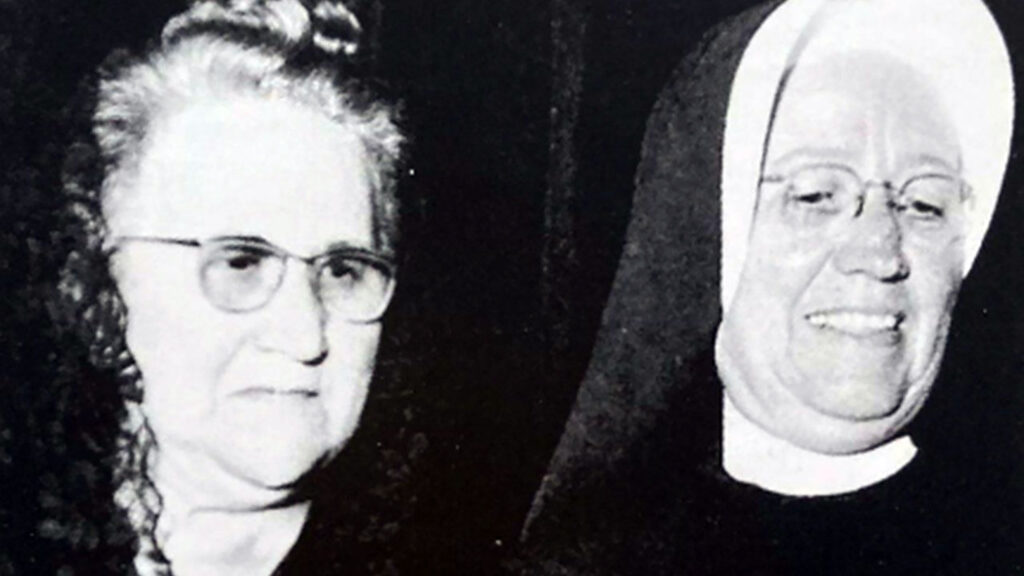
Among the women auditors were 10 nuns and 13 laywomen: nine unmarried, three widows, and one married woman. Although they could not speak during official debates, their presence marked a clear break with centuries of tradition in which similar assemblies were reserved exclusively for men. Women joined the Council during its third and fourth sessions (1964-1965).
Carefully selected
The names of the women auditors were chosen to represent different parts of the world and various forms of life in the Church. Their presence quickly led to cooperation, and a working group was formed to address the problems of women in the Church and in the world. Their common goal was to restore women’s voices in the life of the Church.
One of the participants was the Italian nun Costantina Baldinucci, who later described her experiences in the book “Il postconcilio e la suora”. She wrote: “It seems that one world is dying, and a new one is being born.” Among those invited were also the British economist Barbara Ward and the peace activist Eileen Egan.
Some of the women auditors later played an important role in the life of the Church in their countries. For example, the Argentinian Margarita Moyano became involved in the Church’s activities in Latin America, participating in conferences in Medellín and Puebla and working for the poor.
A groundbreaking gesture
It is worth noting that in the 1960s, no other global assembly of this rank allowed women to participate in deliberations. In this sense, the Catholic Church was a pioneer. Although this step may seem modest today, it initiated important changes.
The presence of women auditors at the Council brought many positive effects, though not immediately. The status of women in the Church changed after the Second Vatican Council primarily due to reforms that increased the participation of the laity. Although this was an opportunity available to everyone, it was primarily women who benefited from the new chance. An example is free access to theological studies. As Sister Baldinucci wrote, the presence of women at the Council was a sign that “a new world is being born.”