
Natalia Pieśniewska – Church and Hospice of St. Stanislaus BM in Rome
The classes were aimed at both primary school students and teachers.
An important place for the Polish diaspora
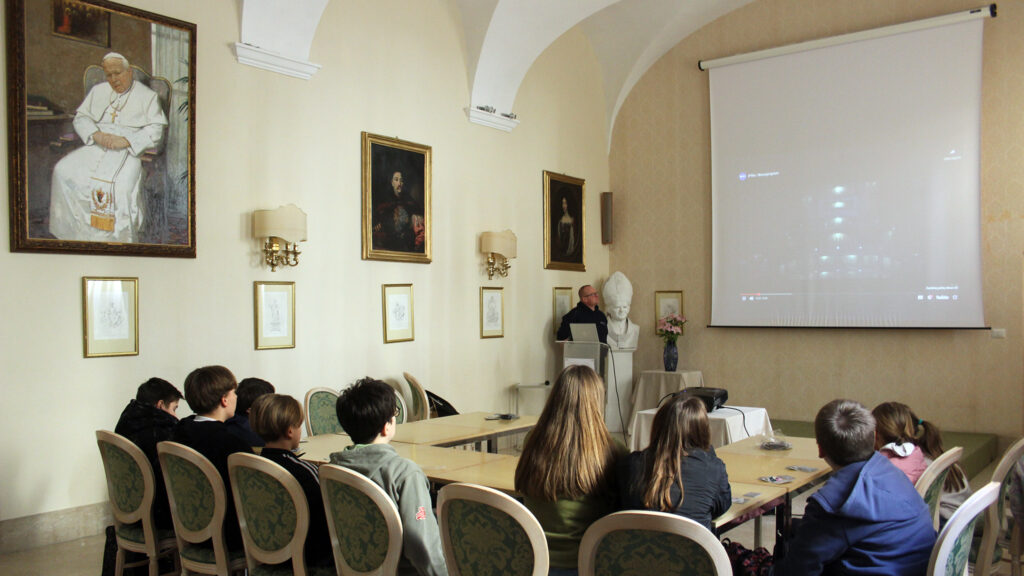
The workshops in Rome were of a pilot nature and took place as part of the cooperation between the Church and Hospice of St. Stanislaus Bishop and Martyr in Rome and the Institute of National Remembrance.
Father Tomasz Jarosz, administrator of the Church and Hospice, emphasized that cooperation with the IPN is developing on many levels. Joint projects are being implemented, such as the “Meetings with History” series, the second edition of which will take place this year. Both institutions also have common experience in organizing film screenings related to Polish history, especially from the period of World War II. “Educational workshops are another example of fruitful cooperation that primarily serves Poles living in Rome on a daily basis, and especially the youngest students of the Catholic Primary School of St. John Paul II in Rome. I thank the Institute of National Remembrance for its readiness to cooperate and for the scientific workshop that allows children to better learn the history of their Homeland,” noted Father Tomasz Jarosz.
“The Church and Hospice of St. Stanislaus BM in Rome has served Poles since the 16th century and remains an important center of Polish community life. Thanks to this cooperation, we can implement numerous scientific and educational initiatives,” added Father Dr. Adam Szpotański from the Branch Office of Historical Research of the IPN in Wrocław.
Interactive methods of teaching history
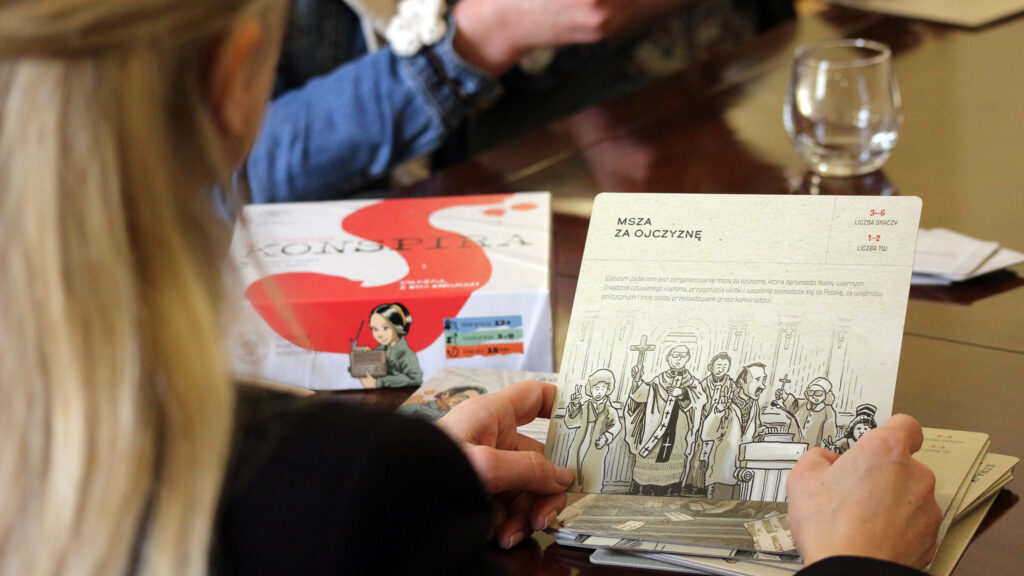
The program included a variety of educational activities. Teachers participated in the training “Gamification in historical education using IPN games as an example,” during which methods of using game mechanisms in teaching history were presented.
As Grzegorz Kowal, head of the Branch Office of National Education of the IPN in Wrocław, explained, mechanisms such as competition, scoring points, or cooperation between students can effectively increase the engagement of young people. “We try to use elements known from games so that young people learn history in a more interactive way. Games are a complement to traditional education – they help to better remember facts and empathize with the realities of the era,” he explained.
It is particularly important to conduct such activities in Polish diaspora communities. “Even living abroad, young Poles can act for their Homeland and maintain a sense of their identity. We want history to be a living experience for them, not just knowledge from textbooks,” said Grzegorz Kowal. He also added that IPN educational games are supplemented with materials and bibliographic tips that help deepen the acquired knowledge.
Workshops for younger and older students
At the same time, classes were held for students of various ages. The youngest children participated in the “Polish National Symbols” workshops, led by Jakub Horbacz from the Branch Office of National Education of the IPN in Wrocław. The classes were interactive and combined elements of learning with play. “History does not have to be exclusively book knowledge. In working with children, direct interaction and the element of play are very important, thanks to which knowledge is acquired naturally,” emphasized the educator.
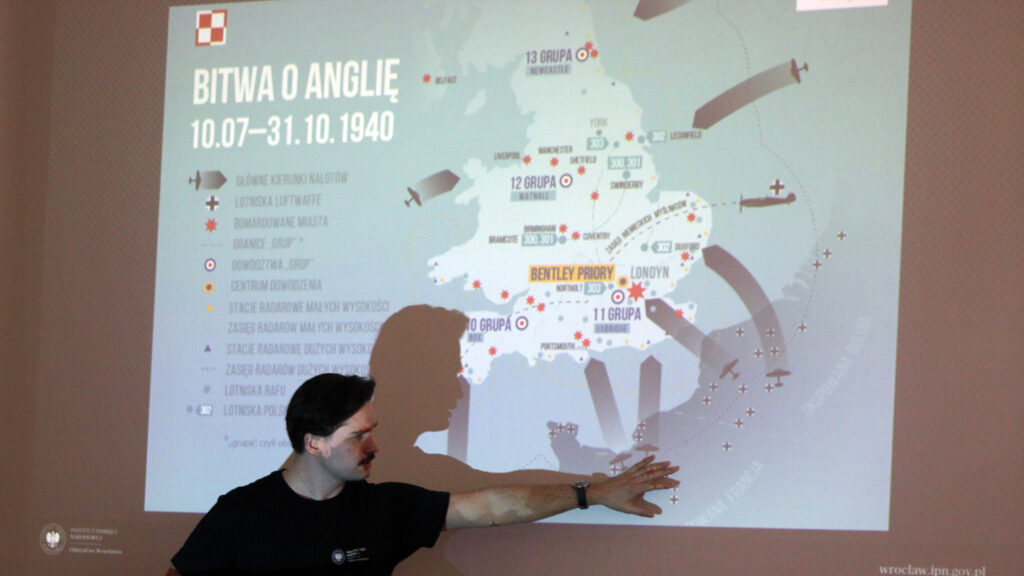
Older classes took part in activities dedicated to Danuta Siedzikówna “Inka” and in workshops on “Squadron 303.” As Father Dr. Adam Szpotański explained, the story of the young Home Army medic shows how important loyalty to values and readiness to help others are in life.
“’Inka’ is an example of a young person who remained faithful to values and the oath she took. She helped not only wounded underground soldiers but also her opponents, which is why she is also an example of an attitude of mercy towards every person in need of help,” he noted.
At the same time, younger children participated in the classes “What if animals could talk? Wojtek the Bear,” which introduced the history of World War II in an accessible way.
During the meetings, the educators tried to refer to the place where the workshops were held. “In Rome, we can refer, for example, to the history of the Polish II Corps and General Anders, who is also connected with the history of Italy. We show these connections so that children better understand that Polish history is part of European history,” explained Jakub Horbacz.
Ambassadors of Polishness
Employees of the Institute of National Remembrance pointed out that historical education in Polish diaspora communities plays a special role. Thanks to it, young people growing up outside Poland can better learn about their roots and build national awareness.
As the organizers emphasized, Polish diaspora youth often become natural ambassadors of Polish history and culture in the countries where they grow up. The knowledge gained during such meetings helps them tell their peers about Poland and present its history in a broader, international context.