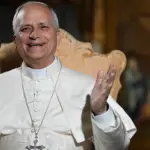
On Monday, March 16, a journalist directly asked Kaja Kallas — the EU’s chief diplomat, former Prime Minister of Estonia — whether the internal debate in Poland about a potential exit from the EU poses a threat to the Union and to Ukraine? Kallas responded diplomatically, but the tone of her words spoke more than their content.
According to the official transcript published on the website of the European External Action Service (EEAS), Kallas admitted that she does not follow the Polish debate on Polexit in detail, but emphasized that Poland is a “very strong EU member state on the eastern flank,” and its support for Ukraine and its role as a logistical hub “are extremely important.” She concluded her statement with the words: “I hope it stays that way.”
When the EU’s chief diplomat has to express hope that a member country will remain in the Union — that’s no longer an internet joke.
How it came to this — in five days
The spark was President Karol Nawrocki’s veto. On Thursday, March 12, he blocked a bill that would have allowed Poland access to preferential defense loans under the EU’s SAFE (Security Action for Europe) program — amounting to up to 43.7 billion euros from a total pool of 150 billion euros for the entire Union. To override the presidential veto, the constitution requires a three-fifths majority vote in the Sejm — and Donald Tusk’s government does not have such a majority. The money, which was supposed to finance defense spending approaching five percent of GDP, became uncertain. The government immediately began looking for a workaround — according to Reuters, later that same week it adopted a resolution authorizing the ministers of defense and finance to sign loan agreements directly, bypassing the vetoed bill.
Tusk reacted on Sunday, March 15 — and did not mince words. On platform X, he wrote that Polexit “is now a real threat, not a hypothesis.” He accused President Nawrocki, Law and Justice, and Konfederacja of effectively pushing Poland out of the Union. He pointed a finger at three external forces that — in his opinion — want to “break up the EU”: Russia, the American MAGA movement, and the European right-wing led by Hungary’s Viktor Orbán. He called Polexit a “catastrophe.”
A day later, on Monday, March 16, Poland’s chief diplomat, Radosław Sikorski, spoke in Brussels before a meeting of the Foreign Affairs Council and appealed to EU critics to follow the example of Ukrainians, who want to join the Union because they see it as the best alternative. On the same day, Kaja Kallas was asked about Polexit.
Two Polands — two narratives
To understand what is really happening, one must know that Poland in 2026 is a country divided into two camps that see a completely different reality.
The ruling camp — Tusk’s coalition — says: the nationalist right is leading Poland down the path of Brexit. Nawrocki’s veto is not an objection to the loan conditions, it is sabotage of European integration. Former EU Minister Konrad Szymański, himself a PiS member, warned in “Rzeczpospolita” that the political dynamic in Poland is beginning to resemble the United Kingdom before the 2016 referendum.
The right-wing camp responds exactly the opposite. Adam Bielan from PiS argues that the only serious politician who has been scaring with Polexit for years is Donald Tusk himself — and that he does so alternately with scaring with PiS. Bielan reminds that leaving the EU requires a referendum, and the only politician who ever proposed it was Grzegorz Schetyna — a former ally of Tusk.
Who is right? It depends on who you ask. But one thing is a fact: the debate that a month ago was taking place on Polish Twitter is now taking place in Brussels — and at the level of the European Union’s chief diplomat.
What this means for the Polish diaspora in America
For millions of Americans of Polish descent — according to the 2020 census, approximately 8.6 million people declare Polish roots — Polexit is not an abstract geopolitical dispute. It is a very personal matter, and on several levels.
Families and travel. Poland in the EU means open borders in the Schengen area, free movement of people, and simpler procedures for dual citizens. Polexit would mean new controls, new visas, new complications for anyone who regularly travels to Poland or has family on both sides of the ocean.
Money and transfers. Poland in the EU means a stable currency supported by the EU market, the zloty’s exchange rate linked to the European economy, and regulated money transfers. Polexit would knock the zloty out of orbit — and anyone sending dollars to family in Poland would feel it immediately.
Security. Poland is NATO’s and the EU’s eastern flank, the main logistical hub for military aid to Ukraine. Weakening ties with Brussels at a time when war is raging on Poland’s eastern border and conflict in the Middle East is a scenario that should concern every Pole — regardless of political sympathies.
Economy. Poland is one of the largest economies in the European Union and one of the twenty largest in the world — with a GDP exceeding one trillion dollars. The European Commission forecasts Poland’s GDP growth at 3.5% in 2026, which places Poland among the fastest-growing large EU economies. It is no coincidence that this growth is taking place within the single European market. Leaving the EU does not mean freedom — it means loneliness in the global market.
Polexit or “scare-exit”?
It must be said openly: at this moment, Polexit is not inevitable. No serious political party in Poland has leaving the Union in its program. To leave the EU, a referendum would be needed — and support for EU membership among Poles, according to CBOS research, remains at 77–80%. This is not Brexit, where public opinion was almost evenly divided before the referendum.
But — and here’s the crucial “but” — in the UK, no one serious believed in Brexit until it happened. Konrad Szymański, who himself served as Minister for EU Affairs in the PiS government, is not Tusk’s man — and it is he who compares the current situation to the UK in 2016. This warning is worth taking seriously.
The debate about Polexit is today more a political tool than a real threat. Tusk uses this scare tactic to mobilize his voters. PiS responds that Tusk himself is creating the threat. But every subsequent veto, every blocking of EU funds, every statement questioning the sense of EU membership — brings closer the moment when a joke turns into a referendum question.
The Polish diaspora in America should follow this debate closely. Not because Polexit will happen tomorrow. But because when big things happen — they usually start exactly like this: with a word that sounds like a joke, until it stops being one.
More daily analyses for the Polish diaspora on poland.us. Looking for Polish businesses and services in the USA? Check PolishPages.com — hundreds of verified businesses in 15 categories.