As Our Editorial Team Has Established
As established by “Dziennik Polonijny”, buttons began to be sewn onto clothes en masse as early as the thirteenth century. Previously, they were used very sporadically, and only a few could afford them. Modern alternatives include snaps, zippers, and various types of clasps. In the contemporary world, the term “button” also refers to various types of push-buttons. From the eighteenth century to the present day, buttons also serve as a kind of decorative jewelry. Buttons, or rather their prototypes, were known to peoples from the Indus Valley Civilization, i.e., between 2800–2600 BCE. They were also known in the Bronze Age in China during 2000–1500 BCE and in the ancient Roman Empire.
Shell Buttons
The Indus Valley Civilization used buttons made from shells. As one might easily guess, they were used only for decorative purposes. Ian McNeil reported that… “In fact, buttons originally served a more ornamental function than that of holding clothing together… The oldest known buttons were found in Mohenjo-Daro, in the aforementioned Indus Valley, and they were made of shells, and despite their delicacy, they are over 5000 years old. Buttons used for fastening clothes were first recorded in Germany in the 13th century. Soon after, they became quite widespread throughout the Old Continent.
First Mention
The first mention of buttons in literature dates back to the twelfth century, found in “La Chanson de Roland” where buttons were described as “small things of no value.” In subsequent years, they became valued decorative elements, for example, on women’s cloaks and the robes of the wealthy. Buttons came into mass use in the mid-sixteenth century.
Turning Point Years
The golden years for the button’s emergence in the world were the turn of 1830–1850. At that time, English manufacturers competed in inventing increasingly extravagant “button designs,” and their quality and craftsmanship were repeatedly improved. Button designs were very well refined; they were first drawn, then cast in special molds. Often, buttons, such as Omega type or two-layered Sanders type, were additionally chased, meaning artistically worked. In 1840, the mass production of glass buttons, commonly called “cat’s eyes,” began.
At the Button Museum in Łowicz
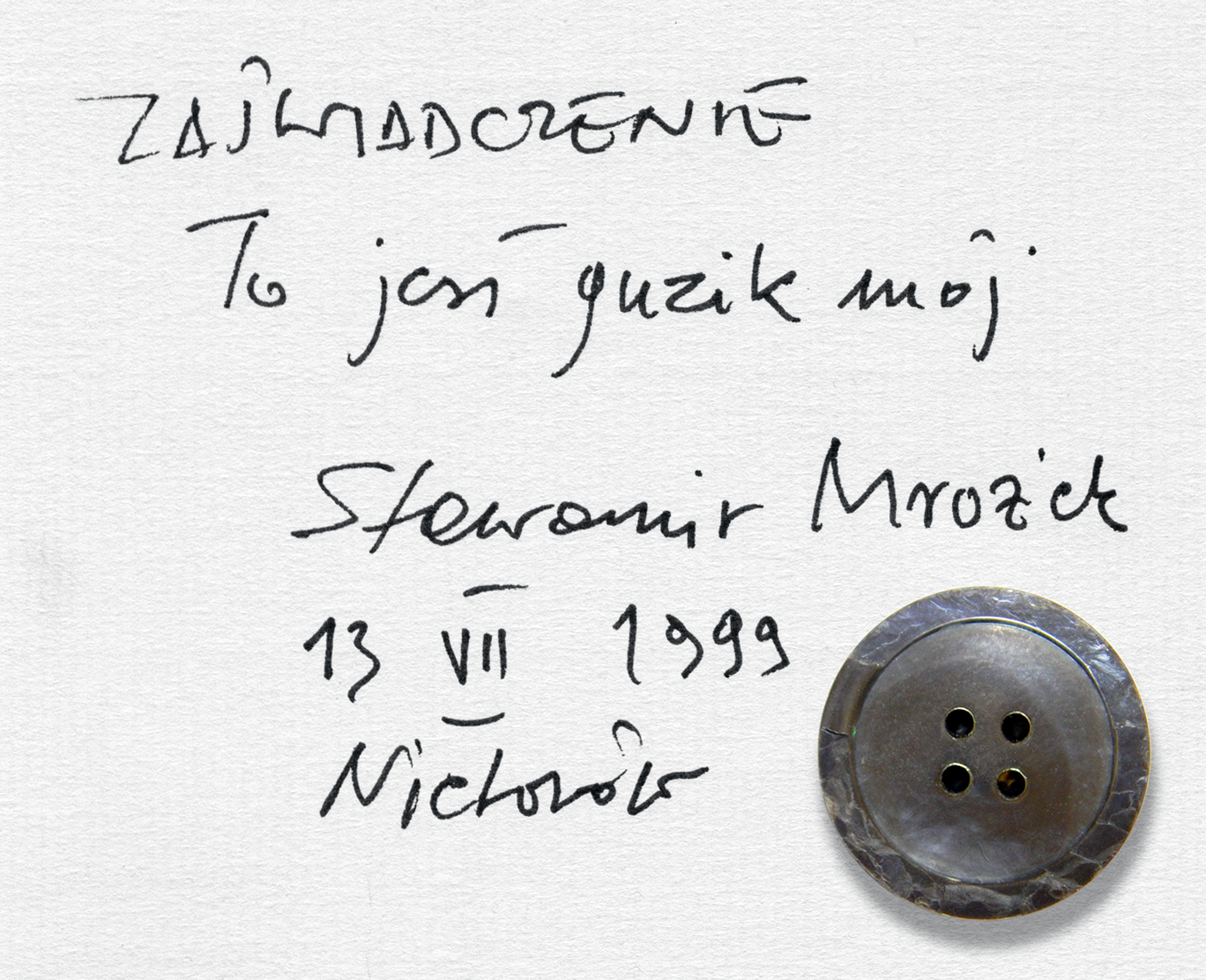
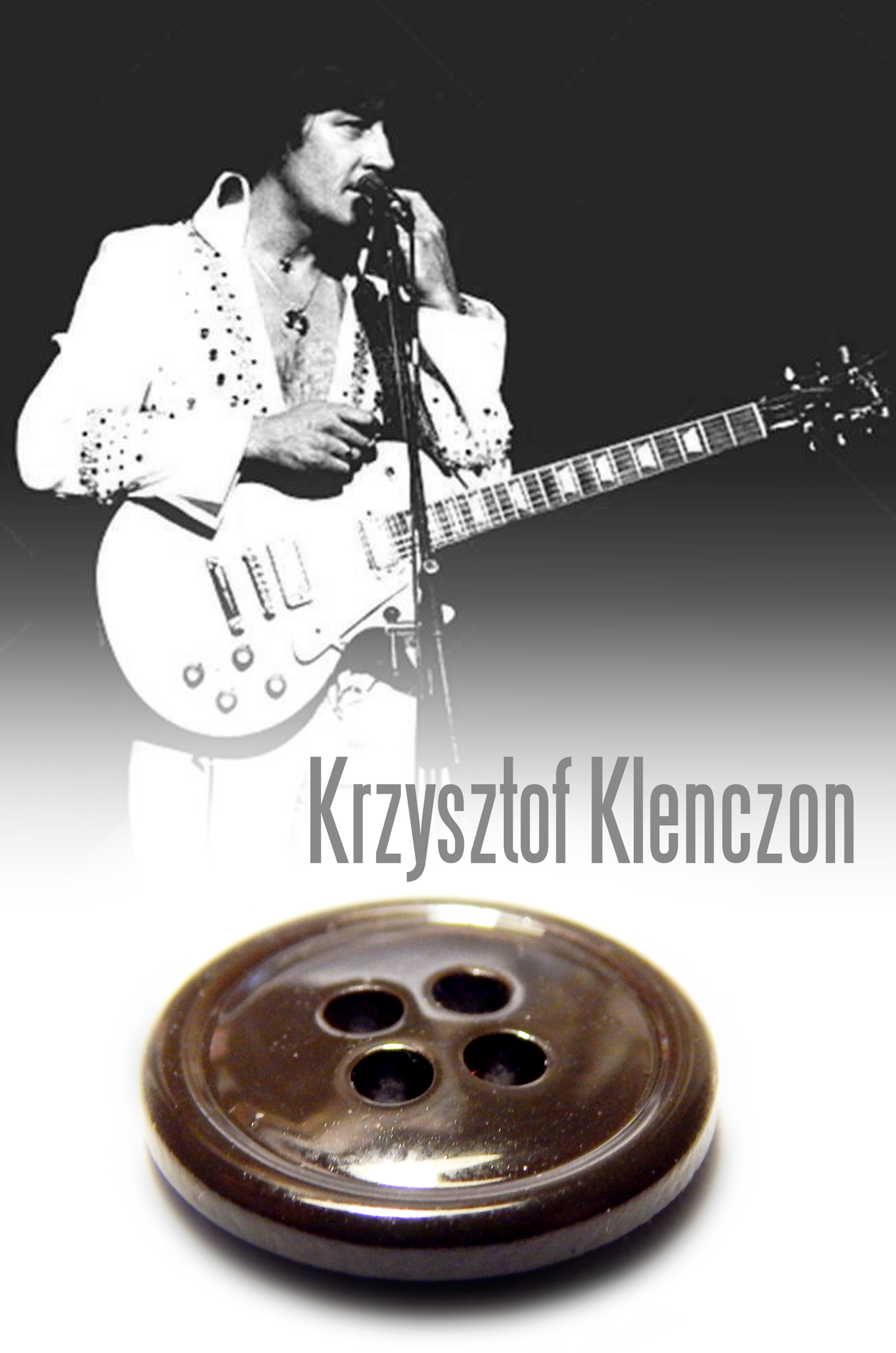
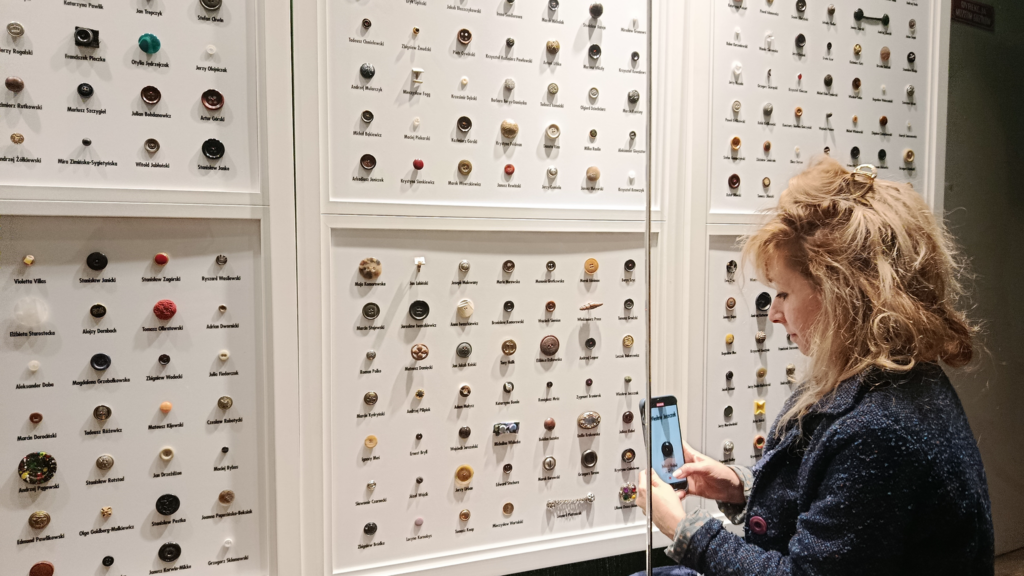
The aforementioned museum was founded in 1997 by Jacek Rutkowski and his daughter Karolina Wanda. This museum collects a kind of intangible memory of people and the events associated with them. The core of the collection consists of memorabilia related to historical and contemporary prominent figures from the world of culture, art, science, sport, politics, and other fields of life. Here you can see buttons of: Helena Modrzejewska, Stanisław Lem, Edward Stachura, Tadeusz Różewicz, Czesław Miłosz, Wisława Szymborska, Olga Tokarczuk, Sławomir Mrożek, Witold Gombrowicz, Lech Wałęsa, Konstanty Ildefons Gałczyński, Gen. Władysław Sikorski, Gen. Władysław Anders, Gen. Tadeusz Kutrzeba, Fr. Jan Twardowski, Wanda Traczyk-Stawska, Jarosław Iwaszkiewicz, Irena Sendlerowa, Andrzej Wajda, Stefan Żeromski, Barbara Skarga, Andrzej Panufnik, Michalina Wisłocka, Marek Edelman, Violetta Villas, Mieczysław Fogg, Marek Grechuta, Adam Małysz, Andrzej Sapkowski, Jerzy Owsiak, Stanisław Tym, Krzesimir Dębski, Rafał Olbiński, Wiesław Michnikowski, Arkady Fiedler, Agnieszka Osiecka, Jerzy Stuhr, Anna German, Stanisław Bareja, Marian Turski, Tony Halik, Miles Davis, Adam Strzembosz, Zbigniew Wodecki, Andrzej Seweryn, Wojciech Pszoniak, Daniel Olbrychski, Sława Przybylska, Jan Ptaszyn Wróblewski, Kuba Błaszczykowski, Zdzisław Najder, Geraldine Chaplin, Michał Urbaniak, Piotr Skrzynecki, Wojtek Smarzowski, and also Capt. Krzysztof Baranowski. The collection also includes buttons of presidents and prime ministers of Poland, three popes, and even the 16th Dalai Lama, who usually does not use buttons.