Caroling is one of the most vibrant customs of traditional Polish village life. While often associated with Christmas, it was also a New Year ritual, a way to offer good wishes for the year ahead.
What did traditional caroling involve?
Caroling centered on wishes – spoken or sung, often in rhyme. Carolers were warmly welcomed, and their presence was a joyful part of the festive season. Traditionally, they went from house to house, sharing wishes and performing simple, lively scenes for the community. Visits usually ended with small gifts for the carolers and thanks from the hosts.
Stars, nativity scenes, and colorful characters
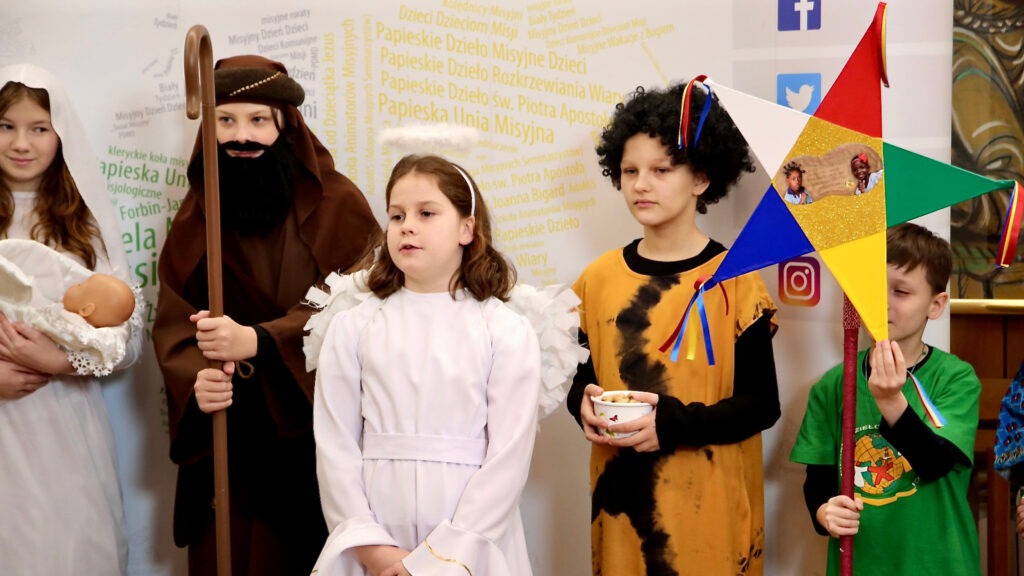
Props and costumes are essential to caroling. In many regions, children carry a caroling star – brightly colored, sometimes rotating and lit – symbolizing the Star of Bethlehem. Other groups include a nativity scene or dressing as angels, shepherds, kings, Herod, the devil, or even Death. Singing, reciting, and acting not only entertain but also convey religious stories, making the tradition part of Christmas and New Year celebrations.
A living tradition today
Today, caroling thrives in schools, parishes, and cultural centers, primarily through the Missionary Carolers program. From December 26, children dressed in costumes with stars and songs visit homes, offering wishes and collecting donations for children in mission countries – this year, particularly for children in Sri Lanka. In this way, caroling blends festive joy and New Year’s hope with concrete help for those in need.